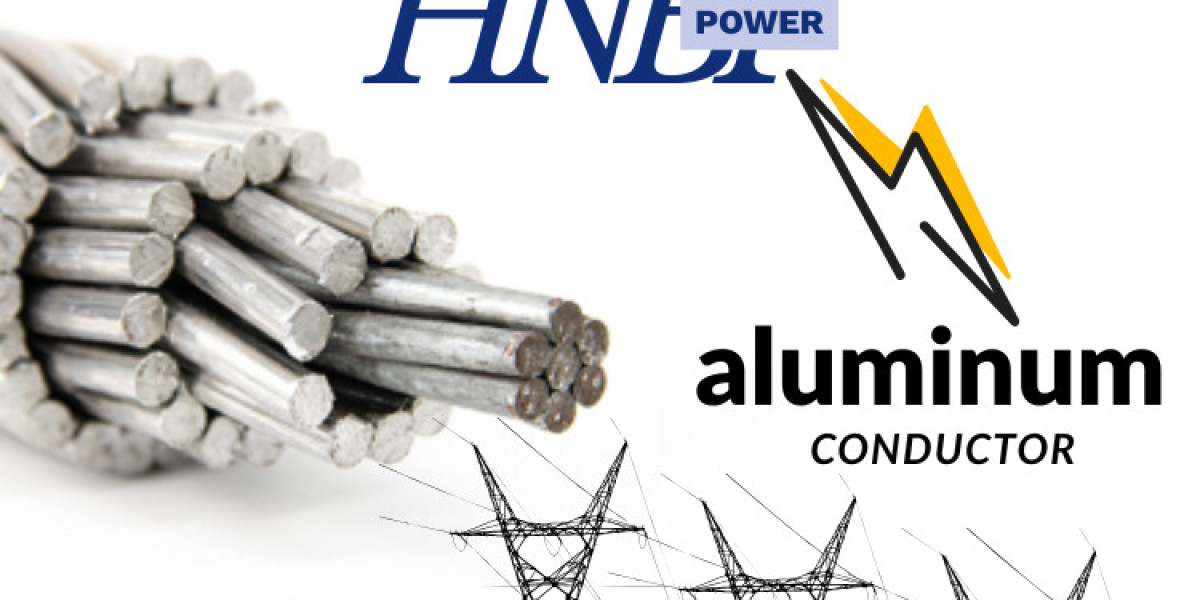

In modern transmission and distribution networks, selecting the right aluminum conductor is a strategic engineering and procurement decision. Utilities, EPC contractors, and grid developers must balance electrical performance, mechanical strength, lifecycle cost, and long-term reliability especially in large-scale overhead line projects.
As a global manufacturer of overhead conductors and power cables, HNBF Power supports utility and infrastructure buyers with engineered aluminum conductor solutions designed for real-world operating conditions, from urban distribution lines to long-span transmission corridors.
This guide explains how aluminum conductors perform, how to choose the correct type, and what engineers and procurement teams should evaluate before project approval.
Why Aluminum Conductor Is Widely Used in Power Networks
Aluminum has become the industry standard conductor material for overhead lines because it delivers a unique balance of performance and economy.
Key technical advantages of aluminum conductors
High conductivity-to-weight ratio
Aluminum provides excellent current-carrying capability while remaining significantly lighter than copper.Reduced structure and foundation costs
Lower conductor weight reduces mechanical loading on poles and towers.Improved installation efficiency
Lighter conductors simplify handling, stringing, and tensioning.Excellent corrosion resistance
Naturally forming oxide layers help protect aluminum in most outdoor environments.Competitive lifecycle cost
Aluminum conductor solutions offer long-term operational value for utilities and grid operators.
For power transmission and distribution systems where span length, sag performance, and total installed cost are critical, aluminum conductors remain the preferred engineering choice.
Common Types of Aluminum Conductor Used in Utility Projects
Different grid applications require different conductor constructions. HNBF Power manufactures a full range of aluminum conductor products to support diverse network requirements.
AAC – All Aluminum Conductor
AAC is composed of stranded aluminum wires without any steel core.
Typical applications
Urban and suburban distribution networks
Short to medium span overhead lines
Coastal and moderate corrosion environments
AAC offers excellent conductivity and corrosion resistance, but lower tensile strength compared to reinforced designs.
AAAC – All Aluminum Alloy Conductor
AAAC uses aluminum-magnesium-silicon alloy to improve mechanical performance.
Key benefits
Higher tensile strength than AAC
Better sag performance under load
Enhanced resistance to vibration and mechanical fatigue
AAAC is widely used for distribution and sub-transmission lines where improved mechanical stability is required.
ACSR – Aluminum Conductor Steel Reinforced
ACSR combines aluminum strands for conductivity with a steel core for strength.
Why engineers specify ACSR
High tensile strength for long spans
Suitable for river crossings, valleys, and rugged terrain
Stable performance under heavy wind and ice loads
ACSR remains one of the most common aluminum conductor designs for high-reliability overhead transmission projects.
ABC – Aerial Bundled Cable
For low-voltage and distribution networks, aluminum conductors are also used inside ABC cable systems.
Advantages of aluminum conductors in ABC
Improved public safety
Reduced power theft
Higher reliability in congested urban areas
HNBF Power supplies ABC systems using high-quality aluminum conductors designed for long service life.
Key Engineering Factors When Selecting an Aluminum Conductor
Before approving an aluminum conductor for a utility or EPC project, technical and procurement teams should evaluate the following performance parameters.
Electrical performance
DC resistance at 20°C
AC resistance and skin effect behavior
Current-carrying capacity under local ambient conditions
Mechanical strength and sag characteristics
Ultimate tensile strength
Modulus of elasticity
Creep behavior and long-term sag
These factors directly affect tower design, clearances, and network reliability.
Environmental suitability
Corrosion resistance in coastal, industrial, or desert environments
Wind-induced vibration performance
Ice and temperature loading conditions
Compliance with international standards
Professional buyers should ensure aluminum conductor products comply with applicable international and regional standards such as IEC, ASTM, BS, and relevant utility specifications.
HNBF Power designs and manufactures aluminum conductors in strict accordance with global utility requirements.
Manufacturing Quality Matters in Aluminum Conductor Performance
The long-term performance of any aluminum conductor depends heavily on manufacturing precision.
At HNBF Power, the production process focuses on:
Controlled aluminum rod quality
Accurate stranding geometry
Consistent wire tension during stranding
Precise steel core alignment for ACSR conductors
Online dimensional and surface inspection
Every aluminum conductor supplied by HNBF Power undergoes electrical, mechanical, and dimensional testing to ensure stable performance throughout its operational lifetime.
How HNBF Power Supports Utility and EPC Buyers
As a global manufacturer of AAC, AAAC, ACSR, ABC and low-voltage power cable solutions, HNBF Power works closely with utilities, project developers, and EPC contractors to deliver technically matched aluminum conductor solutions.
Our engineering support includes:
Conductor selection based on project route conditions
Mechanical and electrical performance matching
Custom conductor construction where required
Packaging, logistics, and project delivery coordination
This approach helps procurement teams reduce technical risk while ensuring reliable grid performance after commissioning.
FAQs About Aluminum Conductor
1. Why is aluminum conductor preferred over copper for overhead lines?
Aluminum conductor offers a better conductivity-to-weight ratio, lower installation cost, and reduced structural loading. These advantages make it more practical and economical for large-scale overhead transmission and distribution projects.
2. Which aluminum conductor is suitable for long-span transmission lines?
ACSR is commonly selected for long-span routes because the steel core provides higher tensile strength and improved mechanical stability under wind and ice loading.
3. Can aluminum conductors be used in harsh environments?
Yes. Properly designed aluminum conductor products, such as AAAC or protected ACSR constructions, perform well in coastal, industrial, and high-humidity environments when selected correctly.
4. How do I choose between AAC, AAAC, and ACSR?
The choice depends on span length, mechanical loading, sag requirements, and environmental conditions. Distribution networks often use AAC or AAAC, while transmission projects typically specify ACSR.
5. Does HNBF Power offer customized aluminum conductor designs?
Yes. HNBF Power provides customized aluminum conductor constructions based on project-specific mechanical, electrical, and installation requirements.
Partner with HNBF Power for Reliable Aluminum Conductor Solutions
Selecting the right aluminum conductor is critical to the long-term safety, performance, and efficiency of your power network. Whether you are designing a new transmission line, upgrading a distribution corridor, or planning a utility expansion project, HNBF Power delivers technically proven aluminum conductor solutions you can rely on.
Contact HNBF Power today to discuss your project requirements and receive customized aluminum conductor solutions engineered for your transmission and distribution applications.