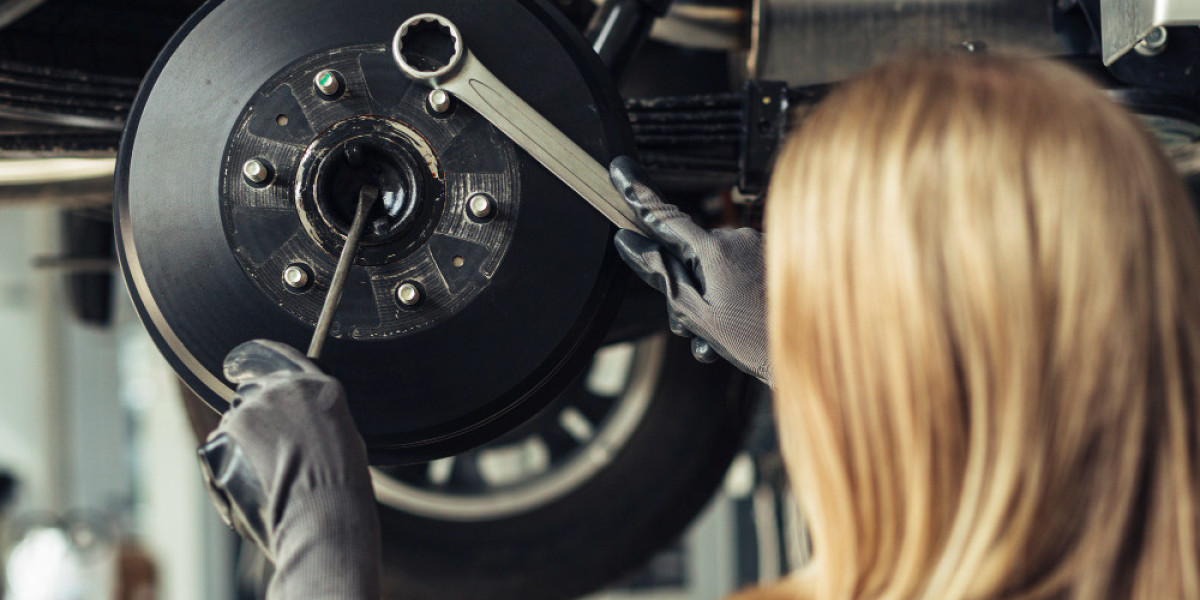

If you are driving down the road and notice a low-frequency "hum" or "growl" that gets louder as you speed up, you aren't just hearing road noise. You are likely dealing with a failing hub bearing. In modern automotive engineering, the wheel hub is the critical connection point between your tires and the rest of the vehicle. When this component begins to degrade, it doesn’t just affect your comfort—it compromises your steering precision and braking safety.
Most drivers wait until the noise is unbearable to seek a solution, but by then, the damage may have spread to the CV axle or the braking system. To solve this problem permanently, you need to identify exactly which stage of failure your bearing is in and address the root causes like moisture entry or improper torque.
The Problem: The "Ghost" Noise in Your Cabin
One of the most frustrating aspects of hub bearing failure is that the sound can be "telepathic." A bad front-left bearing might sound like it is coming from the rear-right due to how vibrations travel through the vehicle's frame.
The Diagnostic Solution: To pinpoint the failing unit, perform a "load shift" test. While driving at a safe speed on an empty road, gently sway the car from left to right.
- If you veer left and the noise gets louder, the weight has shifted to the right side bearings.
- If you veer right and the noise disappears, you have successfully "unloaded" the failing bearing on the right side.
Solving the ABS Dashboard Warning Light
Modern hub bearings are rarely just a set of metal rings. Most are now "integrated hub assemblies" that house the ABS sensor and a magnetic tone ring.
A common problem occurs when the internal bearings develop "axial play" (wobble). This wobble causes the magnetic tone ring to move out of alignment with the speed sensor. Even if the bearing isn't making noise yet, it can trigger an ABS or Traction Control light.
- The Mistake: Many owners replace the ABS sensor first, only to find the light stays on.
- The Solution: Check for "hub run-out." If the wheel has even a millimeter of play when you shake it at the 12 and 6 o'clock positions, the internal races are worn. The only solution is to replace the entire hub assembly to restore the sensor's air gap.
The Over-Torque Trap: Why New Bearings Fail
We often see DIY mechanics and even some professional shops face a "repeat failure" where a new hub bearing dies within 5,000 miles. This is almost always caused by improper installation of the axle nut.
Most modern hubs are "non-serviceable" units. The internal preload is set at the factory. However, the final "squeeze" that holds the assembly together comes from the CV axle nut.
- Under-Torquing: Leaves the bearing loose, causing the rollers to "skid" rather than roll.
- Over-Torquing: Crushes the internal races, creating massive heat that melts the factory grease.
The Fix: Never use an impact wrench to tighten an axle nut. Always use a calibrated torque wrench to reach the manufacturer’s exact foot-pound specification. This ensures the hub bearing operates within its designed thermal window.
Dealing with Water and Road Salt Contamination
The primary enemy of any hub bearing is the environment. The seals on a hub are designed to keep grease in and water out. However, hitting a deep pothole or driving through a flooded street can "shock" the seal.
Once water enters the bearing, it causes "micro-pitting" on the steel surface. As the balls or rollers pass over these pits, they create the humming sound you hear. If you live in a "salt belt" state, the salt accelerates this corrosion, leading to a seized hub that can be incredibly difficult to remove from the steering knuckle.
Pro-Tip for Removal: If the hub is seized into the spindle due to rust, do not hammer directly on the flange. Use a "hub removal tool" or the "bolt-press method" to push the hub out evenly. This prevents damage to the steering knuckle, which is often made of softer aluminum.
Conclusion
A hub bearing failure follows a predictable path: it starts as a whisper, turns into a growl, and ends as a dangerous wheel wobble. By diagnosing the noise through load-shifting and ensuring that your replacement is installed with a torque wrench rather than an impact gun, you can solve the vibration and sensor issues for good.
Replacing a hub might seem like a major task, but compared to the cost of a seized wheel or a damaged spindle, it is the most cost-effective way to keep your drivetrain silent and your steering sharp.