
From Automation to Intelligent Interaction
In an era where immediacy defines customer expectations, businesses are under increasing pressure to deliver fast, personalized, and seamless interactions. Traditional customer service models—reliant on human agents and limited operating hours—are no longer sufficient. Enter AI-powered chatbots and voicebots: intelligent systems that are transforming how organizations communicate, operate, and scale.
What began as simple rule-based automation has evolved into sophisticated, context-aware conversational AI capable of understanding intent, learning from interactions, and delivering human-like responses across text and voice channels. As these technologies mature, they are not merely tools for efficiency—they are becoming central to digital strategy and customer experience design.
This article explores the evolving landscape of AI chatbots and voicebots, offering practical insights and forward-looking perspectives for organizations aiming to harness their full potential.
Understanding AI Chatbots and Voicebots
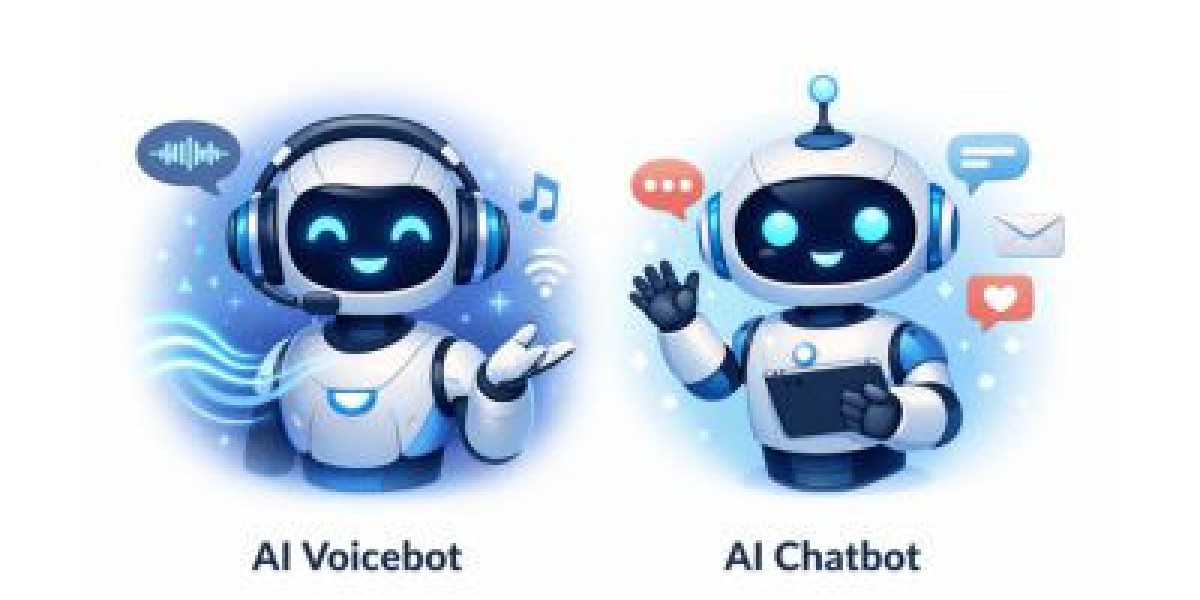
AI chatbots and voicebots are conversational interfaces powered by technologies such as natural language processing (NLP), machine learning, and speech recognition.
- AI Chatbots operate primarily through text-based interfaces—websites, mobile apps, messaging platforms—enabling users to interact through typed queries.
- AI Voicebots extend this capability into spoken language, allowing users to engage via voice commands through phone systems, smart devices, or virtual assistants.
While both serve similar purposes, voicebots introduce additional layers of complexity, including speech-to-text conversion, voice synthesis, and real-time audio processing.
Together, they form a unified conversational ecosystem that meets users where they are—whether typing on a smartphone or speaking into a device.
The Strategic Value of Conversational AI
The adoption of AI chatbots and voicebots is no longer experimental; it is strategic. Organizations across industries are leveraging these technologies to drive measurable outcomes.
Key benefits include:
- 24/7 Availability: Continuous support without human limitations.
- Scalability: Handle thousands of interactions simultaneously.
- Cost Efficiency: Reduce reliance on large customer support teams.
- Consistency: Deliver standardized, accurate responses.
- Data-Driven Insights: Capture and analyze user interactions for continuous improvement.
However, the true value lies beyond efficiency. Conversational AI enables businesses to create personalized, context-aware experiences that foster engagement and loyalty.
Designing Effective AI Chatbot Experiences
Building a successful chatbot requires more than deploying a model—it demands thoughtful design, clear objectives, and continuous optimization.
1. Define Clear Use Cases
Start with specific, high-impact use cases such as customer support, lead qualification, or onboarding assistance. Avoid overloading the chatbot with too many responsibilities at the outset.
2. Focus on User Intent
Understanding user intent is critical. Invest in training your models with diverse datasets to accurately interpret variations in language, tone, and context.
3. Maintain Conversational Simplicity
Effective AI chatbots communicate clearly and concisely. Avoid overly complex responses and guide users through interactions with structured flows when necessary.
4. Integrate with Backend Systems
To deliver meaningful outcomes, chatbots must connect with CRM systems, databases, and APIs. This enables actions such as retrieving account information or processing transactions.
5. Enable Human Handoff
No AI system is perfect. Provide seamless escalation to human agents when the chatbot cannot resolve an issue, ensuring a smooth user experience.
Unlocking the Potential of AI Voicebots
Voicebots represent the next frontier in conversational AI, offering a more natural and accessible interaction model. However, they require a distinct approach.
1. Prioritize Speech Clarity and Naturalness
Voice interactions demand high-quality speech recognition and synthesis. Users expect natural, human-like conversations with minimal latency.
2. Design for Conversational Flow
Unlike text, voice interactions are linear and ephemeral. Design dialogues that are intuitive, with clear prompts and confirmations to avoid user confusion.
3. Optimize for Noise and Variability
Voicebots must perform reliably in diverse environments—background noise, accents, and speech patterns can all impact performance. Continuous training and testing are essential.
4. Focus on Use Case Suitability
Voicebots excel in scenarios such as call centers, appointment scheduling, and hands-free interactions. Not all use cases benefit equally from voice interfaces.
Integration: Creating a Unified Conversational Strategy
The real power of conversational AI lies in integrating chatbots and voicebots into a cohesive strategy. Users often switch between channels—starting a conversation via chat and continuing it over a call.
To support this:
- Implement Omnichannel Continuity: Maintain context across platforms so users do not need to repeat information.
- Centralize Data and Insights: Use unified analytics to understand user behavior across channels.
- Standardize Brand Voice: Ensure consistency in tone and messaging, regardless of interface.
A fragmented approach can undermine user experience, while a unified strategy enhances engagement and efficiency.
Common Pitfalls to Avoid
Despite their potential, many chatbot and voicebot initiatives fall short due to avoidable mistakes:
- Overpromising Capabilities: Setting unrealistic expectations can lead to user frustration.
- Neglecting Training Data Quality: Poor data leads to inaccurate responses and degraded performance.
- Ignoring User Feedback: Continuous improvement depends on analyzing real interactions.
- Lack of Governance: Without clear oversight, conversational AI systems can drift from business objectives.
Recognizing and addressing these challenges early can significantly improve outcomes.
The Future of Conversational AI
As AI technologies continue to evolve, the capabilities of chatbots and voicebots will expand dramatically.
1. Hyper-Personalization
Future systems will leverage advanced analytics and user data to deliver highly personalized interactions, adapting in real time to user preferences and behavior.
2. Multimodal Interfaces
Conversational AI will increasingly combine text, voice, and visual elements—creating richer, more interactive experiences.
3. Emotional Intelligence
Advancements in sentiment analysis and affective computing will enable chatbots and voicebots to detect and respond to user emotions more effectively.
4. Autonomous Decision-Making
Beyond answering queries, AI systems will take proactive actions—resolving issues, making recommendations, and optimizing processes with minimal human intervention.
5. Industry-Specific Intelligence
Specialized models trained for specific domains—healthcare, finance, legal—will deliver deeper expertise and more accurate responses.
Conclusion: Rethinking Engagement in the AI Era
AI chatbots and voicebots are no longer optional enhancements—they are foundational components of modern digital ecosystems. When designed and deployed effectively, they enable organizations to scale interactions, improve customer satisfaction, and unlock new efficiencies.
Yet, success requires more than technology. It demands a strategic mindset—one that prioritizes user experience, continuous learning, and seamless integration across channels.
Takeaway: The future of engagement is conversational, but not all conversations are created equal. Organizations that invest in thoughtful design, robust infrastructure, and continuous optimization will not only keep pace with change—they will define the standard for intelligent interaction in the years ahead.