
In modern industrial environments, data is the backbone of automation, control, and decision-making. Whether it’s monitoring temperature in a chemical reactor, tracking pressure in a pipeline, or measuring flow rates in a manufacturing process, the accuracy of collected data directly impacts system performance and operational efficiency. Industrial systems rely heavily on analog signals because they represent real-world variables in a continuous form.
This is where the Analog Input Terminal Board (AITB) plays a crucial role. Acting as the interface between field devices and control systems, it ensures that analog signals are captured, conditioned, and transmitted with high precision. By enhancing signal accuracy and integrity, Analog Input Terminal Boards significantly improve data acquisition and overall system reliability.
Understanding Analog Data Acquisition in Industrial Systems
Analog data acquisition refers to the process of collecting continuous signals from physical processes and converting them into usable digital data for control systems. Unlike digital signals, which operate in binary states, analog signals vary continuously and represent real-time changes in physical parameters.
Common industrial sensors generate outputs such as:
- 4–20 mA current signals (widely used due to noise immunity)
- 0–10V voltage signals
- Thermocouples and RTDs for temperature measurement
These signals are fed into control systems like PLCs (Programmable Logic Controllers), DCS (Distributed Control Systems), and SCADA platforms. However, without proper handling, analog signals are susceptible to noise, interference, and signal degradation, which can lead to inaccurate readings and poor decision-making.
What Is an Analog Input Terminal Board?
An Analog Input Terminal Board is a hardware module designed to receive analog signals from field instruments and prepare them for processing by the control system. It acts as a bridge between sensors and controllers, ensuring that incoming signals are clean, accurate, and properly formatted.
Key components typically include:
- Input channels for multiple sensor connections
- Signal conditioning circuits for filtering and scaling
- Terminal blocks for secure field wiring
- Isolation circuits to protect against electrical disturbances
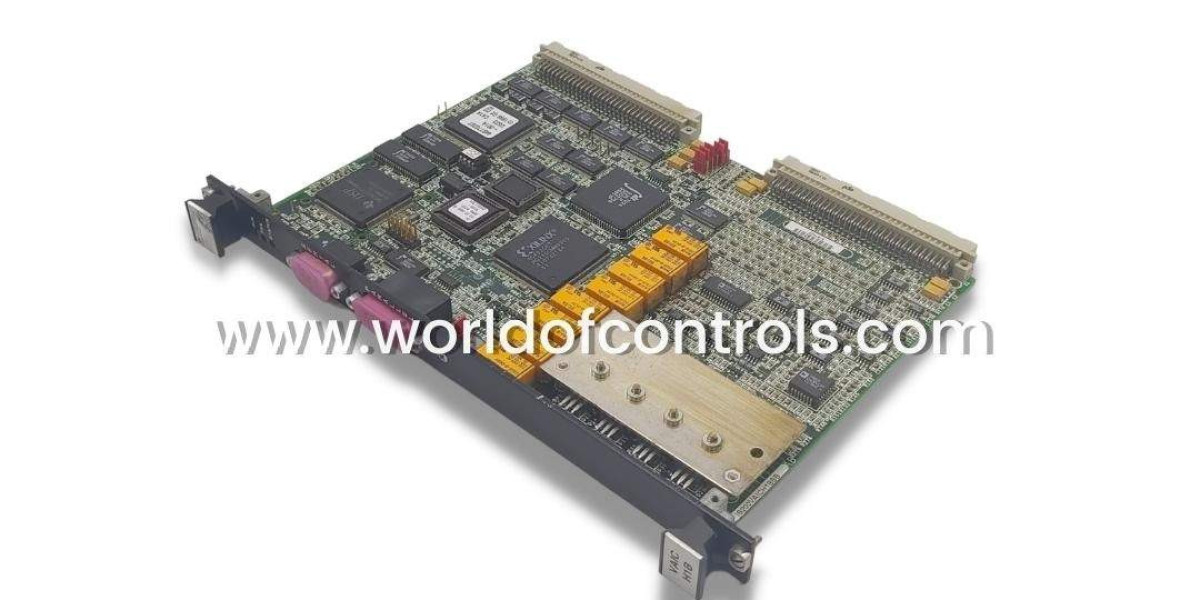
A well-known example is the IS200VAICH1B Analog Input Terminal Board, widely used in industrial control systems for reliable and precise signal interfacing.
Key Features That Enable Precision Data Acquisition
High-Resolution Signal Conversion
Analog Input Terminal Boards are designed to support high-resolution signal processing, ensuring that even the smallest variations in input signals are accurately captured. This is essential for applications where precision is critical, such as process control and quality assurance.
Advanced Signal Conditioning
Signal conditioning is one of the most important functions of an AITB. It includes:
- Filtering unwanted noise
- Amplifying weak signals
- Linearizing sensor outputs
This ensures that the signal reaching the control system is both accurate and stable.
Electrical Isolation
Isolation protects the system from voltage spikes, ground loops, and electrical interference. By isolating input channels, the board prevents external disturbances from affecting sensitive control equipment, thereby maintaining data integrity.
Noise Reduction and EMI Protection
Industrial environments are often filled with electromagnetic interference (EMI) from motors, drives, and high-voltage equipment. Analog Input Terminal Boards incorporate shielding and grounding mechanisms to minimize noise and preserve signal clarity.
Multi-Channel Processing
Modern boards can handle multiple input channels simultaneously, allowing efficient data acquisition from various sensors. This is particularly useful in large-scale industrial systems where numerous parameters must be monitored in real time.
Benefits of Using Analog Input Terminal Boards
The integration of Analog Input Terminal Boards offers several operational advantages:
- Improved Accuracy: Precise signal conditioning and isolation ensure reliable data
- Enhanced Reliability: Reduced noise and interference lead to consistent performance
- Better Decision-Making: Accurate data enables smarter control strategies
- Simplified Wiring: Organized terminal connections reduce installation complexity
- Scalability: Easy integration with expanding systems and additional sensors
Applications in Industrial Systems
Power Generation Plants
Analog Input Terminal Boards are used to monitor turbine speed, temperature, and vibration, ensuring optimal performance and safety.
Oil & Gas Industry
They play a critical role in measuring pressure, flow, and level in pipelines and refineries, where precision is essential for safety and efficiency.
Manufacturing Automation
In automated production lines, accurate sensor data ensures consistent product quality and minimizes defects.
Process Industries
Chemical and pharmaceutical plants rely on precise data acquisition to maintain strict process conditions and regulatory compliance.
Integration with Control Systems
Analog Input Terminal Boards seamlessly integrate with control architectures such as PLCs, DCS, and SCADA systems. They serve as the first point of contact for field data, converting raw analog signals into a format that controllers can interpret.
The data flow typically follows this path:
Sensor → Analog Input Terminal Board → Controller → SCADA Interface
This integration enables real-time monitoring, feedback control, and automated decision-making, which are essential for modern industrial operations.
Best Practices for Maximizing Performance
To fully leverage the capabilities of Analog Input Terminal Boards, it is important to follow best practices:
- Proper Installation: Ensure correct wiring and secure connections
- Regular Calibration: Maintain accuracy over time
- Use of Shielded Cables: Reduce noise and interference
- Effective Grounding: Prevent ground loops
- Environmental Control: Protect against extreme temperatures, humidity, and vibration
Future Trends in Analog Data Acquisition
As industrial systems evolve, Analog Input Terminal Boards are also advancing to meet new demands. Key trends include:
- Integration with Industrial IoT (IIoT): Enabling remote monitoring and analytics
- Smart Diagnostics: Built-in health monitoring for predictive maintenance
- Higher Resolution and Speed: Improved data accuracy and faster sampling rates
- Hybrid Systems: Combining analog precision with digital flexibility
Conclusion
Precision data acquisition is fundamental to the success of any industrial system. IS200VAICH1B Analog Input Terminal Board play a vital role in ensuring that real-world signals are captured accurately and delivered reliably to control systems. Through advanced signal conditioning, isolation, and noise reduction, they enhance both performance and reliability.
As industries continue to embrace automation and digital transformation, the importance of high-quality analog data acquisition will only grow. Investing in robust Analog Input Terminal Boards is not just a technical decision—it is a strategic step toward achieving operational excellence and long-term efficiency.