
Custom Office Furniture: A Smart Investment Guide
There's a moment that a lot of business owners and office managers recognize — standing in their own workspace and feeling vaguely embarrassed by it. The mismatched furniture. The desk that's technically functional but clearly designed for someone else's needs. The reception area that looks like it was assembled from whatever was available and affordable at the time.
It's a common situation. And it persists not because people don't care about their environment, but because the path from "our office doesn't reflect who we are" to "we have a workspace we're proud of" feels complicated, expensive, and uncertain.
This guide is about making that path clearer. Specifically, it's about how investing in custom office furniture — done thoughtfully, with the right partners and a realistic understanding of the process — delivers returns that go far beyond aesthetics.
The Hidden Cost of the Wrong Furniture
Before making the case for custom, it's worth understanding what the wrong furniture is actually costing you. Because the costs are real, even if they're not always visible on a balance sheet.
Productivity loss is the most significant. Workstations that don't accommodate the way people actually work create constant small frictions — reaching for things that should be closer, struggling with inadequate storage, working on surfaces that aren't sized or positioned correctly. Individually minor. Collectively significant, especially multiplied across a full team over hundreds of working days.
Brand damage is subtler but real. Every visitor who walks into a space that feels thrown-together is forming an impression — of your professionalism, your attention to detail, your investment in quality. For client-facing businesses, that impression influences confidence and trust in ways that are difficult to measure but very real in their effect.
Replacement costs matter too. The appeal of inexpensive furniture fades quickly when you're replacing it every three to five years because it's wearing out, breaking down, or no longer meeting your needs as the business grows. Custom office furniture built with quality materials and construction typically lasts significantly longer — often 15 to 20 years with proper care.
Understanding What Custom Actually Means
The word "custom" gets used loosely in the furniture industry, and it's worth being precise about what it actually means when you're making this kind of investment.
True custom furniture is designed and built specifically for your space and your requirements. It starts with your dimensions, your functional needs, your brand aesthetic, and your materials preferences — and a design is developed from there. Nothing is off-the-shelf. Every decision, from the overall form to the hardware and finish, is made deliberately for your project.
Semi-custom furniture modifies existing designs within a set of available options — different sizes, different finishes, perhaps some configuration choices. It's a middle ground that works well for some applications but doesn't offer the same flexibility as true custom.
Understanding which you're getting matters for managing expectations, evaluating proposals, and making accurate cost comparisons.
Where to Start: Assessing Your Space and Priorities
The single best thing you can do before approaching any furniture maker or designer is to get clear on your own priorities. What are you actually trying to solve?
If the answer is primarily functional — your workflows are hampered by inadequate furniture, your storage is inadequate, your workstations don't support how people work — that clarity helps you brief a designer on what needs to change and why.
If the answer is primarily brand-related — your office doesn't reflect where the company has grown to, you're embarrassed by the space, client-facing areas need to represent the business better — that's a different starting brief with different priorities.
Most real projects involve both. But knowing which dimension is driving the investment helps you make better decisions about where to spend and where to conserve — and helps you evaluate whether proposals actually address what you care about most.
High-Impact Areas Worth Prioritizing
For businesses approaching custom office furniture for the first time, concentrating investment in a few high-impact areas tends to deliver better results than spreading budget thinly across the entire space.
The entrance and reception
Nothing in your office is seen by more people than the entry and reception area. Every client, every vendor, every candidate, every visitor forms their first impression here. A reception desk that's scaled correctly for the space, finished in materials that reflect your brand, and designed to balance welcoming warmth with professional function changes the entire experience of arriving at your office.
A Modern reception desk — clean lines, quality materials, proportioned to the room rather than forced into it — is one of the most visible signals of organizational investment and attention to detail. It's also one of the highest-ROI custom furniture pieces for client-facing businesses.
Conference and meeting spaces
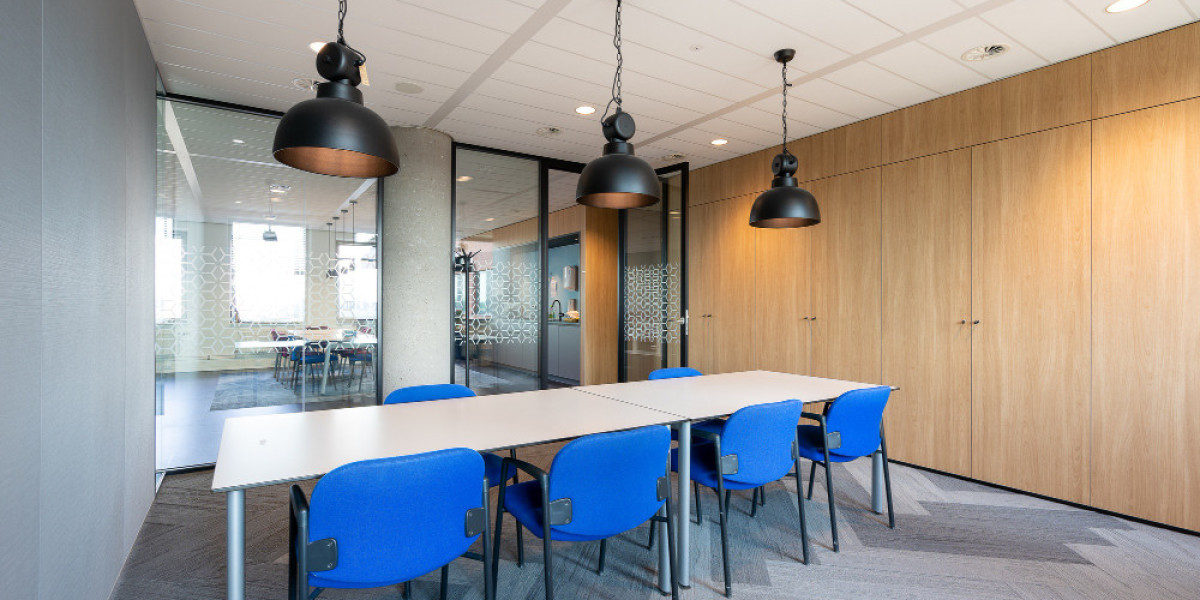
The conference room is where important things happen — client presentations, leadership discussions, critical negotiations, team planning sessions. The furniture in these spaces affects how people feel, how long they can comfortably work, how the room accommodates different group sizes, and how technology integrates into the workflow.
A custom conference table designed for your specific room and typical use case — correctly sized, properly proportioned, integrated with power and connectivity where needed — is worth the investment for any business where the conference room is a working tool rather than just a place to meet.
Creative and studio environments
Creative teams have workspace needs that standard furniture genuinely can't meet. Pin-up space for reviewing work. Large flat surfaces for spreading out materials or drawings. Flexible configurations that accommodate both individual focus and collaborative review. Storage designed for the specific tools and media the team works with.
For design studios, media production companies, architecture firms, and similar businesses, custom studio office furniture addresses these specialized needs in ways that make the physical environment genuinely supportive of the creative process — rather than something the team works around.
Questions to Ask Any Custom Furniture Provider
The custom furniture market in the US includes everything from exceptional craftspeople doing serious work to companies using the word "custom" to describe minor modifications to standard catalog pieces. Knowing how to evaluate providers helps you find the right match.
Ask to see their construction methods. What materials do they use in the core structure? How are joints made? How is hardware integrated? A furniture maker who can't or won't answer these questions in specific terms is one worth approaching with caution.
Ask about their design process. How do they translate client requirements into design concepts? What does the revision process look like? How do they handle situations where the first concept doesn't quite hit the mark?
Ask about lead times and what affects them. Custom furniture takes time — typically 8 to 16 weeks for most projects, sometimes more for complex pieces or busy production schedules. Understanding the timeline upfront, and what factors could affect it, helps you plan and avoids unpleasant surprises.
Ask about warranties and service. Quality custom furniture should be backed by meaningful warranty coverage. What does the maker stand behind, for how long, and how do they handle issues if something doesn't perform as expected?
Thinking Long-Term About Your Workspace
The businesses that get the most from their custom office furniture investments are the ones that think about their space strategically — not just solving today's problems, but anticipating how the space will need to function as the company grows and evolves.
That might mean building in flexibility: furniture systems that can be reconfigured as team sizes or workflows change. It might mean selecting materials and finishes that will age gracefully rather than dating quickly. It might mean phasing the investment — starting with the highest-impact areas and adding pieces over time as the business grows.
Whatever the approach, the mindset shift that makes the difference is treating your workspace as a genuine business asset — one that deserves the same strategic thinking you'd bring to any significant operational investment.
Your Workspace Should Work as Hard as You Do
A workspace that reflects your brand, supports your team, and makes a strong impression on everyone who experiences it is not a luxury. It's a legitimate competitive advantage — and it starts with the decision to stop settling for furniture that almost works and start investing in environments that actually do.
Take the first step today. Schedule a consultation with a custom office furniture specialist and discover what your workspace could become when it's designed specifically for you.