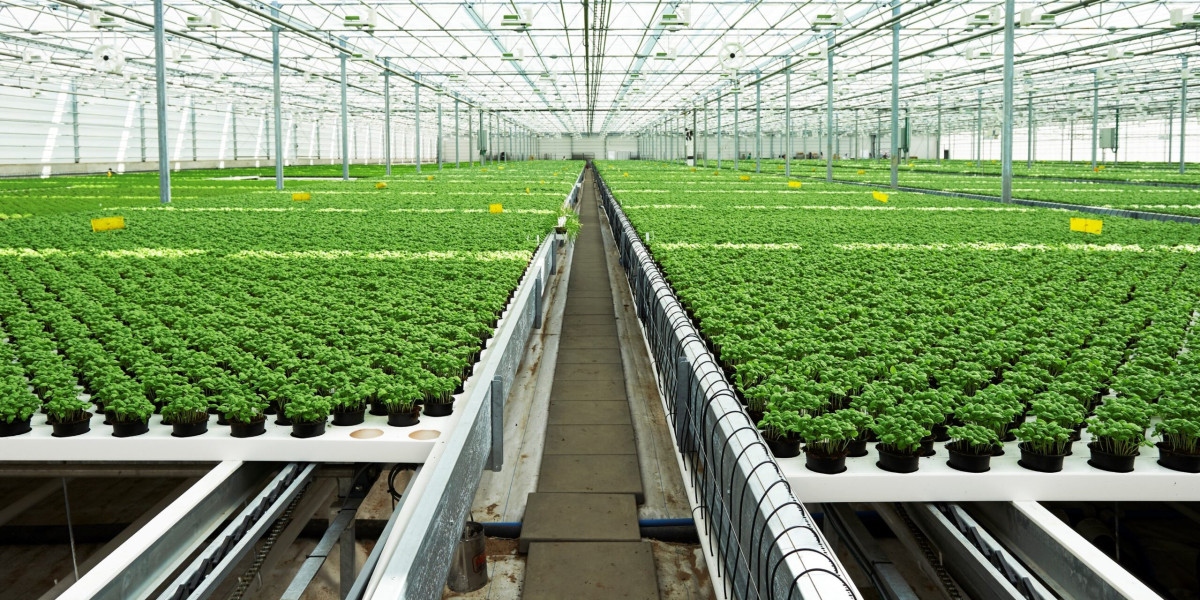

Market Overview:
According to IMARC Group's latest research publication, "Vertical Farming Market: Global Industry Trends, Share, Size, Growth, Opportunity and Forecast 2026-2034", The global vertical farming market size reached USD 8.2 Billion in 2025. Looking forward, IMARC Group expects the market to reach USD 41.0 Billion by 2034, exhibiting a growth rate (CAGR) of 18.94% during 2026-2034.
This detailed analysis primarily encompasses industry size, business trends, market share, key growth factors, and regional forecasts. The report offers a comprehensive overview and integrates research findings, market assessments, and data from different sources. It also includes pivotal market dynamics like drivers and challenges, while also highlighting growth opportunities, financial insights, technological improvements, emerging trends, and innovations. Besides this, the report provides regional market evaluation, along with a competitive landscape analysis.
How AI is Reshaping the Future of the Vertical Farming Market
AI-powered monitoring systems track temperature, humidity, nutrients, and light in real time, enabling vertical farms to cut energy and water use by up to 30%, as demonstrated by Zhejiang PUKU's 5,000 m² AI Auto farm launched in Hangzhou, China, in March 2025.
Government-backed schemes like India's Agriculture Infrastructure Fund (AIF) now offer loans up to INR 2 crore with a 3% interest subsidy for farmers and startups adopting hydroponics, aeroponics, or greenhouse farming, driving AI-enabled agri-entrepreneurship at scale.
Companies like Nature's Miracle Holding Inc. partnered with ZO Motors to deploy EV trucks embedded with hydroponic systems in California, combining AI-optimized cultivation with last-mile sustainable delivery for microgreens and herbs.
AI-driven LED lighting systems replicate natural sunlight spectra with precision, improving photosynthesis efficiency and enabling year-round crop cycles independent of seasonal or weather constraints.
Data analytics platforms used in container-based vertical farms improve crop uniformity and reduce resource waste, making commercial-scale vertical farming more financially viable and scalable for urban food systems.
Download a sample PDF of this report: https://www.imarcgroup.com/vertical-farming-market/requestsample
Key Trends in the Vertical Farming Market
Surge in Controlled-Environment Agriculture (CEA): Urban population growth and shrinking arable land are accelerating the shift toward CEA-based vertical farms. Illinois State University's new 320-square-foot container farm, launched in May 2025, grows 4,600 plants year-round using 95% less water than conventional methods, showcasing how institutional adoption is validating the technology.
Hydroponics Dominates Growth Mechanism Segment: Hydroponics holds the largest share among growth mechanisms owing to its precise nutrient delivery, faster plant development, and significant reduction in soil dependency. The technique enables producers to scale output efficiently while minimizing resource waste in space-constrained urban environments.
Container-Based Farms Lead Structural Innovation: Container-based vertical farms represent the largest structural segment due to their modularity, portability, and suitability for non-traditional locations such as urban lots and parking facilities. Their plug-and-play design allows rapid deployment and relocation, making them ideal for decentralized food production.
Lighting Technology as a Core Driver: LED lighting accounts for the majority of component-level market share, given its role in replicating natural photosynthesis cycles. Polymatech Electronics' Ravaye LED grow light, designed specifically for vertical farming, highlights how innovation in full-spectrum lighting is raising crop quality and cutting operational costs.
Global Policy Support Accelerating Adoption: Governments across Asia, the Middle East, and Europe are embedding vertical farming into national food security and urban planning frameworks. Saudi Arabia's completion of a 20,000 sqm, 19-layer indoor farm in Riyadh in February 2025, under its Vision 2030 initiative, underscores how public-sector mandates are reshaping food infrastructure at a national level.
Growth Factors in the Vertical Farming Market
Year-Round Production Capability: Vertical farming eliminates seasonal dependency, enabling consistent crop yields regardless of climate or geography. Square Roots Japan, launched in 2025, blends traditional Japanese farming knowledge with modular vertical farm technology to grow specialty crops like mizuna and shiso throughout the year, demonstrating the commercial appeal of reliable harvest cycles.
Rising Consumer Demand for Pesticide-Free Produce: Growing awareness around food safety and chemical-free sourcing is pushing retailers and food service companies to partner directly with vertical farms. Traceability tools such as QR-code-linked freshness tracking are becoming standard offerings, aligning supply with health-conscious buyer expectations.
Favorable Government Incentives: Public funding mechanisms are significantly lowering the entry barrier for vertical farming ventures. In April 2025, India's AIF scheme extended subsidized loans to cooperatives and startups adopting soilless farming methods, while Norway's Innovation Norway provided a EUR 1.6 million grant to AgriTech startup Avisomo to build a pilot facility targeting up to 100 tons of lettuce annually.
Integration with Sustainable Urban Logistics: The convergence of vertical farming with electric mobility is enabling producers to grow and deliver within a single mobile unit. Nature's Miracle Holding Inc. and ZO Motors plan to deploy up to 100 EV-embedded hydroponic trucks across California, presenting a scalable model for low-carbon urban food distribution.
Expanding Institutional and Academic Use Cases: Universities and educational institutions are investing in vertical farming infrastructure for both food production and curriculum development. The Kuwait Financial Centre "Markaz" launched a vertical farming education initiative in July 2025 as part of its CSR commitment, integrating sustainable agriculture into school learning at The English School (TES).
Vertical farming market research is expanding rapidly, driven by increasing demand for sustainable agriculture, limited arable land, and growing adoption of advanced indoor farming technologies.
Leading Companies Operating in the Global Vertical Farming Industry:
AeroFarms
Agrilution Systems GmbH
AmHydro
Everlight Electronics Co. Ltd.
Freight Farms Inc.
Grönska Stadsodling
Heliospectra AB
Jones Food Company Limited
Koninklijke Philips N.V.
OSRAM GmbH (ams-OSRAM AG)
Signify N.V.
Urban Crop Solutions
Vertical Farm Systems Pty Ltd.
Vertical Farming Market Report Segmentation:
Breakup By Component:
Irrigation Component
Lighting
Sensor
Climate Control
Building Material (Glass Greenhouse, Plastic Greenhouse)
Others
Lighting accounts for the majority of shares owing to its critical role in controlling photosynthesis, enhancing plant development, and facilitating multi-tiered growing in confined settings.
Breakup By Structure:
Building-based Vertical Farms
Container-based Vertical Farms
Container-based vertical farms hold the largest share due to their modular design, portability, and suitability for urban and non-traditional farming environments.
Breakup By Growth Mechanism:
Hydroponics
Aeroponics
Aquaponics
Hydroponics represents the leading segment owing to its efficient water usage, accurate nutrient distribution, and significant crop yield potential.
Breakup By Application:
Indoor
Outdoor
Breakup By Region:
North America (United States, Canada)
Asia Pacific (China, Japan, India, South Korea, Australia, Indonesia, Others)
Europe (Germany, France, United Kingdom, Italy, Spain, Russia, Others)
Latin America (Brazil, Mexico, Others)
Middle East and Africa
Asia Pacific leads the market, accounting for the largest regional share, driven by high urban population density, government-backed agricultural innovation programs, and rising demand for pesticide-free, locally sourced produce.
Recent News and Developments in the Vertical Farming Market
July 2025: Kuwait Financial Centre "Markaz" launched a vertical farming education initiative at The English School (TES) as part of its CSR program, giving students hands-on experience with indoor vertical farming systems to build capacity in environmental innovation.
May 2025: Illinois State University opened a new Vertical Farm housed in a 320-square-foot repurposed shipping container, using vertical hydroponics and LED lighting to grow 4,600 plants year-round while consuming 95% less water than traditional farming.
April 2025: The Government of India announced financial support for vertical farming under the Agriculture Infrastructure Fund (AIF), offering loans up to INR 2 crore with a 3% interest subsidy for farmers, startups, and cooperatives adopting hydroponics, aeroponics, or greenhouse farming.
March 2025: Zhejiang PUKU Agricultural Technology launched a 5,000 m² AI Auto vertical farm in Hangzhou, China, integrating AI and automation to reduce energy and water use by 30%, with plans to expand internationally to promote sustainable indoor farming.
February 2025: Saudi Arabia completed its largest indoor vertical farming facility in Riyadh, a 19-layer, 20,000 sqm farm developed by Mowreq, VFCo, and YesHealth Group, using AI and automation to grow leafy greens sustainably under the Saudi Vision 2030 framework.
January 2025: Oslo-based AgriTech startup Avisomo raised EUR 5 million, including a EUR 1.6 million grant from Innovation Norway, to develop a fully automated "no-hands farming" vertical system targeting large-scale, sustainable local food production with a pilot facility set to produce up to 100 tons of fresh lettuce annually.
February 2024: Jones Food Company Limited opened JFC2 in Gloucestershire, a 14,448-square-meter facility powered by 100% renewable energy, described as the most advanced vertical farm in the world at the time of its launch.
Note: If you require specific details, data, or insights that are not currently included in the scope of this report, we are happy to accommodate your request. As part of our customization service, we will gather and provide the additional information you need, tailored to your specific requirements. Please let us know your exact needs, and we will ensure the report is updated accordingly to meet your expectations.
About Us:
IMARC Group is a global management consulting firm that helps the world's most ambitious changemakers to create a lasting impact. The company provides a comprehensive suite of market entry and expansion services. IMARC offerings include thorough market assessment, feasibility studies, company incorporation assistance, factory setup support, regulatory approvals and licensing navigation, branding, marketing and sales strategies, competitive landscape and benchmarking analyses, pricing and cost research, and procurement research.
Contact Us:
IMARC Group
134 N 4th St. Brooklyn, NY 11249, USA
Email: sales@imarcgroup.com
Tel No:(D) +91 120 433 0800
United States: +1-201-971-6302