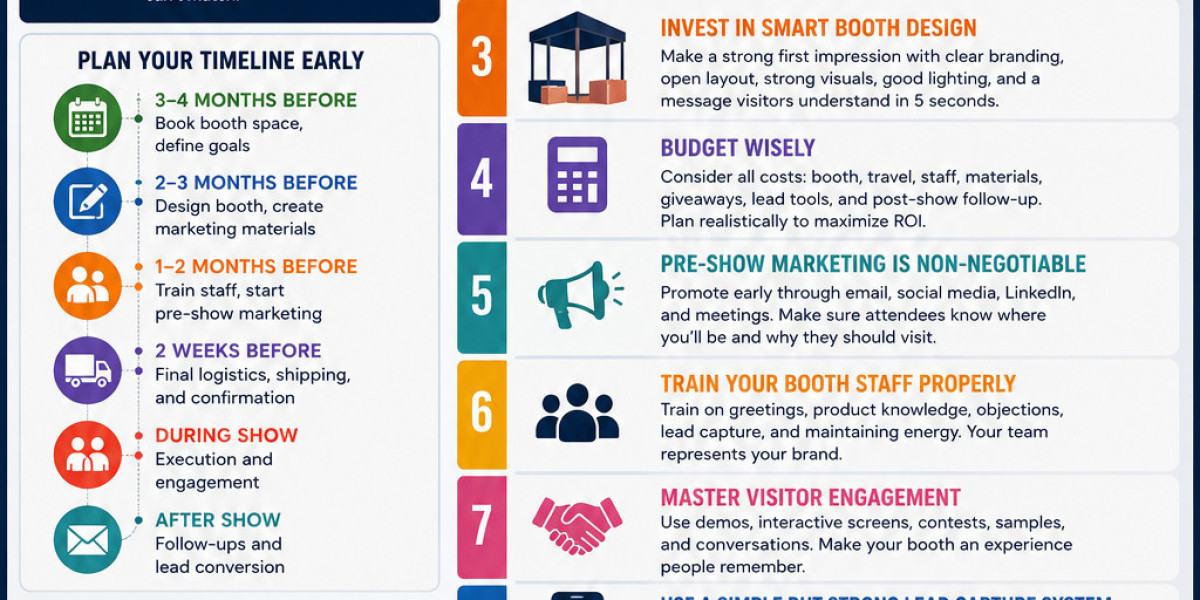

Trade shows can deliver strong ROI, but only when the budget is planned realistically. Many companies begin exploring options like Custom Exhibit: What to Know Before You Design or Rent to understand how costs break down between custom builds and rental exhibits. The challenge is not just deciding how much to spend—it’s understanding where the money actually goes and how to avoid hidden expenses that can quickly inflate your total investment.
Whether you’re building a fully custom booth or renting a modular setup, budgeting is the foundation of your trade show success. A poorly planned budget can lead to compromises in design, staffing, or execution, ultimately reducing your booth’s impact on the show floor.
This guide breaks down how to budget effectively for both custom and rental exhibits while avoiding unnecessary overspending.
Understanding the Core Cost Components
Before setting a budget, you need to understand what you are actually paying for. Exhibit costs are not just about design and fabrication—they include multiple layers.
1. Design and Concept Development
This includes:
- 3D booth design
- Branding integration
- Layout planning
- Visual storytelling
Custom exhibits typically require more investment here compared to rentals.
2. Fabrication or Rental Fee
- Custom exhibit: Full build cost (materials + labor)
- Rental exhibit: Usage fee for pre-built structure
This is usually the largest portion of the budget.
3. Transportation and Logistics
Includes:
- Shipping to venue
- Return shipping (for rentals or reusable booths)
- Freight handling
4. Installation and Dismantling (I&D)
On-site labor for:
- Booth setup
- Electrical connections
- Lighting and tech installation
- Dismantling after the event
5. Graphics and Branding
- Printed panels
- Signage
- Digital displays
- Updated campaign messaging
6. Storage and Maintenance (Custom Booths)
Custom exhibits often require:
- Warehouse storage
- Repairs and updates between shows
Budgeting for a Custom Exhibit
Custom exhibits require a higher upfront investment, but they can deliver long-term value if used strategically.
Step 1: Define Long-Term Usage
Ask:
- How many shows per year will you attend?
- Will the booth be reused or modified?
- Is brand consistency important across events?
More frequent usage justifies higher upfront spending.
Step 2: Allocate Budget Across Phases
A balanced custom exhibit budget typically looks like:
- Design: 10–15%
- Fabrication: 40–50%
- Logistics & I&D: 20–25%
- Graphics & tech: 10–15%
- Contingency: 5–10%
Step 3: Plan for Scalability
Design booths that can be:
- Reconfigured for different booth sizes
- Updated with new graphics
- Expanded for larger events
This reduces future rebuild costs.
Budgeting for a Rental Exhibit
Rental booths are more flexible and cost-efficient, but still require careful budgeting.
Step 1: Choose the Right Package
Rental pricing varies based on:
- Booth size
- Customization level
- Technology integration
Always compare what’s included in the base package.
Step 2: Focus on Add-On Costs
Common add-ons include:
- Extra branding panels
- LED screens or kiosks
- Furniture upgrades
- Lead capture tools
These can significantly increase the final cost.
Step 3: Prioritize Impact Areas
Since budgets are limited, invest in:
- Front-facing branding
- Engagement zones
- Product demo areas
Avoid overspending on decorative elements that don’t drive engagement.
Hidden Costs Most Brands Forget
Many exhibitors exceed their budget due to overlooked expenses:
1. Venue Restrictions
Some venues charge extra for:
- Early setup access
- Electrical upgrades
- Rigging or suspension systems
2. Rush Fees
Last-minute changes can lead to:
- Design rush charges
- Expedited shipping costs
- Emergency labor fees
3. Storage and Damage Fees (Custom Booths)
Improper storage can lead to:
- Repair costs
- Replacement of damaged components
4. Marketing and Promotion
A booth alone is not enough—you also need:
- Pre-show campaigns
- On-site promotions
- Post-show follow-ups
Smart Ways to Reduce Exhibit Costs
Reuse and Modular Design
Custom booths can be designed in modular sections that can be reused across multiple events.
Book Early
Early booking helps:
- Secure better rental rates
- Avoid rush charges
- Get better booth locations
Bundle Services
Many providers offer bundled packages including:
- Design
- Logistics
- Installation
- Storage
This often reduces overall cost.
Focus on ROI, Not Just Price
A cheaper booth that fails to generate leads is more expensive in the long run than a well-planned investment.
Choosing Between Custom and Rental Based on Budget
Choose Custom Exhibit If:
- You attend multiple trade shows annually
- Brand consistency is critical
- You want long-term asset value
- You require full design control
Choose Rental Exhibit If:
- You attend occasionally
- You are testing new markets
- You have limited upfront budget
- You need fast setup
Final Thoughts
Budgeting for a trade show exhibit is not just about controlling costs—it’s about maximizing impact. Whether you choose a custom build or a rental solution, every dollar should contribute to visibility, engagement, and lead generation.
Poor budgeting often leads to compromised design, reduced staffing quality, or weak visitor engagement. On the other hand, a well-structured budget ensures that your booth performs effectively from start to finish.
For businesses trying to understand the full scope of planning, design, and cost structure, resources like Custom Exhibit: What to Know Before You Design or Rent provide valuable clarity before making financial commitments.
Ultimately, successful exhibit budgeting is about balance—aligning creative ambition with financial discipline to create a booth that delivers measurable business results without unnecessary overspending.