
For centuries, ownership of physical and financial assets followed rigid structures. Property deeds, share certificates, custodial intermediaries, and jurisdiction bound registries defined who owned what, how ownership could be transferred, and who could participate. These systems were designed for a world where transactions were slow, trust was centralized, and access was limited to those with capital, connections, or geographic proximity.
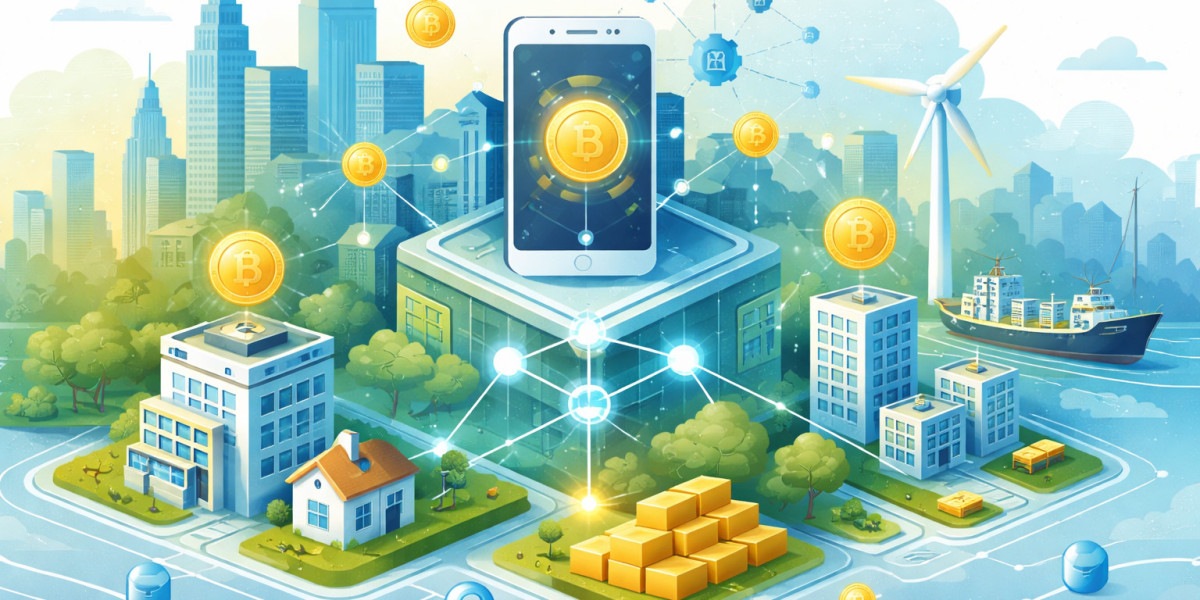
Real World Asset Tokenization is now reshaping this foundation. By converting tangible and regulated assets into blockchain based digital tokens, ownership is no longer a static legal construct. It becomes programmable, divisible, globally accessible, and verifiable in real time. This shift is not simply about efficiency. It represents a fundamental transformation in how ownership itself is structured, distributed, and monetized.
As tokenized assets move from experimental pilots into enterprise scale deployments, the implications for ownership models are profound. From fractional participation and shared governance to automated compliance and borderless liquidity, Real World Asset Tokenization is redefining what it means to own, transfer, and derive value from assets.
Understanding Real World Asset Tokenization at Its Core
Real World Asset Tokenization refers to the process of digitally representing physical or off chain financial assets on a blockchain. These assets can include real estate, commodities, infrastructure projects, intellectual property, private equity, debt instruments, carbon credits, and more.
At its core, tokenization creates a digital token that represents a legally enforceable claim on an underlying asset. Ownership rights, revenue entitlements, transfer rules, and compliance conditions are encoded into smart contracts that govern the lifecycle of the token.
Key elements involved in this process include:
Legal structuring to ensure token holders have enforceable rights
Asset valuation and verification
Smart contract logic that defines ownership behavior
Custody or control mechanisms for the underlying asset
Regulatory compliance embedded at the protocol level
This framework turns ownership from a paper based abstraction into a programmable digital primitive.
Why Traditional Ownership Structures Are No Longer Sufficient
Conventional ownership models evolved in an era of limited connectivity and slow settlement. While they served their purpose, they now struggle to support modern economic realities.
Some of the most pressing limitations include:
High entry barriers due to large minimum investment sizes
Illiquidity caused by lengthy settlement cycles and restricted markets
Fragmented registries and opaque ownership records
Heavy reliance on intermediaries that increase costs and friction
Limited participation across borders and jurisdictions
These constraints have resulted in massive pools of underutilized capital and assets that remain inaccessible to a global investor base. Real World Asset Tokenization directly addresses these inefficiencies by reengineering ownership at the system level.
Fractional Ownership as the First Major Structural Shift
One of the most visible transformations enabled by Real World Asset Tokenization is fractional ownership. Instead of requiring a single buyer or a small group of institutional investors, assets can be divided into thousands or millions of digital tokens.
Each token represents a proportional share of ownership and associated rights.
This model introduces several structural changes:
Smaller investors gain access to high value assets
Ownership becomes granular and flexible
Capital formation becomes faster and more inclusive
Asset exposure can be customized to risk preferences
Fractional ownership is not just about affordability. It fundamentally alters the concentration of ownership and redistributes economic participation across a broader population.
Programmable Ownership Rights and Smart Contract Governance
Tokenized ownership is governed by code. Smart contracts define what ownership means in practice rather than relying solely on manual enforcement.
These programmable rules can include:
Automated dividend or yield distribution
Voting rights for governance decisions
Transfer restrictions based on regulatory status
Time based vesting or lockups
Conditional access to asset benefits
As a result, ownership becomes dynamic rather than static. Rights can evolve based on predefined conditions without renegotiation or administrative overhead. This introduces a level of precision and transparency that traditional ownership frameworks cannot match.
Decentralized Yet Compliant Ownership Models
A common misconception is that tokenization removes regulatory oversight. In reality, Real World Asset Tokenization often embeds compliance directly into ownership logic.
Modern tokenized asset platforms implement features such as:
Identity verified ownership using permissioned access
Jurisdiction based transfer controls
Automated enforcement of investor eligibility
Real time auditability for regulators
This creates ownership models that are decentralized in execution but structured in compliance. Ownership becomes portable without becoming lawless. This balance is critical for institutional adoption and long term sustainability.
Global Accessibility and Borderless Ownership Participation
Traditional ownership structures are deeply tied to national registries, legal systems, and banking infrastructure. Tokenization decouples ownership from geographic limitations.
Through blockchain networks, tokenized assets can be accessed, transferred, and managed globally while still respecting jurisdictional rules.
This shift enables:
Cross border investment without complex intermediaries
Participation from emerging markets
Continuous market access across time zones
Unified ownership records across regions
The result is a more interconnected ownership economy where capital flows are driven by opportunity rather than location.
Liquidity Transformation and the Rise of Always On Markets
Liquidity is one of the most transformative aspects of tokenized ownership. Assets that were previously locked for years can now be traded in secondary markets with near instant settlement.
Tokenized ownership structures support:
Peer to peer asset transfers
Continuous trading windows
Transparent pricing mechanisms
Reduced settlement risk
This liquidity does not just benefit investors. Asset issuers gain access to a broader pool of capital and more efficient price discovery. Ownership becomes an active instrument rather than a dormant holding.
Institutional Ownership Structures Are Being Reengineered
Large institutions are not immune to this shift. In fact, they are among the primary drivers of Real World Asset Tokenization.
Tokenized ownership enables institutions to:
Optimize balance sheet efficiency
Unlock value from illiquid assets
Improve reporting and transparency
Reduce operational costs through automation
Ownership structures that once required layers of special purpose vehicles and custodial arrangements can now be simplified into tokenized frameworks with embedded governance and compliance.
Impact on Asset Issuers and Capital Formation
For asset issuers, tokenization changes how ownership is distributed and monetized.
Key advantages include:
Faster capital raising cycles
Access to a diversified investor base
Lower issuance and administration costs
Enhanced investor engagement through transparency
Ownership becomes a strategic tool rather than a static obligation. Issuers can design ownership models that align incentives, improve liquidity, and support long term asset performance.
Redefining Investor Roles and Participation
Tokenized ownership blurs the traditional boundaries between retail and institutional investors. Participants gain more direct control, visibility, and influence over the assets they own.
This evolution leads to:
Greater investor empowerment
Data driven decision making
Active participation in governance
Alignment between ownership and engagement
Ownership is no longer passive. It becomes interactive and responsive to both market conditions and stakeholder input.
Risk Management and Transparency in Ownership Records
Blockchain based ownership records provide a single source of truth. Every transaction, transfer, and modification is immutably recorded.
This transparency improves:
Risk assessment accuracy
Fraud prevention
Dispute resolution
Audit efficiency
Ownership disputes that once took months to resolve can now be addressed through verifiable on chain records. Trust shifts from intermediaries to infrastructure.
Challenges That Shape the Evolution of Ownership Tokenization
While the transformation is powerful, it is not without challenges. Ownership tokenization must navigate complex legal, technical, and cultural factors.
Key challenges include:
Regulatory fragmentation across jurisdictions
Legal recognition of tokenized ownership
Integration with legacy systems
User education and adoption
Cybersecurity and custody risks
Addressing these challenges requires collaboration between regulators, technologists, legal experts, and market participants.
The Long Term Vision for Ownership in a Tokenized Economy
As Real World Asset Tokenization matures, ownership structures will continue to evolve beyond simple representation.
Future ownership models may include:
Dynamic ownership that adjusts based on performance metrics
Revenue sharing models tied to real time asset usage
Collective ownership structures with automated governance
Interoperable ownership across asset classes
Ownership will become more fluid, data driven, and responsive to economic realities. The line between owning, using, and governing assets will increasingly blur.
Conclusion: Ownership as a Digital Primitive of the Modern Economy
Real World Asset Tokenization is not just modernizing how assets are traded. It is redefining ownership itself. By transforming ownership into a programmable, divisible, and globally accessible construct, tokenization unlocks new economic models that were previously impossible.
This transformation challenges centuries old assumptions about who can own assets, how ownership is transferred, and how value is created and shared. As adoption accelerates, ownership will no longer be constrained by paperwork, geography, or institutional gatekeepers.
In the emerging tokenized economy, ownership becomes infrastructure. Transparent, automated, and inclusive by design. Those who understand and adapt to this shift will be positioned at the forefront of the next financial and economic transformation.