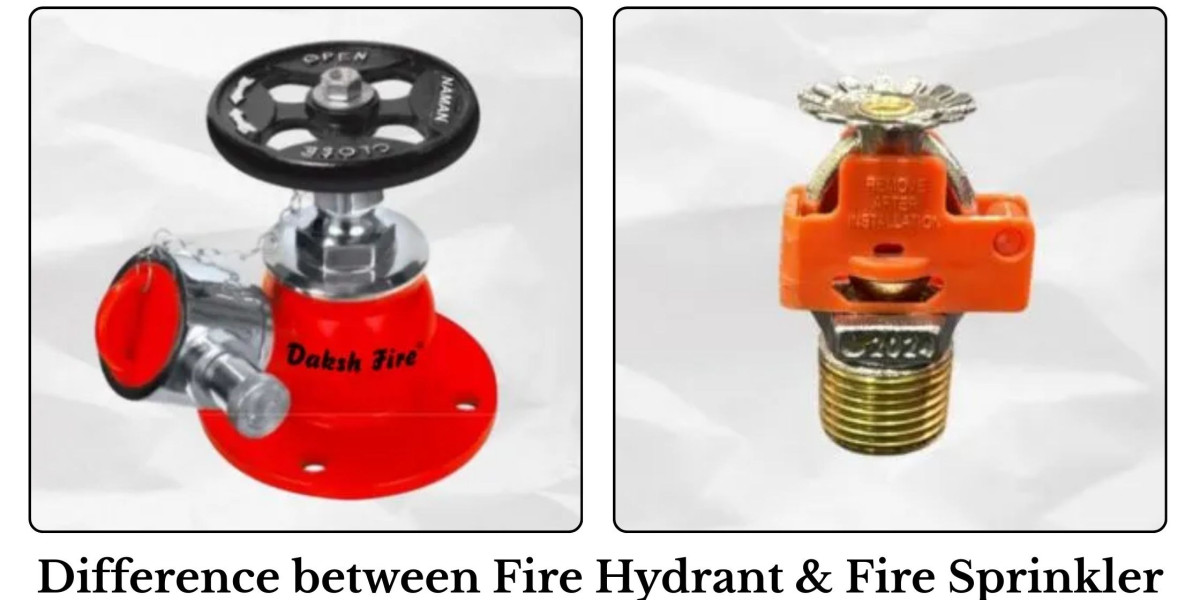

Fire safety is no longer optional for modern buildings—it is a necessity. With increasing urban density, high-rise developments, and complex infrastructure, choosing the right fire protection system is critical. Two of the most commonly used fire safety solutions are the fire hydrant system and the fire sprinkler system.
While both aim to control and suppress fires, they serve different purposes and operate in distinct ways. Understanding the difference between fire hydrant systems and fire sprinkler systems helps building owners, architects, and facility managers make informed decisions for safer buildings.
What Is a Fire Hydrant System?
A fire hydrant system is a manual firefighting system designed to supply large quantities of water at high pressure. It is commonly used by trained firefighting personnel and fire brigade teams.
How a Fire Hydrant System Works
During a fire, hoses are connected to landing valves or hydrant points. Water is pumped from a dedicated fire water tank through fire pumps to extinguish the fire.
Key Components
- Fire Hose Reel Drum
- Landing valves and hydrant outlets
- Fire Hose Box, branch pipes, and nozzles
Fire hydrant systems are essential for commercial and industrial buildings where large-scale fires may occur.
What Is a Fire Sprinkler System?
A fire sprinkler system is an automatic fire suppression system designed to control fires at an early stage.
How a Fire Sprinkler System Works
Each sprinkler head activates individually when exposed to high temperatures. Only the sprinkler closest to the fire releases water, helping control the fire quickly.
Key Components
- Sprinkler heads
- Piping network
- Control and alarm valves
- Reliable water supply
Sprinkler systems are ideal for early fire detection and suppression.
Fire Hydrant System vs Fire Sprinkler System – Key Differences.
Mode of Operation
- Fire hydrant system: Manual operation
- Fire sprinkler system: Automatic activation
Water Discharge Capacity
- Hydrant system: High-volume water flow
- Sprinkler system: Controlled and localized discharge
Fire Coverage
- Hydrant system: Flexible coverage using hoses
- Sprinkler system: Area-specific activation
Installation & Maintenance
- Hydrant systems require pumps, tanks, and pipelines
- Sprinkler systems require calibrated sprinkler heads and valves
Cost Consideration
- Hydrant systems may involve higher initial infrastructure costs
- Sprinkler systems reduce fire damage and insurance costs
Advantages of Fire Hydrant Systems.
✓ Effective for large and high-risk fires
✓ Supports fire brigade operations
✓ High water pressure and continuous supply
✓ Mandatory for industrial and commercial buildings
✓ Flexible firefighting control
Advantages of Fire Sprinkler Systems
✓ Automatic response without human intervention
✓ Controls fire at an early stage
✓ Minimizes smoke and fire damage
✓ Ideal for residential and office buildings
✓ Enhances occupant safety
Which System Is Better for Modern Buildings?
Commercial Buildings
Both systems are recommended—sprinklers for early suppression and hydrants for major fire control.
Residential Buildings
Fire sprinkler systems are more effective due to automatic operation and fast response.
Industrial Facilities
Fire hydrant systems are essential due to higher fire loads and operational risks.
Best Practice
For modern buildings, combining both systems provides maximum fire safety and compliance.
People Also Ask (FAQs)
Q1. Is a fire hydrant system mandatory for all buildings?
Fire hydrant systems are mandatory for large commercial, industrial, and high-rise buildings as per fire safety norms.
Q2. Do all sprinkler heads activate at once?
No, only the sprinkler head exposed to heat activates.
Q3. Which system is more cost-effective?
Sprinkler systems reduce fire damage, while hydrant systems handle major fires. Cost-effectiveness depends on building type.
Q4. Can fire hydrant and sprinkler systems work together?
Yes, combining both systems offers the highest level of fire protection.
Conclusion
Both fire hydrant systems and fire sprinkler systems play vital roles in modern fire safety planning. While sprinklers provide automatic, early-stage fire control, hydrant systems deliver the power and flexibility needed for major firefighting operations.
For modern buildings, the best approach is not choosing one over the other, but implementing a combined fire protection strategy that ensures safety, compliance, and peace of mind.