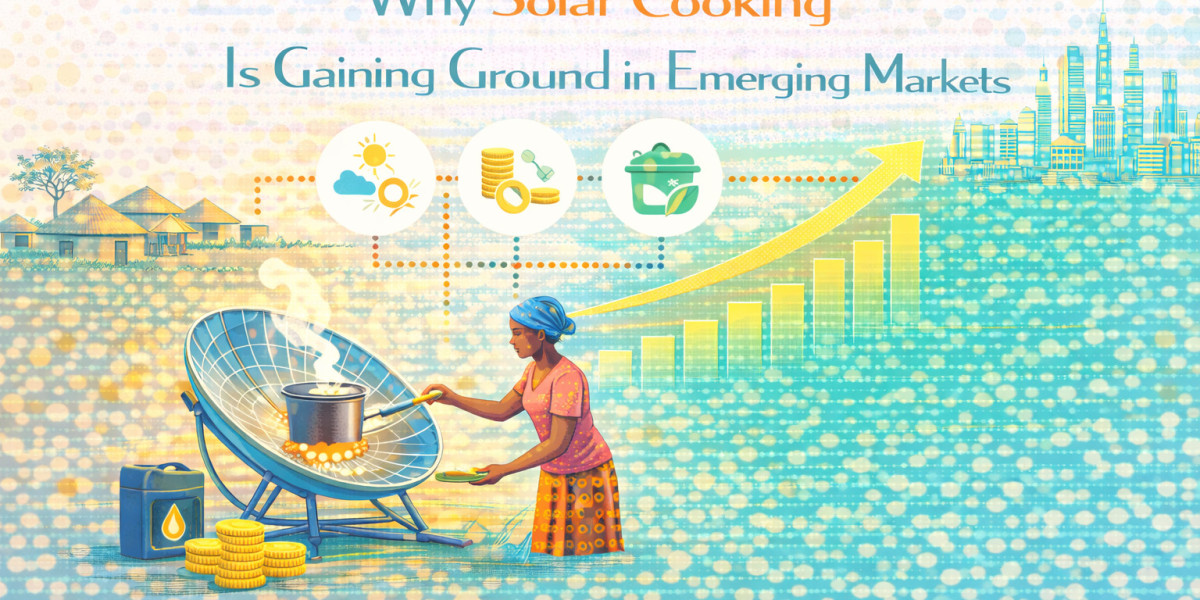

Access to clean, affordable, and reliable cooking energy is a problem many developing countries continue to grapple with. Today, millions of households in various parts of Asia, Africa, and Latin America depend on fuels like firewood, charcoal, coal, or kerosene for their cooking needs, which are not only expensive but also toxic to their environments and unhealthy for their communities. In this context, solar cooking has slowly but surely been gaining acceptance as a viable alternative.
Solar cookers harness the energy of concentrated sunshine to produce enough heat for cooking food, thereby not requiring fossil fuels or biomass. The merit of using solar cookers lies not only in their environmental advantages but also in cutting down on home bills, promoting healthier lifestyles, and energy security. The increasing collaboration between governments, NGOs, and companies to deal with issues of energy poverty has propelled the mainstreaming of solar cooking in developing regions.
Health, Environment, and Energy Access: The Core Drivers
One of the most influential drivers of the increasing use of solar cooking is its effect on public health. Globally, it has been estimated by various health organizations that indoor pollution due to conventional cooking fuels leads to the death of millions of people prematurely every year. This is because women and children who spend more time indoors are impacted adversely due to wood or coal smoke emissions, which cause various illnesses like lung ailments, eye disorders, and cardiac problems.
A solar cooker is a direct solution for this problem since it provides smoke-free means of preparing food. They are ideal solutions for rural and semi-urban settings where there is little access to liquefied petroleum gas and electricity. Another reason why solar cookers are effective solutions is that they are ideal for emerging economies where environmental factors are a consideration and deforestation resulting from fuelwood collection is a major concern.
Governments are increasingly aligning solar cooking initiatives with broader climate and sustainability goals. Programs promoting renewable energy adoption, emission reduction, and rural electrification often include solar cookers as part of integrated clean-energy strategies. These combined health, environmental, and energy-access benefits explain why adoption is accelerating across developing regions.
Market Momentum and Economic Viability
From a market perspective, solar cooking has moved beyond experimentation into measurable commercial growth. The Solar Cooker Market was valued at approximately USD 445 million in 2024 and is projected to expand steadily through 2030, supported by a compound annual growth rate of about 8.02% during 2025–2030. This growth reflects rising demand from households, humanitarian organizations, and government-backed distribution programs.
Affordability plays a critical role in this momentum. While renewable technologies are often associated with high upfront costs, many solar cookers are now available at relatively low prices, especially basic box-type or panel-based models. Once purchased, operating expenses are minimal since sunlight is free, making them economically attractive over the long term. Maintenance requirements are also low, further improving total cost of ownership for low-income users.
In addition, solar cookers have proven valuable in emergency and humanitarian settings. During natural disasters, conflicts, or fuel supply disruptions, they provide a reliable means of preparing food when conventional energy sources are unavailable. This resilience has encouraged NGOs and international agencies to include solar cooking devices in relief and rehabilitation programs, adding another layer of demand.
Technology Improvements Expanding Practical Use
Early solar cookers were often criticized for slow cooking times and limited usability. However, recent technological advancements have significantly improved performance and user experience. Modern designs incorporate better reflective materials, monocrystalline panels, and concentrated solar thermal systems that capture more sunlight and convert it into usable heat more efficiently.
These improvements reduce cooking times and allow users to prepare a wider variety of foods, addressing one of the main barriers to adoption. Advanced materials such as high-temperature-resistant ceramics and durable polymers have also enhanced product lifespan, making cookers more suitable for harsh outdoor conditions common in many emerging markets.
Some newer models integrate thermal storage or hybrid features, allowing heat retention for partial cooking during cloudy conditions. While solar cooking still depends on sunlight availability, these innovations are narrowing the usability gap and making solar cookers more adaptable to real-world conditions.
Regional Adoption Patterns and Policy Support
Asia-Pacific remains a key region for solar cooking adoption, driven by high solar irradiance, large rural populations, and strong government involvement in renewable energy programs. Countries such as India and China have invested heavily in solar infrastructure and awareness campaigns, helping normalize solar-based solutions for everyday use.
Africa is another continent where, despite the problem of energy poverty and the use of biomass fuels being very common, progress is being made with NGO projects and donor-supported programs being actively involved in the distribution of solar cookers in affected areas to eliminate health hazards and deforestation. Selective use is being observed in Latin America and the Middle East regions.
Increasing adoption leads to increased awareness and familiarity with the solar cooker market; this makes it attractive to many people. Current sales trends indicate that offline retailing methods remain dominant in this market, as most people still require demonstrations as well as follow-up services for such a new product.
Key Companies and Industry Participants
The global solar cooking ecosystem includes a mix of specialized manufacturers, energy companies, and technology innovators. Companies such as Tellco Europe, Glenergy, Gosun, Solenium Technology, Simplified Technologies for Life, Kavita Solar Energy, Greenmax Technology, SunMitra Solar, Suryatech Solar Systems, and Hainess Solar Cookers play an active role in developing and distributing solar cooking solutions worldwide.
In addition, partnerships with larger energy players and public-sector organizations have helped scale deployment. Collaborative initiatives—such as grant-funded programs and pilot projects—enable companies to test products in real-world conditions while building trust among local communities. Competition increasingly centers on efficiency, durability, ease of use, and adaptability to local cooking habits rather than price alone.
Challenges That Still Shape Adoption
Despite strong growth prospects, solar cooking faces practical limitations. Dependence on weather conditions remains the most significant challenge. In regions with high rainfall, persistent cloud cover, or extreme heat that discourages outdoor cooking, usage can be inconsistent. Night-time cooking is also not feasible without thermal storage or hybrid systems, limiting flexibility for some households.
Cultural preferences and cooking practices can further influence adoption. Certain foods require high, sustained heat or indoor preparation, which may not align with basic solar cooker designs. Addressing these challenges requires continued innovation, user education, and integration with complementary energy solutions rather than one-size-fits-all deployment.
Outlook: A Practical Path Toward Cleaner Cooking
Solar cooking is gaining ground in emerging markets because it addresses multiple challenges simultaneously—health risks, fuel costs, environmental degradation, and energy insecurity. While it may not fully replace conventional cooking methods in all contexts, it serves as a valuable complementary solution, especially for daytime cooking and fuel-constrained environments.
As technology improves, awareness grows, and supportive policies expand, solar cookers are likely to play a larger role in clean cooking transitions across developing regions. For stakeholders seeking detailed insights into market sizing, regional dynamics, and competitive strategies, research and analysis from marknteladvisors provide a comprehensive foundation for informed decision-making.