
Essential Tools for Restaurant Kitchen Cleaning
Introduction
Maintaining a clean and safe commercial kitchen is crucial for restaurants, hotels, and catering facilities. High-traffic areas like prep stations, fryers, and dishwashing zones accumulate grease, food residues, and microbes, which can compromise food safety and overall hygiene. Efficient cleaning requires not only professional-grade chemical products but also specialized tools that reduce labor, save time, and protect surfaces. Auto-scrubbers, oscillating pads, steam systems, and microfiber cloths allow staff to reach difficult corners, clean embedded grease, and sanitize sensitive surfaces. Structured cleaning schedules combined with proper tools ensure that all surfaces, from countertops to floors, remain food-safe and compliant with health regulations. Using professional tools not only enhances cleaning efficiency but also improves staff workflow, minimizes physical strain, and ensures a safer environment for employees and guests. Prioritizing these tools supports operational efficiency, equipment longevity, and consistent hygiene.
Types of Cleaning Tools for Kitchens
Commercial kitchens require specialized tools to maintain hygiene, efficiency, and food safety. Using the right equipment ensures thorough cleaning while reducing labor and protecting both staff and kitchen surfaces.
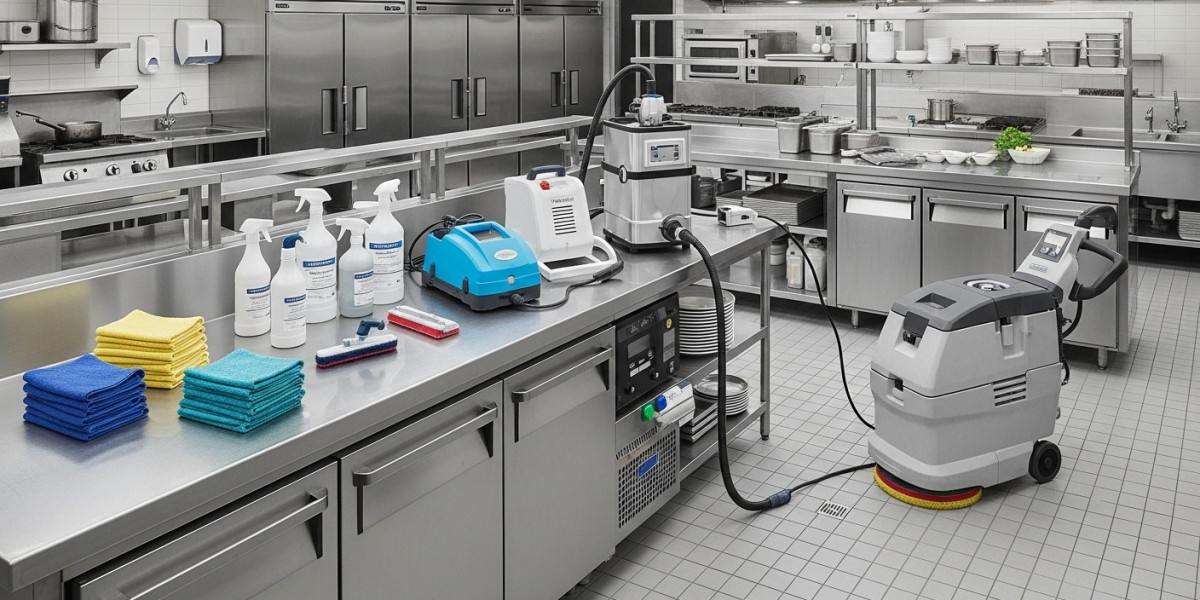
Auto-Scrubbers: These machines quickly remove embedded grease, dirt, and food residues from floors. They save time, reduce physical strain on staff, and help maintain slip-resistant surfaces, a critical safety requirement in busy kitchens.
Oscillating Pads: Designed to reach corners, grout lines, and tight spaces behind equipment, oscillating pads provide deep cleaning where manual methods may fall short, ensuring no buildup of grime or bacteria.
Steam Cleaning Systems: Steam offers chemical-free cleaning for grills, ovens, prep tables, and tiled surfaces. High-temperature steam effectively kills microbes and loosens stubborn residues, reducing the need for harsh chemicals and protecting staff from exposure.
Microfiber Cloths and Scrubbing Brushes: These tools are ideal for detailed cleaning of delicate or uneven surfaces. Microfiber traps grease and bacteria rather than spreading it, while scrubbing brushes can tackle tougher grime on sinks, countertops, and equipment surfaces.
Chemical Dispensers and Spray Systems: Proper dilution of cleaning products is essential for safe, food-contact surfaces. Dispensers ensure consistent application, protecting equipment from damage and improving sanitation effectiveness.
When these tools are combined with professional-grade cleaning products, restaurants achieve thorough deep cleaning, improved operational efficiency, and longer-lasting kitchen equipment. Proper selection, use, and maintenance of cleaning tools are key to supporting hygiene, preserving slip-resistance, and maintaining a safe and productive kitchen environment.
Top Tools for a Hygienic Restaurant Kitchen
1. Microfiber Cleaning Cloths
Microfiber cleaning cloths are one of the most effective tools for maintaining hygiene in restaurant kitchens. Their ultra-fine fibers can trap dust, grease, and bacteria more efficiently than traditional cloths, ensuring surfaces are thoroughly cleaned without scratching. They are ideal for counters, prep stations, stainless steel appliances, and glass surfaces. For optimal hygiene, use separate cloths for raw food prep, cooked food zones, and general cleaning tasks to prevent cross-contamination. Microfiber cloths are reusable and durable, making them eco-friendly and cost-effective. Regular washing at high temperatures ensures they remain bacteria-free and ready for daily use.
2. Enzyme-Based Cleaners
Enzyme-based cleaners are designed to break down organic matter, including fats, proteins, and starches, making them ideal for restaurant kitchens. They work by digesting grease and food residues on prep areas, sinks, countertops, and cutting boards, without damaging surfaces. Regular use helps maintain food-safe environments and reduces microbial growth, making them essential for health compliance. Enzyme cleaners are eco-friendly and often less harsh than chemical alternatives, reducing chemical exposure for staff. They are also effective at cleaning drains and removing odors naturally. Proper application, following manufacturer instructions, ensures maximum sanitation and surface protection.
3. Solvent-Based Degreasers
Solvent-based degreasers are crucial for tackling tough grease and baked-on residues in commercial kitchens. They are commonly used on ovens, fryers, grills, and exhaust hoods where traditional cleaning products are insufficient. These degreasers effectively dissolve oils and grime without damaging metal surfaces when used correctly. Regular application prevents buildup that could compromise hygiene and kitchen safety. Staff should wear protective gloves and ensure proper ventilation during use. Solvent-based degreasers also save time by reducing manual scrubbing and maintaining equipment longevity. Following proper dilution and rinsing guidelines ensures surfaces remain food-safe after cleaning.
4. Steam Cleaning Systems
Steam cleaning systems are increasingly popular in professional kitchens due to their chemical-free and environmentally friendly cleaning method. Steam penetrates grease, food residues, and bacteria, loosening grime while disinfecting surfaces. It is safe for sensitive areas, such as prep tables, ovens, and tiled walls, and reduces exposure to harsh chemicals for staff. Steam cleaning also reaches corners and tight spaces that manual cleaning cannot access. Its high temperature effectively kills microbes, supporting food safety standards. Regular use of steam systems enhances hygiene, preserves surfaces, and complements chemical cleaning routines for a comprehensive sanitation program in busy restaurant environments.
5. Scrubbers and Sponges
Scrubbers and sponges are essential for removing stubborn food residues, grease, and stains in restaurant kitchens. Non-abrasive scrubbers are ideal for delicate surfaces like non-stick cookware, while more durable pads can tackle ovens, grills, and sinks. Sponges are versatile and can absorb liquids, clean counters, and reach tight spaces. However, they can harbor bacteria if not replaced frequently or sanitized properly. For optimal hygiene, use separate sponges for dishes, prep areas, and floors, and disinfect regularly. Incorporating these tools into daily cleaning routines ensures surfaces remain spotless, reduces microbial contamination, and maintains a safe, efficient kitchen environment.
6. Dish Soap and Sanitizers
Dish soap and food-safe sanitizers are fundamental for maintaining cleanliness in a restaurant kitchen. Dish soap effectively removes grease, oils, and food residues from plates, utensils, cookware, and prep surfaces. When combined with sanitizers, it ensures that bacteria, viruses, and other pathogens are eliminated, keeping surfaces safe for food contact. Proper rinsing after washing is crucial to prevent chemical residues from contaminating food. Using these tools regularly as part of structured cleaning schedules ensures consistent hygiene, reduces microbial growth, and protects staff and guests. Food-safe sanitizers are also vital for health code compliance.
7. Rubber Gloves and Protective Gear
Rubber gloves, aprons, and eye protection are essential safety tools in commercial kitchens. Gloves protect hands from hot water, harsh chemicals, and grease, reducing the risk of burns, irritation, and contamination. Aprons shield clothing from spills, while goggles or face protection prevent accidental splashes into the eyes. Protective gear ensures that staff can clean efficiently and safely, especially when handling degreasers, sanitizers, or high-pressure steam systems. Using personal protective equipment (PPE) is also a health compliance requirement in many regions. Proper maintenance, including washing gloves and replacing worn items, enhances durability and safety in high-volume kitchens.
8. pH-Neutral Floor Cleaners
pH-neutral floor cleaners are designed to maintain restaurant kitchen floors safely without causing damage or reducing slip resistance. They effectively remove grease, spills, and food residues while preserving the integrity of tiles, vinyl, or rubberized surfaces. These cleaners are ideal for daily maintenance in high-traffic areas, preventing slip hazards and bacterial buildup. When combined with mechanical tools like auto-scrubbers or oscillating pads, they provide efficient deep cleaning with minimal effort. Regular use ensures compliance with safety standards, prolongs floor life, and creates a safer environment for kitchen staff. They are also environmentally friendly and gentle on surfaces.
9. Stainless Steel and Appliance Cleaners
Stainless steel and appliance cleaners keep restaurant equipment, refrigerators, ovens, and sinks free from smudges, grease, and corrosion. Regular cleaning not only maintains a polished, professional appearance but also extends the lifespan of appliances. Professional-grade cleaners protect surfaces from harsh chemicals, while eliminating fingerprints and stains. When applied correctly, they reduce microbial contamination on frequently touched surfaces, supporting food safety standards. Use soft cloths or microfiber towels for application and wipe along the grain for the best results. Consistent maintenance of stainless steel surfaces ensures a hygienic, safe, and visually appealing kitchen environment.
Tips for Using Kitchen Cleaning Tools Effectively
Maintaining a clean and hygienic kitchen requires more than just the right tools—it also depends on how they are used. Follow these best practices to maximize efficiency, safety, and food-safe sanitation:
1. Follow Instructions: Always read the labels on cleaning products and equipment before use. Proper dilution, dwell times, and application methods ensure surfaces are sanitized effectively without causing damage to kitchen equipment or food-contact areas.
2. Rinse Surfaces Thoroughly: After using chemical cleaners, rinse all surfaces with clean water to remove residues. This prevents chemical contamination of food and ensures compliance with health and safety standards.
3. Clean Regularly: Establish a consistent cleaning routine. Daily wiping of counters, prep stations, and high-traffic areas prevents grease buildup and bacterial growth. Weekly or monthly deep-clean cycles, including ovens, drains, and equipment, maintain optimal hygiene and food safety.
4. Avoid Cross-Contamination: Use separate tools and cloths for different areas, such as raw food prep, cooked food surfaces, and dishwashing zones. This prevents bacteria and food residues from spreading and ensures safe food preparation.
5. Rotate Cleaning Tools: Replace sponges, brushes, and microfiber cloths regularly. Overused tools can harbor bacteria and reduce cleaning effectiveness. Proper storage and regular sanitization of cleaning equipment further enhance hygiene and longevity.
By following these tips, restaurant staff can ensure that kitchen cleaning tools are used safely, efficiently, and effectively, maintaining a hygienic and food-safe environment for both staff and customers.
Why Proper Kitchen Cleaning Matters in Restaurants
Maintaining a clean and sanitary kitchen is critical in restaurants, not just for appearance but for the health, safety, and efficiency of the entire operation. Here’s why proper cleaning is essential:
1. Food Safety: Regular and thorough cleaning reduces the risk of microbial contamination, bacteria, and foodborne illnesses. Proper sanitation of prep areas, utensils, and cooking surfaces ensures that the food served is safe for customers, protecting both their health and your restaurant’s reputation.
2. Staff Safety: Proper kitchen cleaning prevents slip and fall accidents by keeping floors free from grease, spills, and debris. Using protective gear and following safe cleaning practices also reduces staff exposure to harsh chemicals, creating a safer working environment.
3. Equipment Longevity: Regular cleaning and maintenance prevent corrosion, buildup, and damage to expensive kitchen appliances such as ovens, fryers, and refrigerators. This not only extends the lifespan of equipment but also minimizes repair and replacement costs.
4. Regulatory Compliance: Adhering to local health and safety standards requires consistent and documented cleaning routines. Proper sanitation ensures compliance during inspections and avoids fines, penalties, or temporary closures.
5. Operational Efficiency: Organized cleaning schedules and effective use of tools improve staff workflow. Clean and well-maintained kitchens allow staff to work efficiently, reducing downtime and ensuring smooth day-to-day operations.
Proper kitchen cleaning is therefore not just a routine task it is an investment in health, safety, operational efficiency, and long-term success for any restaurant.
Conclusion
Maintaining a clean and hygienic kitchen is vital for the success of any restaurant. Proper cleaning protects staff and customers, reduces the risk of foodborne illnesses, and ensures compliance with health and safety standards. Using the right tools such as microfiber cloths, enzyme-based cleaners, steam systems, and pH-neutral floor cleaners combined with structured cleaning schedules, helps preserve equipment, maintain slip-resistant floors, and improve operational efficiency. By following safe practices, avoiding cross-contamination, and regularly inspecting equipment and surfaces, restaurants can create a food-safe environment that supports both staff productivity and customer confidence. Investing in professional cleaning routines is not just about sanitationit’s about long-term safety, efficiency, and the reputation of your business.
FAQs About Restaurant Kitchen Cleaning
Q1: How often should restaurant kitchens be cleaned?
High-traffic areas like prep stations and fryers should be cleaned multiple times daily. Surfaces like ovens, drains, and walls benefit from weekly deep-clean cycles, while monthly routines cover equipment maintenance and microbial audits.
Q2: Can household cleaning products replace professional-grade solutions?
No. Professional kitchens require enzyme-based cleaners, solvent-based degreasers, and pH-neutral floor cleaners to ensure thorough, food-safe sanitation and compliance with health regulations.
Q3: How can slip-resistant floors be maintained?
Use pH-neutral cleaners with mechanical tools such as auto-scrubbers or oscillating pads. Regular cleaning, combined with proper maintenance, preserves slip resistance and prevents accidents.
Q4: What are the essential tools for restaurant kitchen cleaning?
Key tools include microfiber cloths, scrubbing brushes, auto-scrubbers, oscillating pads, steam cleaning systems, rubber gloves, and stainless steel cleaners. Using them correctly enhances cleaning efficiency and hygiene.
Q5: Why is structured cleaning important in restaurants?
Structured cleaning schedules ensure all areas are sanitized consistently, reduce microbial contamination, improve staff workflow, and maintain regulatory compliance. Consistency prevents buildup of grease and bacteria, safeguarding both staff and customers.