
Introduction
The digital economy is rapidly evolving, and customers increasingly prefer platforms that offer multiple services in one place. From ride-hailing and food delivery to home services, grocery delivery, and digital payments, multi-service apps (often called super apps) are redefining convenience and user engagement. Platforms like Gojek, Grab, and Careem have demonstrated how combining services under a single ecosystem can drive massive growth, customer loyalty, and revenue diversification.
For entrepreneurs and businesses, developing a successful multi-service app presents a powerful opportunity—but it also comes with strategic, technical, and operational challenges. This ultimate guide walks you through everything you need to know, from ideation and market research to development, launch, and scaling.
What Is a Multi-Service App?
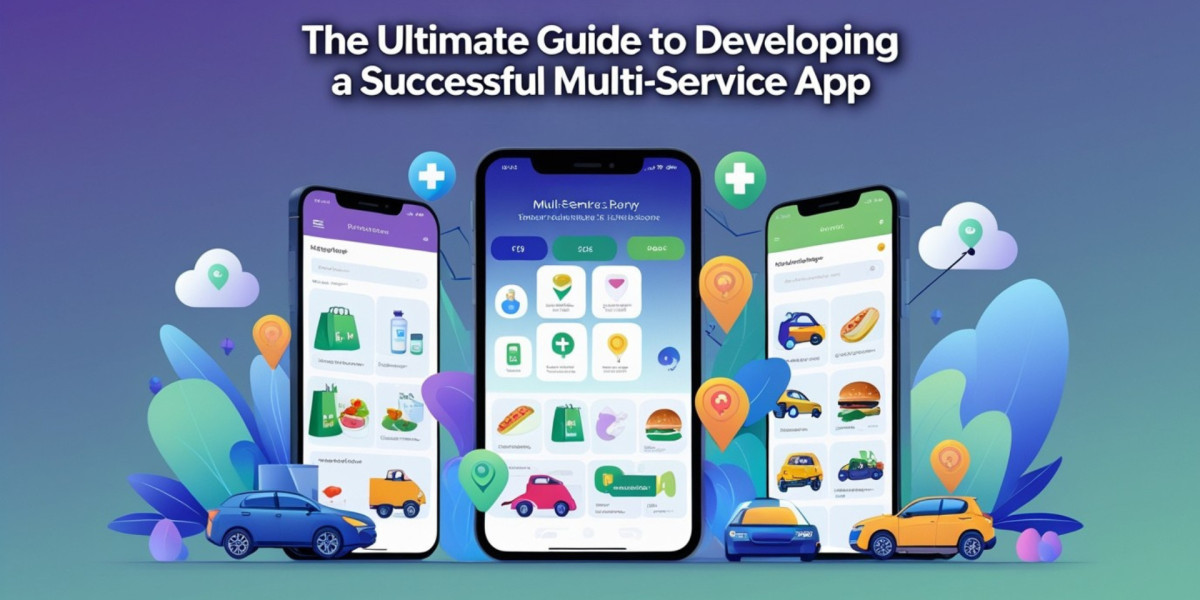
A multi-service app is a unified digital platform that allows users to access multiple on-demand services through a single application. Instead of installing and managing multiple apps, users enjoy seamless access to diverse offerings such as:
Ride-hailing and taxi booking
Food delivery and restaurant ordering
Grocery and essentials delivery
Home and professional services (cleaning, repairs, beauty)
Courier and logistics services
Digital wallet and payments
The key value lies in integration, convenience, and ecosystem-based growth.
Why Multi-Service Apps Are in High Demand
1. User Convenience
Customers prefer fewer apps with more functionality. A single login, wallet, and interface significantly improve user experience.
2. Higher Customer Retention
Once users rely on your app for multiple daily needs, switching costs increase, leading to stronger retention.
3. Cross-Selling Opportunities
One service naturally promotes another—food delivery users may adopt grocery delivery or courier services.
4. Scalable Business Model
Adding new services becomes easier once the core infrastructure is established.
Step 1: Market Research and Validation
Before development begins, thorough research is critical.
Identify Target Audience
Urban vs. semi-urban users
Age groups and income levels
Smartphone usage and digital payment adoption
Analyze Competitors
Study existing multi-service platforms in your target region. Identify:
Service gaps
Pricing models
UX/UI weaknesses
Customer pain points
Validate Demand
Use surveys, MVP testing, or pilot launches to confirm that users actually want multiple services under one app.
Step 2: Define Services and App Scope
Not all services should be launched at once. Start with core services and expand gradually.
Choosing the Right Initial Services
High-demand services (ride-hailing, food delivery)
Services with operational synergy
Services aligned with local market needs
Modular Service Architecture
Design your app so each service operates as a module. This allows easy upgrades, removals, or additions without disrupting the entire system.
Step 3: Business Model and Monetization Strategy
A successful multi-service app relies on diversified revenue streams.
Common Monetization Models
Commission-based: Percentage from service providers
Subscription plans: Monthly or yearly user or vendor subscriptions
Surge pricing: Dynamic pricing during peak demand
Advertising and promotions: Sponsored listings and featured services
Delivery and service fees: Fixed or distance-based charges
Balancing profitability with affordability is key.
Step 4: Essential Features of a Multi-Service App
User App Features
Easy registration and login
Service selection dashboard
Real-time tracking
Secure in-app payments
Ratings and reviews
Push notifications
Customer support and chat
Service Provider App Features
Profile and service management
Order/task notifications
Earnings dashboard
Availability and scheduling
Performance analytics
Admin Panel Features
User and provider management
Service configuration
Commission and pricing control
Analytics and reporting
Dispute and support management
Step 5: Technology Stack Selection
Choosing the right technology ensures scalability and performance.
Frontend
Flutter or React Native for cross-platform apps
Native development for high-performance needs
Backend
Node.js, Python, or Java
Microservices architecture
Database
PostgreSQL or MySQL for structured data
MongoDB for flexibility
Cloud and Infrastructure
AWS, Google Cloud, or Azure
CDN for faster content delivery
Payment Gateways
Support multiple payment methods
Ensure PCI-DSS compliance
Step 6: UX/UI Design Best Practices
User experience plays a decisive role in adoption.
Design Principles
Simple navigation
Clear service categorization
Minimal steps to complete an order
Consistent branding across services
Accessibility
Multilingual support
Readable fonts and intuitive icons
A clean and intuitive interface reduces friction and increases engagement.
Step 7: Development Approach
Custom Development vs. White-Label Solutions
Custom Development
Full flexibility
Higher cost and time
White-Label or Clone Solutions
Faster launch
Proven architecture
Lower upfront investment
Choose based on budget, timeline, and scalability goals.
Agile Development
Use agile methodology with iterative testing, allowing continuous improvement and faster issue resolution.
Step 8: Security and Compliance
Security is non-negotiable for multi-service platforms.
Key Security Measures
End-to-end data encryption
Secure authentication (OTP, biometrics)
Fraud detection systems
Regular security audits
Legal Compliance
Data protection laws (GDPR, local regulations)
Tax and invoicing compliance
Service provider agreements
Step 9: Testing and Quality Assurance
Before launch, extensive testing ensures reliability.
Types of Testing
Functional testing
Load and performance testing
Security testing
User acceptance testing (UAT)
Testing helps prevent costly failures post-launch.
Step 10: Launch Strategy
Soft Launch
Release the app in a limited area to gather feedback and fix issues.
Full-Scale Launch
App Store Optimization (ASO)
Digital marketing campaigns
Referral and promo offers
Partnerships
Collaborate with local vendors and service providers to accelerate adoption.
Step 11: Scaling and Expansion
Once the app gains traction, focus on growth.
Add New Services
Introduce complementary services based on user behavior.
Geographic Expansion
Expand city by city to manage operations efficiently.
Advanced Features
AI-based recommendations
Predictive analytics
Loyalty programs
Challenges in Building a Multi-Service App
Managing complex operations
Maintaining consistent service quality
High initial investment
Balancing supply and demand
Proactive planning and the right technology partner can mitigate these risks.
Conclusion
Developing a successful multi-service app is a strategic journey that blends market insight, robust technology, thoughtful design, and scalable operations. By starting with the right services, choosing a flexible architecture, and focusing relentlessly on user experience and security, businesses can build powerful platforms that thrive in today’s on-demand economy. Whether you choose a custom-built solution or a ready-to-launch clone model, the key to long-term success lies in continuous innovation, customer-centric thinking, and smart expansion.
Frequently Asked Questions (FAQs)
1. How long does it take to develop a multi-service app?
Depending on features and approach, development can take anywhere from 3 to 9 months.
2. What is the estimated cost of building a multi-service app?
Costs vary widely based on complexity, technology, and region, ranging from moderate to high investment levels.
3. Can I start with one service and expand later?
Yes. Many successful platforms start with a single core service and scale gradually.
4. Is a white-label multi-service app reliable?
Yes, if sourced from a reputable provider, white-label solutions offer faster deployment and proven stability.
5. How do multi-service apps generate revenue?
They earn through commissions, subscriptions, ads, service fees, and premium features.