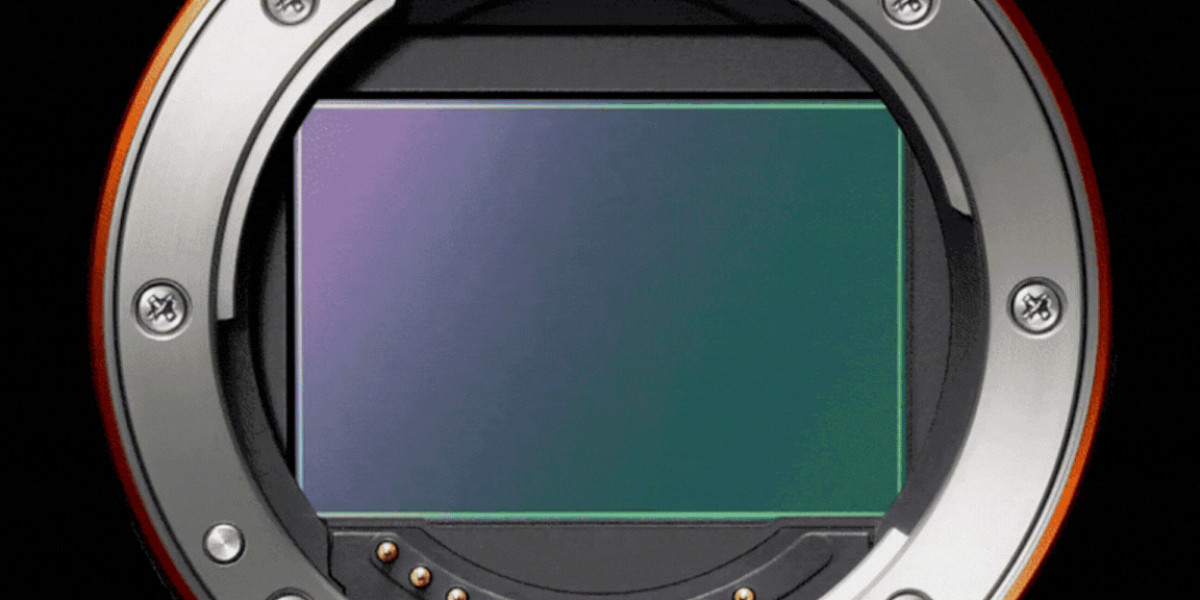

How Does Global Shutter Technology Change Sports Photography?
In the fast-paced world of professional sports photography, the difference between a career-defining shot and a discarded file often comes down to a few milliseconds. For decades, photographers have battled the physical limitations of "rolling shutters," which read sensor data line-by-line, often resulting in distorted balls, warped golf clubs, and "jello" effects during high-speed movement. As we move through 2026, the transition to global shutter technology has fundamentally rewritten the rules of the game. By capturing the entire frame instantaneously, global shutters have eliminated the compromises of the past, allowing sports photographers to capture the world exactly as it appears. This guide explores the profound impact of global shutter technology on the sports imaging industry and why it is the most significant advancement for action creators in a generation.
Understanding the Mechanical Shift: Rolling vs. Global Shutter
To appreciate the impact on sports, one must first understand the technical hurdle that global shutters have overcome. Most digital cameras historically used a rolling shutter, which scans the sensor from top to bottom. While this happens very quickly, a fast-moving object—like a tennis racket or a Formula 1 car—will have moved significantly between the time the first line of the sensor is exposed and the last. This leads to "rolling shutter distortion," where straight objects appear curved or tilted. Global shutter technology exposes every pixel on the sensor at the exact same moment. This instantaneous capture means that no matter how fast a subject is moving, there is zero geometric distortion. For sports where precision is paramount, this is not just a marginal improvement; it is a total paradigm shift.
The End of "Jello Effect" in High-Speed Action
In sports like golf, baseball, and cricket, the high-speed arc of a swing or a pitch is notoriously difficult to capture accurately. With rolling shutter sensors, a golf club at the peak of a swing often appears bent like a pool noodle. This "jello effect" has long been a frustration for coaches and analysts who rely on photography for biomechanical feedback. Global shutter technology ensures that the equipment remains rigid and true to life in every frame. This level of accuracy allows photographers to provide a higher level of service to teams and athletes, moving beyond aesthetic capture into the realm of precise scientific documentation. For professionals looking to upgrade to these advanced systems, visiting the Best Camera shop in Lahore provides an opportunity to consult with experts who understand the nuances of these next-generation sensors and how they handle high-speed sync.
Flash Synchronization Without Limits
Perhaps the most revolutionary aspect of global shutter technology for sports photographers is the elimination of flash sync speed limits. Traditionally, photographers were limited to "sync speeds" (usually 1/200th or 1/250th of a second) because of the time it took for the shutter curtains to travel across the sensor. To use flash at higher speeds, "High-Speed Sync" (HSS) was required, which significantly drained battery life and reduced flash power. Global shutters allow for flash synchronization at any shutter speed, even up to 1/80,000th of a second. This allows sports photographers to overpower the afternoon sun with ease, creating dramatic, high-contrast action shots that were previously impossible without massive, expensive lighting rigs.
The Hybrid Workflow: High-Quality Stills from Video
Global shutter technology has also bridged the gap between videography and photography in the sports arena. Because every frame of a video recorded with a global shutter is a "complete" image with no rolling distortion, photographers can now extract high-resolution stills from 8K video footage with total confidence. This "hybrid" approach is becoming the standard for 2026, allowing a single creator to provide both social media clips and high-detail print assets from the same sequence. In this multi-media environment, sound quality is just as important as visual clarity. For creators building a comprehensive sports media kit, staying informed about the Microphones price In Pakistan is a critical part of the process, as the roar of the crowd and the impact of the game provide the sensory context that makes these high-speed visuals truly immersive.
Improved Autofocus Accuracy in Chaotic Environments
Global shutter technology also aids the camera's internal autofocus (AF) algorithms. Because the sensor data is being read all at once, the AI-driven AF systems receive a more "stable" and coherent image of the subject. In traditional sensors, the micro-distortions caused by a rolling shutter could occasionally confuse the AI, leading to "pulsing" or focus hunting in high-speed scenarios. Global shutters provide a cleaner data feed to the processor, resulting in faster and more reliable eye and subject tracking. This is particularly noticeable in sports like basketball or soccer, where players are constantly changing direction and overlapping in the frame.
The Professional Advantage: Reliability and Speed
For the professional sports photographer, gear reliability is everything. Global shutters are often part of "shutterless" designs, meaning there are fewer mechanical parts to fail over hundreds of thousands of activations. This durability is a key consideration for agencies that cover long tournament seasons. Furthermore, the massive readout speeds associated with global shutters allow for incredible burst rates—frequently exceeding 120 frames per second at full resolution. This ensures that the "perfect" moment, such as the ball compressing against a bat, is never missed due to a gap between shots.
Navigating the Tech Transition in Local Markets
Adopting global shutter technology is a significant investment that requires expert guidance. Hope Enterprises, located in the prominent camera market in Lahore, has become a vital hub for professionals making this transition. Their technical staff can explain how a global shutter affects exposure settings and which lens glass is sharp enough to keep up with these ultra-fast sensors. Having access to a local resource that understands the specific challenges of shooting in the varied lighting conditions of regional stadiums ensures that photographers aren't just buying new tech, but are successfully integrating it into their professional workflow to maintain a competitive edge.
Challenges: Base ISO and Dynamic Range Trade-offs
It is important for photographers to understand that global shutter technology is not without its challenges. The additional circuitry required at each pixel to allow for simultaneous readout can sometimes lead to a slightly higher "base ISO" or a marginal decrease in dynamic range compared to the best rolling shutter sensors. However, by 2026, neural noise reduction and advanced sensor architectures have largely mitigated these issues. For the vast majority of sports applications—where shutter speeds are high and lighting is often controlled or bright—the benefits of zero distortion and unlimited flash sync far outweigh the minor trade-offs in raw dynamic range.
Conclusion: The New Gold Standard
Global shutter technology has fundamentally redefined what is possible in sports photography. By removing the physical limitations that have haunted action creators since the dawn of digital imaging, it has allowed the focus to return entirely to the photographer’s vision and timing. We are now in an era where the hardware is finally fast enough to match the speed of the world’s greatest athletes. As this technology continues to mature and trickled down into more affordable camera bodies, the overall quality of sports media will continue to reach new heights. For those who make their living by capturing the split-second drama of competition, the global shutter is not just a luxury; it is the new gold standard of professional performance.