
Building a mobile app in-house sounds straightforward until you start calculating the real costs. Between hiring developers, designers, and QA specialists, providing benefits and workspace, and waiting months to assemble the right team, many businesses find themselves staring at six-figure budgets before writing a single line of code.
That's why outsourcing mobile app development has become the go-to strategy for startups, mid-sized companies, and even enterprise organizations. When done right, outsourcing gives you access to specialized talent, faster timelines, and significant cost savings. When done wrong, it becomes an expensive lesson in what not to do.
I've seen both scenarios play out countless times. The difference between success and disaster usually comes down to how you approach the outsourcing process. Let me share what actually works based on real-world experience, not theoretical best practices that look good on paper but fall apart in execution.
Understanding Why Outsourcing Makes Business Sense
Before diving into how to outsource effectively, let's be clear about why it makes sense in the first place.
Cost is the obvious factor. Hiring full-time developers in major tech hubs means paying premium salaries plus benefits, equipment, and office space. Software development outsourcing to regions with lower costs of living can reduce your development budget by 40 to 60 percent without sacrificing quality.
But cost isn't the only reason. Outsourcing gives you immediate access to specialized skills you might not need full-time. Maybe you need someone experienced in blockchain integration for three months, or you're building features that require augmented reality app development services, but don't have AR expertise in-house. Outsourcing lets you bring in that expertise exactly when you need it.
Speed matters too. Assembling an internal team takes months. Outsourcing partners can often start within weeks because they already have talent in place. That time advantage can be the difference between launching ahead of competitors or watching them take market share while you're still hiring.
The flexibility is underrated. Projects expand and contract. Outsourcing lets you scale teams up or down without the complexity and cost of hiring and layoffs. You pay for the work you need when you need it.
Defining Your Project Requirements Before You Start
The biggest outsourcing failures happen because businesses skip this step. They find a development partner, hand over a vague concept, and expect magic to happen. It doesn't work that way.
Get clear on what you're building. Document your app's core features and functionality. Create wireframes or mockups showing user flows. Identify your target platforms, whether iOS and Android app development or one platform first, with expansion later.
Define your technical requirements. Will your app need real-time features? Heavy data processing? Integration with existing systems? Backend infrastructure? The more specific you are, the more accuratethe quotes will be and the fewer surprises you'll face during development.
Set realistic timelines and budgets. Research what comparable apps cost to build. Understand that quality work takes time. Unrealistic expectations lead to either poor results or developers who bail when they realize the project isn't feasible within your budget.
Document your requirements clearly. This becomes your project brief, the foundation of conversations with potential outsourcing partners. The time invested here pays dividends throughout the entire project.
Finding the Right Outsourcing Partner
Not all development companies are created equal. Your job is to find one whose strengths match your needs.
Start by identifying your priorities. Do you need the absolute lowest cost, or are you willing to pay more for better communication and reliability? Are you comfortable with significant time zone differences, or do you need overlapping work hours for collaboration?
Research potential partners thoroughly. Look at their portfolios and actually use the apps they've built. Read reviews from multiple sources, not just testimonials on their website. Check how long they've been in business and whether they specialize in projects like yours.
Ask for detailed case studies, especially for apps similar to what you want to build. Anyone can show attractive screenshots. You want to know about technical challenges they overcame, how they handled unexpected problems, and whether clients were satisfied enough to work with them again.
Request references and actually contact them. Ask former clients about communication, deadline adherence, code quality, and how the partner handled issues. These conversations reveal more than any marketing material ever will.
Consider working with IT Consultants for initial guidance if you're new to outsourcing. They can help you evaluate potential partners, review proposals, and avoid common pitfalls. The upfront consulting cost often prevents much bigger mistakes down the road.
Evaluating Technical Capabilities and Expertise
Technical skills separate professionals from pretenders. You need developers who can actually deliver what you need.
Assess their technology stack. Do they work with modern frameworks and tools? Can they explain why they recommend certain technologies over others? Beware of anyone pushing specific solutions without understanding your requirements first.
Ask about their development process. How do they approach architectural design? What testing methodologies do they use? How do they ensure code quality? Detailed answers indicate genuine expertise. Vague responses suggest they're winging it.
Request code samples if possible, or ask a technical advisor to review their work. Good code is clean, well-documented, and maintainable. Poor code might work initially, but it becomes a nightmare to update or fix.
Verify their experience with the specific features you need. If your app requires payment processing, geolocation, push notifications, or complex data visualization, make sure they've built these features before. Learning from your project wastes time and money.
Structuring Your Outsourcing Agreement
Contracts protect everyone involved. Don't skip the legal groundwork because things seem friendly during initial conversations.
Clearly define deliverables. What exactly will the outsourcing partner deliver, and by when? Break the project into milestones with specific outputs. Vague agreements lead to mismatched expectations and disputes.
Establish payment terms tied to milestones. Never pay everything upfront. Common structures include an initial deposit, payments at development milestones, and final payment upon delivery and acceptance. This approach protects both parties.
Address intellectual property ownership explicitly. You should own all code, designs, and related assets. Some contracts include provisions about work-for-hire or assignment of rights. Make sure everything transfers to you.
Include confidentiality agreements if your app involves proprietary business logic, unique features, or sensitive data. Standard NDAs protect your intellectual property and business information.
Define how changes and additional features will be handled. Scope creep kills budgets and timelines. Your contract should outline the change request process and how additional work gets quoted and approved.
Specify quality standards and acceptance criteria. What testing is required? What performance benchmarks must the app meet? How are bugs defined and handled? Clear standards prevent arguments about whether work is actually complete.
Establishing Effective Communication Channels
Communication makes or breaks outsourcing relationships. You can work with the best developers in the world, but if you can't communicate effectively, the project will struggle.
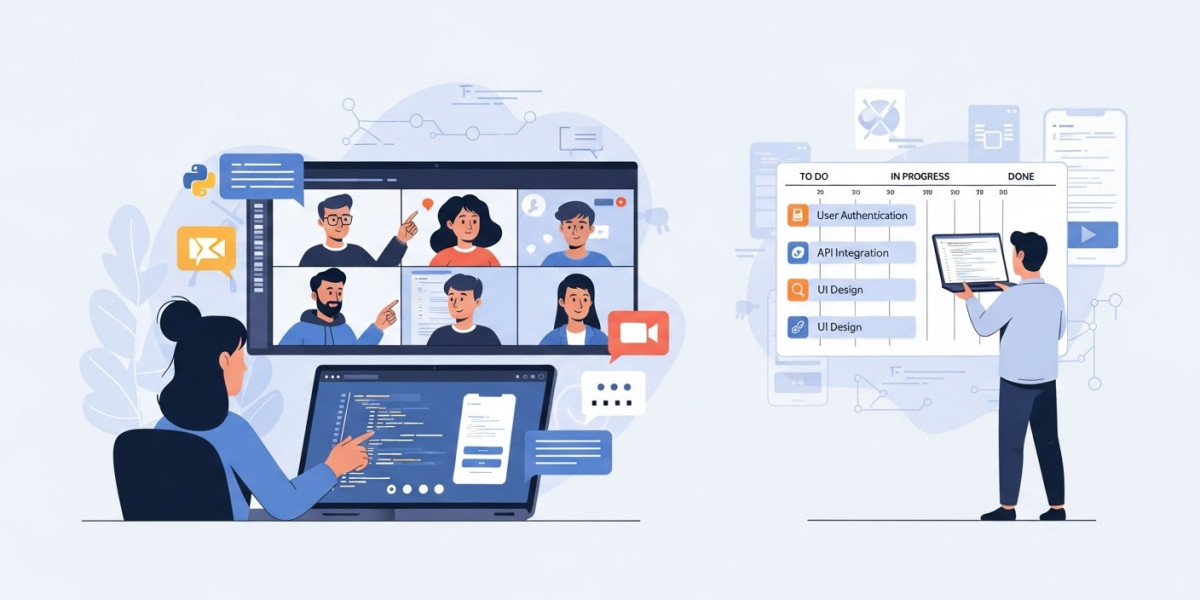
Set clear communication protocols from the start. Who's your primary contact? How often will you have check-ins? What channels will you use for different types of communication? Daily updates via Slack, weekly video calls, and monthly progress reviews create structure and accountability.
Establish overlapping work hours if you're dealing with significant time zone differences. Even a few hours of overlap each day makes real-time collaboration possible. Some teams work split shifts to create better overlap with clients.
Use project management tools that everyone can access. Platforms like Jira, Trello, or Asana keep everyone aligned on tasks, priorities, and progress. Good documentation prevents the I thought you were handling that scenarios that derail projects.
Be responsive yourself. Communication with remote developers is a two-way street. If you take days to answer questions or provide feedback, you're creating delays. Set expectations for your own response times and stick to them.
Don't assume anything. Different cultures and backgrounds mean people interpret information differently. Over-communicate rather than under-communicate. Repeat important points. Confirm understanding. Ask questions when things aren't clear.
Managing the Development Process
Active involvement keeps outsourced projects on track. You're not just paying someone to handle everything while you wait for the finished product.
Participate in sprint planning and reviews if using agile methodologies. Understanding what's being worked on and why helps you spot issues early. You can adjust priorities based on what you're learning.
Review progress regularly through working demos, not just status reports. Seeing actual functionality helps you catch problems before they become expensive to fix. Insist on frequent demonstrations of completed features.
Provide prompt feedback on everything you review. Developers can't improve what they don't clarify. Detailed, actionable feedback keeps projects moving in the right direction.
Test early and often. Don't wait until final delivery to start testing. Review features as they're completed. Report bugs immediately. This iterative approach to quality assurance prevents massive rework at the end.
Document decisions and changes. When you agree to modify features or adjust timelines, put it in writing. Email confirmations or shared documents prevent misunderstandings about what was decided and when.
Ensuring Quality Throughout Development
Quality doesn't happen by accident. It requires deliberate processes and standards.
Insist on code reviews. Good development teams review each other's code to catch issues and maintain standards. Ask about their code review process and who's responsible for approvals.
Require comprehensive testing. Unit tests verify that individual functions work correctly. Integration tests ensure components work together properly. User acceptance testing confirms the app meets requirements. All three matter.
Plan for security from the beginning. Security testing should happen throughout development, not just at the end. Ask about secure coding practices, data encryption, and how they handle common vulnerabilities.
Monitor performance regularly. Apps should be tested under various conditions and loads. If your app will have thousands of users, make sure it's tested for scalability before launch.
Use staging environments that mirror production. Testing in environments that match where your app will actually run catches issues that only appear in specific configurations.
Planning for Launch and Beyond
Development is just the beginning. Success requires planning for what happens after your app goes live.
Coordinate deployment carefully. App store submissions involve specific requirements and review processes. Your outsourcing partner should handle this smoothly, including preparing screenshots, descriptions, and addressing any rejection issues.
Plan for post-launch support. Bugs will appear in production despite thorough testing. You need a support arrangement that addresses critical issues quickly. Define response times for different severity levels.
Discuss maintenance and updates. Operating systems change. Devices evolve. Your app needs ongoing updates to remain compatible and secure. Establish whether your initial contract includes this or requires a separate maintenance agreement.
Consider knowledge transfer if you plan to eventually bring development in-house. Your outsourcing partner should document their work thoroughly and potentially train your internal team on the codebase.
Plan for feature expansion. Most successful apps evolve based on user feedback and business needs. Structure your relationship so you can easily continue working with the same team for future enhancements.
Avoiding Common Outsourcing Pitfalls
Learn from others' mistakes rather than making them all yourself.
Don't choose based solely on price. The cheapest option usually costs more in the long run due to poor quality, missed deadlines, or projects that have to be completely rebuilt. Focus on value, not just cost-effective app solutions.
Avoid vague requirements. Ambiguity leads to developers building what they think you want rather than what you actually need. Invest time in requirements definition upfront.
Don't skip regular check-ins. Going radio silent for weeks and then expecting perfection is unrealistic. Stay engaged throughout the process.
Resist the urge to constantly change direction. Some evolution is normal, but frequent major changes waste time and money. Make deliberate decisions and stick with them unless you have compelling reasons to change.
Don't ignore red flags. If communication is poor during sales conversations, it won't magically improve during development. If developers can't answer basic questions about their process, they likely don't have one. Trust your instincts when something feels off.
Making Outsourcing Work for Your Business
Outsourcing app development successfully requires careful planning, clear communication, and active management. It's not a way to avoid being involved in your project. It's a way to access expertise and resources you don't have internally while maintaining control over the direction and quality of your product.
The businesses that succeed with outsourcing treat their development partners as extensions of their team, not just vendors. They invest in the relationship, communicate openly, and work collaboratively to overcome challenges.
Start with a clear vision of what you want to build. Find a partner whose capabilities and approach match your needs. Establish strong processes for communication and quality control. Stay involved throughout development. Plan for the long term, not just the initial launch.
Done right, outsourcing transforms how quickly and cost-effectively you can bring products to market. It lets you compete with companies far larger than yours by giving you access to the same caliber of talent. The key is approaching it strategically rather than hoping for the best.
Ready to start your outsourcing journey? Begin with a thorough requirements definition, then research potential partners carefully. Take time to choose wisely rather than rushing into a relationship you'll regret. Your app's success depends on the foundation you build now.