
Marine telephone systems keep shipboard teams connected during routine tasks and emergencies. This guide explains marine common battery telephones, compares top options, and shows how to buy and service systems in Dubai, UAE.
TL;DR / Key takeaways
Marine telephone (common battery) uses a central 24 V DC supply for reliable wired voice links.
Choose intrinsically safe, IP-rated handsets for deck and hazardous-zone use.
Al Ghwasa supplies models, installation, and 24/7 service across UAE ports — see product page.
What is a marine common battery telephone?
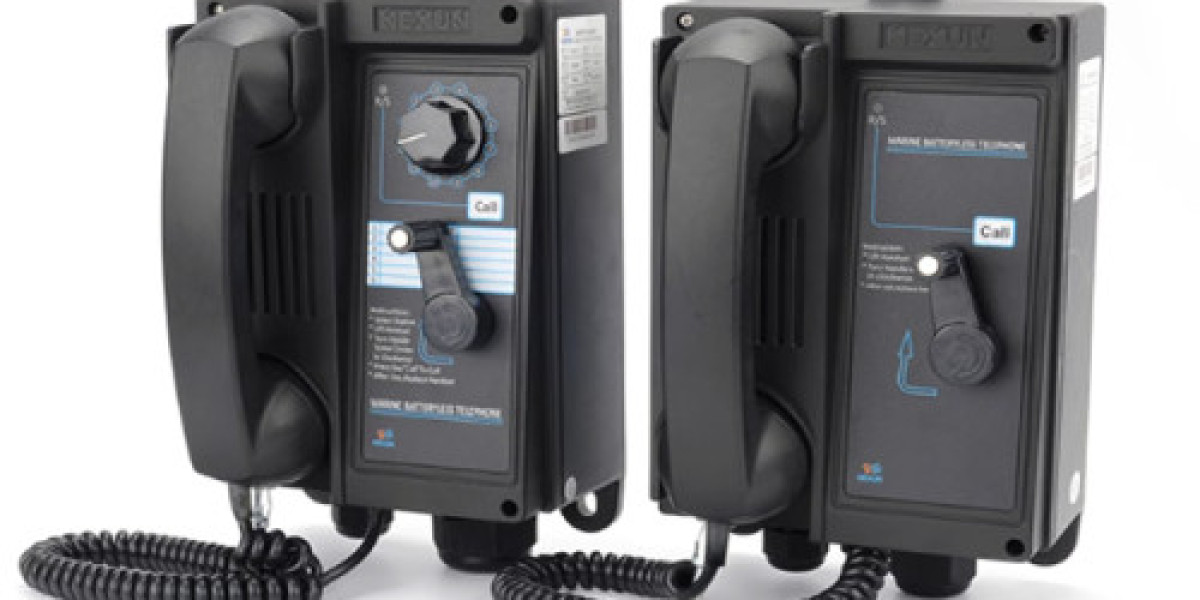
A marine telephone is a wired shipboard intercom powered from a central DC battery supply. It provides fixed-point voice communication between bridge, engine room, cargo control, and deck stations. A concise definition: a marine common battery telephone is a ship intercom system powered from a single 24 V DC source to ensure continuous voice links in harsh environments. Use cases include cargo operations on tankers and crane coordination on offshore support vessels.
Types and system topologies (1:1, 1:2, 1:3, multi-link)
Different topologies fit different operational needs.
1:1 connects two fixed stations for one-to-one calls, ideal for isolated control lines.
1:2 / 1:3 master lets a master station call two or three endpoints, common for bridge-to-engine links.
Multi-link supports many stations with group or selective calling for large vessels.
Compared to PABX or VoIP, common battery phones offer simpler wiring, lower power needs, and robust operation during electrical faults. *They remain preferred where reliability and intrinsic safety matter.*
Features, safety and technical specs to check
Focus on safety and durability when evaluating marine telephones.
Key specs include 24 V DC operation, weatherproof ratings (IP66 or better for exposed deck use), and intrinsic safety certification for hazardous zones. Look for temperature range, handset cable type, and approved terminal/relay boxes. Proper cabling and receptacles keep performance stable in vibration and salt spray. For rules and guidance, consult IMO or class society documentation such as the DNV maritime pages.
How to choose the right marine telephone for your vessel
Select systems by vessel type, zone, and operational profile.
Tankers: intrinsically safe 1:2 or multi-link systems for cargo control and pump rooms.
Offshore vessels: multi-link systems connecting deck, crane stations, and bridge.
Small merchant vessels: 1:1 or simple multi-station sets reduce cost and complexity.
Assess retrofit impact. Many systems reuse existing trunk cabling and add relay boxes to avoid full rewiring. Ask suppliers for wiring diagrams and a site survey.
Suppliers and service in Dubai / UAE
Buy locally for fast delivery and 24/7 support in UAE ports.
Al Ghwasa offers a range of marine common battery telephones, installation, and regional coverage across Dubai, Jebel Ali, Fujairah, and Abu Dhabi. See the Al Ghwasa marine common battery telephone product page for models and specs: Al Ghwasa – Marine Common Battery Telephone. For class and safety references, review guidance at the International Maritime Organization: IMO Safety and DNV maritime services: DNV Maritime.
Installation, maintenance and compliance
Installation must follow class and flag requirements.
Typical project steps: site survey, system design, supply, panel mounting, cabling, commissioning, and sea trials. Test voice clarity, loop continuity, and power failure behavior. Inspect telephones annually and test call functionality during routine drills. Class approval may be required for hazardous area devices; keep certificates on board.
Summary
Marine telephones provide simple, dependable communication on board ships. Choose intrinsically safe, IP-rated common battery systems when safety and reliability matter. For Dubai-based purchases and 24/7 support, Al Ghwasa supplies models, installation, and regional service across major UAE ports. Contact Al Ghwasa early in procurement to confirm model fit, lead times, and onsite support.
FAQ
Who invented the telephone?
Alexander Graham Bell is credited with patenting the telephone in 1876, though several inventors contributed to its development.
What was the first telephone like?
The first telephones converted sound into electrical signals using diaphragms and electromagnets; they were bulky and stove‑like compared to modern handsets.
Are marine telephones still used when ships have VoIP?
Yes. Ship operators keep common battery or sound-powered phones for redundancy and hazardous zones where VoIP risks power or network dependency.
How often should marine telephones be tested?
Test telephones at least once per year and after any major repair; more frequent checks are common during drydock or ship trials.