
Hydronic systems in Dubai lose performance when air is trapped in pipes. This article explains how air separators, especially inline air separators Dubai, fix that problem and which suppliers can deliver ASME-rated units quickly.
Key takeaways
Air separators remove entrained air and micro-bubbles to protect pumps and coils.
Inline and tangential designs suit different flow profiles and spaces.
Use ASME-rated, appropriately pressure-classed units for high-rise Dubai projects.
Local suppliers like Hotline Trading LLC and authorized Taco distributors supply parts and installation support.
What an air separator does
An air separator removes entrained air from closed-loop HVAC systems.
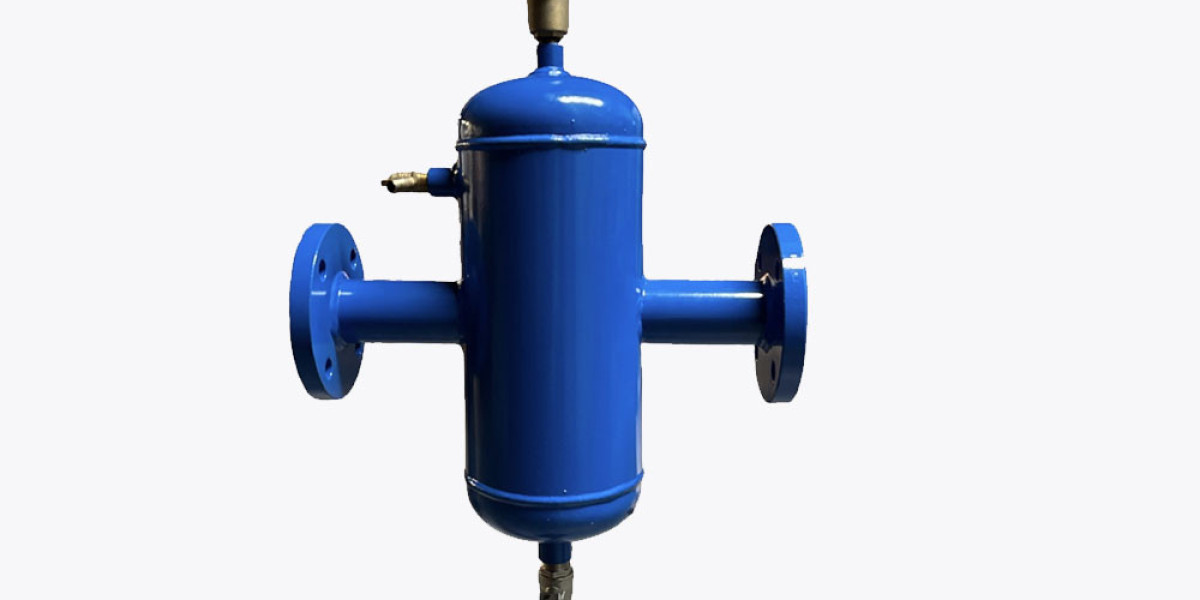
Definition: an air separator is a pressure vessel that separates and vents air and sometimes captures dirt using flow dynamics or internal media. Example: a chiller header with a separator sees improved heat transfer and quieter pumps. Key fact: Pall Ring-based units can remove micro-bubbles down to 18 microns.
Inline air separator: quick summary
Inline air separators mount directly in the pipe run and handle flow without changing routing.
Definition: an inline air separator uses internal geometry or media to slow flow and collect air for venting. Benefits include compact footprint and ease of retrofit. Typical Taco inline units cover a wide range of flows and pressures; see Taco for specs (tacocomfort.com).
Types: tangential vs inline vs air & dirt separators
Choose a type based on flow, particle load, and installation space.
Definitions and examples:
Tangential separators use a swirl to strip air. They work well on mains with stable flow.
Inline separators sit in-line and are ideal for confined piping and retrofit.
Air & dirt separators include media or baskets to trap solids as well as micro-bubbles.
Tip: select an air & dirt unit for systems with commissioning debris or high dirt risk.
Sizing and selection for Dubai projects
Sizing starts with system GPM and pressure class requirements.
Steps: determine system flow rate, match separator connection size, and choose a pressure rating that exceeds system maximum. Typical working pressures available locally start at 10 bar and go higher on request. Taco listings show standard classes up to 300 psi and high temperatures to 375°F.
Pressure ratings and materials
High-rise and district cooling systems need ASME-rated vessels and carbon steel construction.
Definition: ASME Section VIII vessels meet local code and insurance needs. Example: many suppliers in Dubai offer 10 bar as standard and bespoke 20 bar designs for tall buildings. *Always confirm hydrostatic and temperature ratings before purchase.*
Where to buy in Dubai and UAE
Local suppliers stock inline and air & dirt separators with supply and installation support.
Representative sources: Hotline Trading LLC provides ASME air & dirt separators, Pall Ring media options, and turnkey services. Taco distributors and local HVAC wholesalers also supply inline models and technical support (tacocomfort.com). For standards and design guidance consult ASHRAE resources (ashrae.org).
Installation best practices
Install separators where flow slows and vents are accessible.
Guidance: place separators on the supply side near pumps or at riser takeoffs. Orient vents vertically and plumb the automatic air vent to a safe drain. For air & dirt types, include a blow-down or access port for basket cleaning. Avoid installing upstream of frequent throttling valves that create turbulence.
Operation and maintenance
Regular checks keep separators effective and extend system life.
Routine: confirm vents operate, clean strainers per schedule, and inspect for corrosion. Frequency: inspect after commissioning and quarterly for first year, then semiannual checks for busy plants. *Document maintenance in the plant log for warranty and performance claims.*
Performance benefits and applications
Air separators improve energy use, reduce noise, and protect equipment.
Examples: chilled water plants, boiler loops, solar thermal arrays, and district cooling headers benefit from micro-bubble removal. Stat: advanced Pall Ring separators capture particles as small as 18–35 microns, reducing fouling and preserving heat transfer. This lowers pump work and reduces service calls.
Common mistakes to avoid
Poor sizing, wrong orientation, and missing venting reduce effectiveness.
Checklist: do not undersize for peak GPM, avoid hidden vent piping, and never omit a blow-down on air & dirt separators. Plan access for future maintenance during installation drawings.
Summary
Air separators, and inline variants in particular, are practical components that protect hydronic systems in Dubai. Choose ASME-rated products sized to flow and pressure, buy from local suppliers such as Hotline Trading LLC or authorized Taco distributors, and follow correct installation and maintenance to maximize performance.
FAQs
What is the difference between an air eliminator and an air separator?
An air eliminator vents only surface air pockets, while an air separator removes entrained micro-bubbles from flow.
When should I choose an air & dirt separator?
Choose air & dirt units if the system has commissioning debris or visible particulate contamination.
Can I retrofit an inline air separator into an existing loop?
Yes, inline models are designed for retrofit but confirm space, shut-off valves, and pressure rating first.
How often must I service an air & dirt separator?
Inspect after commissioning, then quarterly in year one, and at least twice yearly thereafter for busy systems.