
Introduction
In India, product quality and safety are taken very seriously. To ensure that products sold in the Indian market meet prescribed standards, the government has made BIS Certification mandatory for many categories. Whether you are a manufacturer or importer, understanding the BIS certification process is crucial to avoid legal issues and ensure smooth market entry.
In this blog, we will explain everything about BIS Certification, including the BIS Certificate full form, how to get BIS certification in India, the BIS certificate online process, and BIS license cost in simple and easy language.
BIS Certificate Full Form
The BIS Certificate full form is Bureau of Indian Standards Certificate. BIS is the national standards body of India, functioning under the Ministry of Consumer Affairs, Food and Public Distribution.
BIS certification confirms that a product conforms to Indian Standards (IS) related to quality, safety, and performance.
What is BIS Certification?
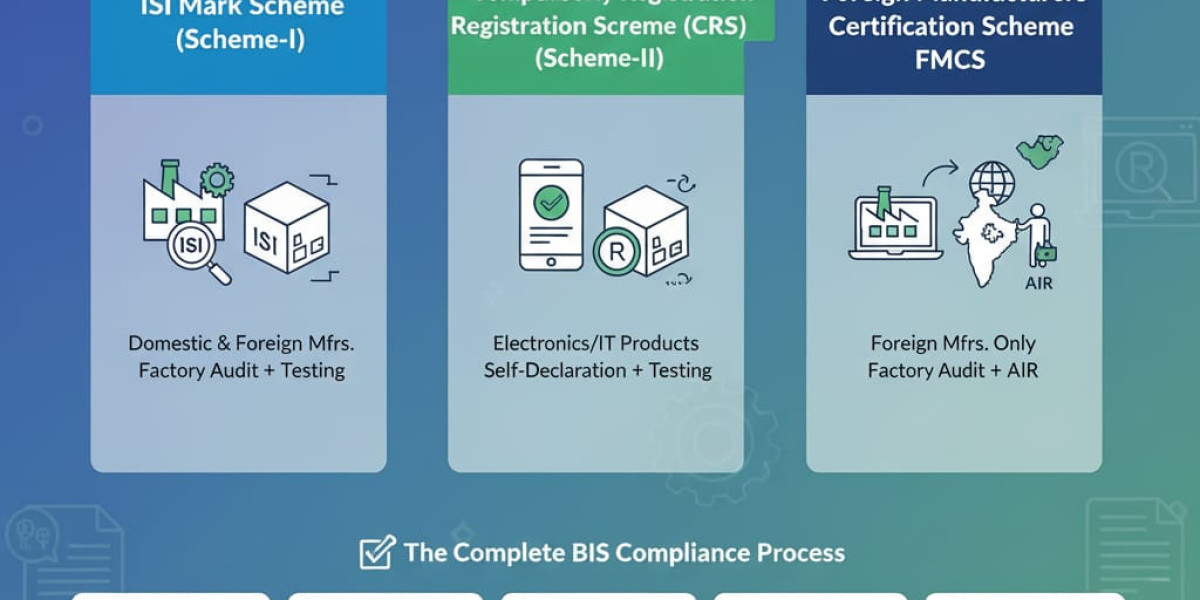
BIS Certification is a conformity assessment scheme under which BIS grants a license to manufacturers after verifying that their product meets the relevant Indian Standard.
Once certified, the manufacturer is allowed to use the ISI Mark on the product, which acts as a symbol of trust and quality for Indian consumers.
Why is BIS Certification Important?
BIS certification is important for several reasons:
Mandatory compliance for notified products
Ensures product safety and quality
Builds consumer trust and brand value
Required for customs clearance (for imports)
Avoids penalties, product seizure, and legal action
Without BIS certification, products under mandatory list cannot be manufactured, imported, or sold in India.
Products Covered Under BIS Certification
Some commonly regulated products include:
Electrical appliances (fans, irons, heaters, etc.)
Electronics and IT products
Cement and steel products
Household items
Automotive components
Medical and safety equipment
Each product category has a specific Indian Standard that must be followed.
Q11` How to Get BIS Certification in India
Many businesses often ask how to get BIS certification in India. Below is a simplified step-by-step process:
1. Identify Applicable Indian Standard
First, identify whether your product falls under mandatory BIS certification and determine the applicable IS standard.
2. Product Testing
Product samples must be tested in a BIS-recognized laboratory to ensure compliance with the relevant Indian Standard.
3. BIS Application Submission
After successful testing, the manufacturer must submit a BIS application along with required documents and test reports. This can be done through the BIS certificate online portal.
4. Factory Inspection
BIS officials conduct a factory inspection to verify:
Manufacturing process
Quality control systems
Testing facilities
Raw material handling
5. Grant of BIS License
If all requirements are met, BIS grants the certification license, allowing the use of the ISI mark.
BIS Certificate Online Application Process
The government has introduced the BIS certificate online system to make the process more transparent and efficient.
Benefits of online application:
Easy form submission
Online tracking of application status
Faster communication with BIS
Reduced paperwork
Despite the online system, technical documentation and compliance still require expert handling.
Documents Required for BIS Certification
Common documents required include:
Manufacturing license
Factory address proof
Quality control plan
Product test reports
Raw material details
Undertaking and declarations
Trademark registration (if applicable)
Document requirements may vary depending on the product and scheme.
BIS License Cost in India
One of the most common questions is about BIS license cost. The total cost depends on several factors:
Product category
Testing charges
Application fees
Inspection fees
Annual marking fees
Approximate cost range:
Basic government fees are affordable
Testing and compliance costs vary by product
Additional consultancy costs may apply
Since BIS license cost is not fixed, professional guidance helps in estimating accurate expenses and avoiding unnecessary delays.
Validity and Renewal of BIS Certification
Initial license validity: 1 to 2 years
Renewal can be done for up to 5 years
Regular surveillance audits may be conducted
Non-compliance with BIS norms can result in suspension or cancellation of the license.
Common Challenges in BIS Certification
Businesses often face challenges such as:
Incorrect product testing
Documentation errors
Delays in factory inspection
Misinterpretation of Indian Standards
These issues can significantly increase the time required to obtain certification.
Conclusion
BIS Certification is not just a legal requirement but also a mark of quality and trust in the Indian market. Understanding the BIS Certificate full form, knowing how to get BIS certification in India, applying through the BIS certificate online system, and estimating the BIS license cost are essential steps for any manufacturer or importer.
With proper planning and expert support, the BIS certification process can be smooth, cost-effective, and timely.