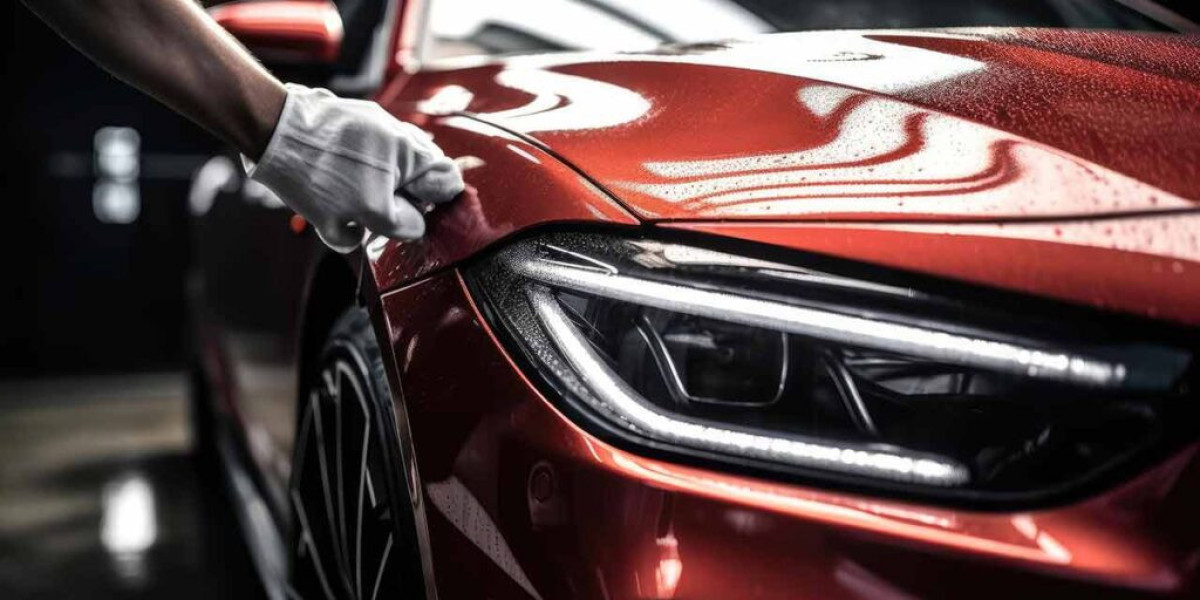

While a gleaming foam bath makes for a great visual, the true mastery of automotive aesthetics happens in the nuanced, often unseen steps that follow. The journey from clean to concours-ready is paved with specialized techniques that demand precision, advanced chemistry, and a deep understanding of automotive surfaces. This distinction between washing and true reconditioning defines the upper echelon of professional car detailing, where the goal shifts from mere cleaning to correction, preservation, and restoration.
Mastering the Art of Abrasion: Multi-Step Paint Correction
The most transformative service in a detailer’s arsenal is full-scale paint correction. This is not a one-step polish but a systematic, multi-stage process.
Stage-Specific Mastery: It begins with compounding—using a rotary or forced rotation polisher with a heavy-cut foam pad and abrasive compound to level the clear coat and remove deep defects. This is followed by polishing with a dual-action polisher and a finer polish to eliminate compounding haze. The final stage is refining with an ultra-fine finishing polish and a soft pad to achieve a flawless, hologram-free gloss. The true skill lies in selecting the exact combination of machine, pad, and product for each specific paint type (hard German clears vs. soft Japanese paints) and defect, a knowledge gained only through experience.
The Science of Coating: Ceramic and Graphene Application
Applying a long-term protective coating is a surgical procedure, not a simple wipe-on. The preparation is 90% of the work, culminating in a high-stakes application.
Environmental and Procedural Control: A true professional coating requires a climate-controlled, dust-free environment. After paint correction, the vehicle undergoes a chemical decontamination bath and a panel wipe with a prep solvent to ensure zero contaminants interfere with bonding. The application itself uses specialized suede or foam applicators, with the installer working in small, manageable sections under high-intensity LED or halogen lighting to instantly spot and level any high spots. For multi-layer coatings, a specific cure time between layers is mandated. Newer graphene-infused coatings add another layer of complexity, requiring precise cross-hatch application techniques for optimal conductivity and hydrophobics.
Engine Bay Aesthetics: The Functional Detail
Transforming a greasy, grimy engine bay into a showpiece requires a methodical, safety-first approach that few master.
The Protected Deep-Clean: Electronics are meticulously covered. A pH-neutral, biodegradable degreaser is agitated with an array of brushes—from long-handled wheel brushes for large areas to detailing brushes for tight spots around hoses and fittings. The rinse is performed with a low-pressure misting nozzle, never a pressure washer stream. After blow-drying with compressed air, the final step is dressing. The pro technique involves applying a water-based protectant, then buffing it after a few minutes to a satin, not glossy, finish that resists dust accumulation and looks factory-fresh, not overly dressed.
Advanced Interior Remediation: Beyond Extraction
For interiors, pros have solutions for what seems unsalvageable.
Fabric and Carpet Rejuvenation: This goes beyond a standard extractor. For set-in stains, a process called “spotteting” is used: injecting a targeted chemical (enzyme for organic, solvent for oil) directly into the stain, allowing dwell time, then agitating with a drill-mounted carpet brush before hot water extraction. For color correction on faded carpets or seats, professional-grade fabric dyes can be expertly applied with an airbrush to restore uniform color.
Leather Reconstruction: For cracked or torn leather, detailers perform minor repairs using leather filler compounds, which are sanded level once cured. The area is then color-matched using a leather dye system and blended seamlessly with the surrounding upholstery using an airbrush, making damage virtually disappear.
Precision Trim and Plastic Restoration
Faded black trim and bumpers are restored not with temporary dressings, but through two advanced methods. For lightly oxidized trim, a dedicated trim restorer product is applied and often heat-activated with a steamer or infrared lamp for deeper penetration. For severe cases, a process of light sanding and application of a permanent, dye-based trim coating (like Cerakote®) is used, which actually stains the plastic, restoring a like-new, durable finish for years.
Headlight Restoration: The Permanent Fix
Professional headlight restoration is a multi-hour wet-sanding process. After masking, the lens is sanded through a sequence of grits (often from 800 to 3000). It is then machine-polished. The critical, often-missed final step is the application of a true, UV-resistant clear coat, sprayed on just like automotive paint. This provides a permanent, yellowing-resistant barrier, unlike consumer wipe-on sealants that fail quickly.
The Final Pass: Light-Based Inspection
The hallmark of a true pro is the final audit. Using a combination of sunlight, 5000K LED scanning boards, and swirl-finder halogen lamps, the detailer performs a micrometer-perfect inspection. Any remaining imperfections are marked and corrected. This ensures the vehicle doesn’t just look good in the soft light of the shop, but under the harsh, revealing sun.
Conclusion
Advanced detailing is a technical craft that blends the precision of a chemist with the hands of a surgeon and the eye of an artist. It’s a commitment to solving automotive aesthetic problems at their root, not just masking them. These techniques deliver not just a clean car, but a preserved asset, a safer vehicle, and a deeply satisfying restoration. For the discerning owner who demands this level of meticulous care without disruption, this entire suite of advanced services is now accessible through elite mobile car detailing providers, who transport this depth of expertise and equipment directly to the client.
Frequently Asked Questions
What’s the biggest difference between a pro and DIY paint correction?
The three key differences are: 1) Measurement: Pros use paint thickness gauges to work safely. 2) Product Selection: They have access to professional-grade compounds and polishes not available at retail. 3) Lighting & Inspection: They use specialized lights to see defects the human eye normally misses, ensuring a complete correction.
Can ceramic coatings be repaired if scratched?
Yes, to a degree. Light marring in the coating itself can often be polished out with a fine finishing polish, as you would polish the clear coat. However, this removes a tiny amount of the coating. A deep scratch that penetrates through the coating into the clear coat would require a spot repair of both the paint and the coating in that specific area.
Is it safe to clean the engine bay of a modern, electronics-packed car?
Yes, with the correct protocol. Professional detailers treat it as a sensitive operation. They use low-pressure water, cover critical electronic modules, air intakes, and alternators with waterproof bags, and avoid direct streams on any sensors or fuse boxes. Using a moisture-displacing spray on connectors after drying adds a layer of safety.
How do you permanently restore faded black plastic trim?
Temporary dressings just coat the surface. For a permanent fix, professionals use a two-part process: First, a thorough cleaning and light sanding to open the plastic’s pores. Second, application of a ceramic or polymer-based trim coating specifically formulated for plastics. This product chemically bonds to and stains the trim, restoring the original color for 1-2 years, unlike dressings that wash off.
Why does professional headlight restoration last longer than a kit?
Consumer kits typically only polish the outer layer of oxidized plastic. Professionals wet-sand to remove all the damaged, UV-degraded plastic, then apply a true, liquid clear coat (often a 2K urethane) that is sprayed on and cures to a hard, UV-resistant layer. This recreates the original factory barrier, while kits leave the plastic exposed to quickly re-oxidize.