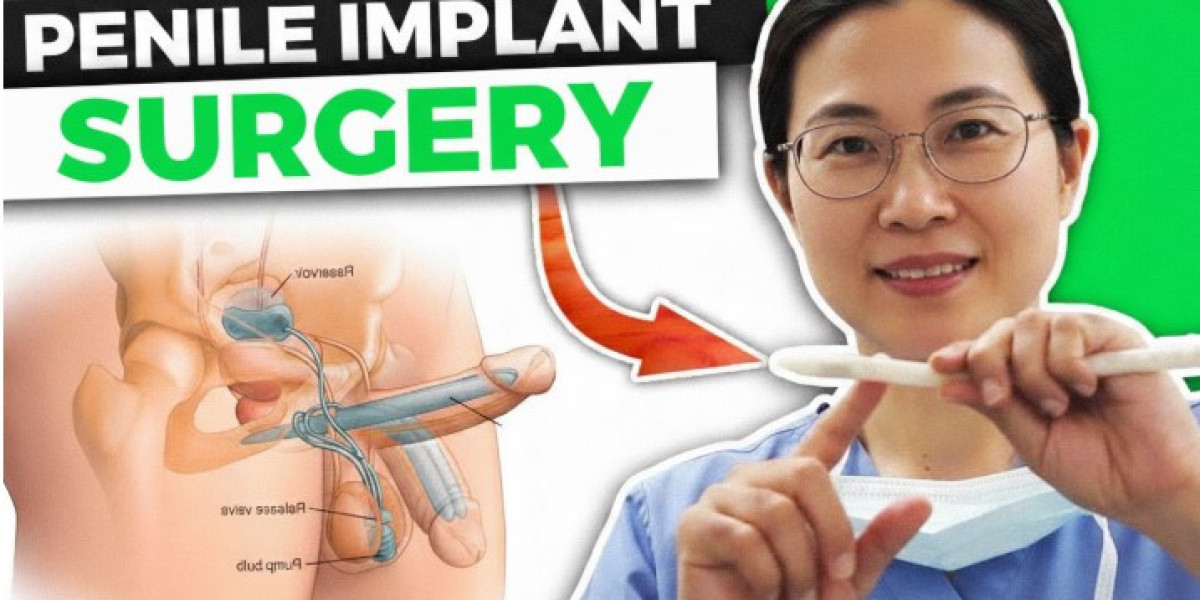

Erectile dysfunction (ED) is a common condition affecting millions of men worldwide. While medications such as Viagra, Cialis, and other treatments work for many individuals, some men do not respond to these therapies. For such cases, a penile implant can be a highly effective, long-term solution.
Penile implant surgery has helped restore confidence, intimacy, and quality of life for men struggling with severe erectile dysfunction. This article provides a comprehensive overview of penile implants, including types, procedure details, benefits, risks, recovery, and frequently asked questions.
What Is a Penile Implant?
A penile implant, also known as a penile prosthesis, is a medical device surgically placed inside the penis to allow men with erectile dysfunction to achieve an erection suitable for sexual intercourse.
Unlike medications that increase blood flow temporarily, a penile implant provides a mechanical solution that produces a firm erection on demand. It does not increase sexual desire (libido) but enables physical performance when arousal occurs.
Penile implants are usually recommended for men who:
Have severe erectile dysfunction
Do not respond to oral ED medications
Cannot tolerate side effects of medications
Have Peyronie’s disease with ED
Have nerve damage from diabetes or prostate surgery
Types of Penile Implants
There are two main types of penile implants: inflatable implants and malleable (semi-rigid) implants.
1. Inflatable Penile Implants
This is the most commonly used type and offers the most natural-looking erection.
Three-Piece Inflatable Implant
It consists of:
Two cylinders placed inside the penis
A fluid reservoir placed in the abdomen
A pump placed in the scrotum
When the pump is squeezed, fluid moves from the reservoir into the cylinders, creating an erection. Pressing a release valve returns the fluid, making the penis flaccid again.
Advantages:
Most natural erection
Better control over firmness
Flaccid state looks natural
Higher satisfaction rates
Two-Piece Inflatable Implant
This model includes:
Cylinders in the penis
Pump with built-in reservoir in the scrotum
It is slightly simpler than the three-piece system but may not produce as firm an erection.
Advantages:
Fewer components
Suitable for men with prior abdominal surgeries
2. Malleable (Semi-Rigid) Penile Implant
This implant consists of bendable rods inserted into the penis. The penis remains semi-rigid at all times and can be manually positioned upward for intercourse or downward for concealment.
Advantages:
Simpler surgery
Lower mechanical failure rate
Easier to use
Less expensive
Disadvantages:
Penis is always somewhat firm
Less natural appearance
May be harder to conceal
Who Is a Good Candidate?
Penile implants are usually recommended when other treatments have failed. Good candidates typically include:
Men with long-term ED unresponsive to medication
Patients with diabetes-related ED
Men who have undergone prostate cancer surgery
Individuals with spinal cord injuries
Patients with severe Peyronie’s disease
However, penile implants may not be suitable for men who:
Have untreated urinary tract infections
Have active infections elsewhere in the body
Have uncontrolled diabetes
Are not healthy enough for surgery
A thorough medical evaluation is necessary before surgery.
How Does the Penile Implant Procedure Work?
Penile implant surgery is usually performed under general or spinal anesthesia and typically takes 1–2 hours.
Step-by-Step Overview:
Anesthesia Administration
The patient is given general or spinal anesthesia.Incision
A small incision is made either at the base of the penis, in the scrotum, or lower abdomen.Placement of Cylinders
Cylinders are inserted into the erectile chambers (corpora cavernosa).Placement of Pump and Reservoir (for inflatable types)
The pump is positioned in the scrotum, and the reservoir is placed in the abdomen.Closure
The incision is closed with sutures.
Most patients can go home the same day or within 24 hours.
Recovery After Penile Implant Surgery
Recovery is generally straightforward but requires patience.
Immediate Post-Surgery:
Swelling and bruising are common
Mild to moderate pain (managed with medication)
Antibiotics to prevent infection
Avoid heavy activity for 4–6 weeks
When Can You Resume Sexual Activity?
Typically after 4–6 weeks, once healing is complete and the doctor confirms readiness.
Patients are usually taught how to operate the device after swelling decreases.
Benefits of Penile Implants
Penile implants offer numerous benefits, especially for men with severe ED.
1. High Satisfaction Rate
Studies show satisfaction rates of 85–95% among patients and their partners.
2. Long-Term Solution
Implants can last 10–20 years, depending on the type and care.
3. Natural Spontaneity
No need to plan intercourse around medication timing.
4. Improved Confidence
Restores sexual confidence and improves relationships.
5. Works Regardless of Nerve Damage
Unlike medications, implants do not depend on nerve function.
Risks and Possible Complications
As with any surgery, penile implants carry potential risks.
1. Infection
Occurs in 1–3% of cases (higher in diabetic patients). Severe infections may require removal.
2. Mechanical Failure
Modern implants are durable, but mechanical problems can occur over time.
3. Pain
Temporary discomfort after surgery.
4. Device Malfunction
May require revision surgery.
5. Erosion or Tissue Damage
Rare but possible complication.
Choosing an experienced urologist significantly reduces risks.
Does a Penile Implant Affect Sensation or Orgasm?
A penile implant does not affect:
Sexual desire (libido)
Ability to orgasm
Ejaculation (if previously possible)
It only restores the ability to achieve an erection.
Men who had prostate removal may already have changes in ejaculation, but this is unrelated to the implant.
How Long Do Penile Implants Last?
On average:
10–15 years for most implants
Some last over 20 years
Mechanical survival rate after 10 years is about 60–80%
Revision surgery may be needed eventually.
Cost of Penile Implant Surgery
Costs vary depending on country, hospital, and implant type.
Estimated ranges:
United States: $15,000 – $25,000
Europe: €10,000 – €20,000
Asia: $6,000 – $12,000
Many insurance plans cover penile implant surgery when medically necessary.
Penile Implant vs Other ED Treatments
| Treatment | Effectiveness | Permanence | Spontaneity |
|---|---|---|---|
| Oral Medications | Moderate | Temporary | Limited |
| Injections | High | Temporary | Planned |
| Vacuum Devices | Moderate | Temporary | Limited |
| Penile Implant | Very High | Long-Term | High |
For men who fail conservative treatments, penile implants offer the highest reliability.
Psychological Impact
Erectile dysfunction can cause:
Anxiety
Depression
Low self-esteem
Relationship stress
Penile implant surgery often leads to significant improvement in psychological well-being and relationship satisfaction.
Counseling before and after surgery may enhance outcomes.
Frequently Asked Questions (FAQs)
Is the surgery painful?
Pain is usually manageable with medications and subsides within a few weeks.
Will people know I have an implant?
No. The implant is completely internal and invisible.
Can the implant increase penis size?
No. It restores previous erectile length but does not increase natural size.
Can the implant be removed?
Yes, but removal may damage natural erectile tissue permanently.
Is the implant noticeable during intercourse?
Partners usually report a natural feel, especially with inflatable implants.
Advances in Penile Implant Technology
Modern implants feature:
Antibiotic coatings to reduce infection
Improved pump designs
Enhanced durability
Better concealment
Technology continues to evolve, increasing safety and patient satisfaction.
Conclusion
A penile implant is a highly effective, long-term solution for men with severe erectile dysfunction who do not respond to other treatments. With high satisfaction rates, improved confidence, and reliable performance, it can significantly enhance quality of life.
Although surgery carries some risks, modern implants are safe, durable, and discreet when performed by experienced surgeons.
Men considering penile implant surgery should consult a qualified urologist for evaluation, discuss all treatment options, and understand both benefits and potential risks before making a decision.
Restoring sexual function is not just about performance—it’s about confidence, emotional well-being, and maintaining healthy relationships. For many men, a penile implant provides exactly that.