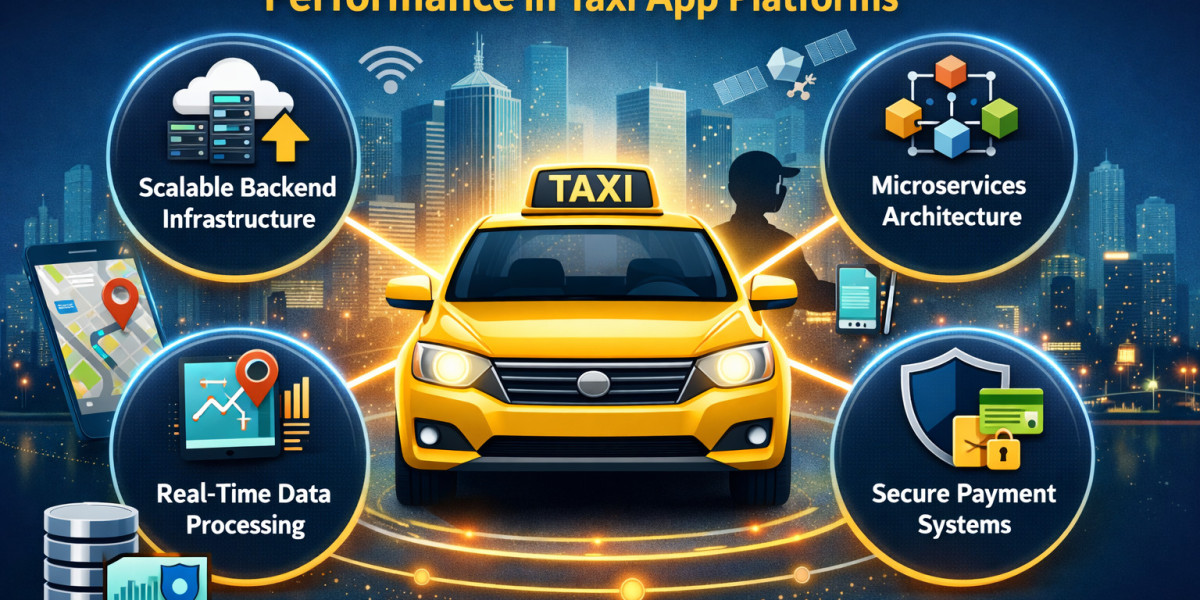

Modern mobility platforms depend heavily on architectural decisions that determine system responsiveness, scalability, and operational stability. Taxi platforms, in particular, must process real time location updates, pricing calculations, driver availability, and payment transactions simultaneously. These technical requirements demand carefully planned infrastructure and software design patterns. A well structured architecture ensures that performance remains consistent even during peak demand periods, while also supporting future feature expansion and platform integrations across diverse mobility ecosystems and device environments.
Scalable backend infrastructure for real time ride flow management
The backend layer forms the operational foundation of any taxi platform. It coordinates ride requests, driver matching, route computation, and transaction workflows. Without horizontal scalability, performance bottlenecks quickly emerge during surge traffic periods such as rush hours or large public events.
A typical taxi booking app development company prioritizes distributed backend infrastructure built on containerized services and auto scaling compute environments. This allows systems to dynamically allocate resources when ride demand spikes.
Key infrastructure considerations include:
Load balancing across ride matching services
Distributed caching for frequently accessed ride data
Event driven job queues for dispatch workflows
Fault tolerant service replication
Stateless service design plays an important role in improving resilience. When ride request services remain stateless, instances can be replaced or scaled without affecting user sessions. Infrastructure monitoring systems continuously track CPU utilization, request latency, and queue depth to trigger scaling policies automatically.
These backend patterns ensure ride allocation logic remains responsive even under heavy concurrency.
Microservices architecture enabling modular mobility services
Microservices architecture has become the dominant model for mobility platforms because it allows independent scaling and deployment of functional modules. Instead of maintaining a monolithic system, services such as driver onboarding, pricing, notifications, and payments operate independently.
A taxi booking app development company often separates core services into bounded domains to minimize cross service dependencies. This reduces the risk of cascading failures across the platform.
Typical microservices in taxi ecosystems include:
Driver management service
Passenger account service
Ride dispatch service
Payment processing service
Notification service
Analytics service
Service isolation also accelerates release cycles because development teams can update individual modules without redeploying the entire platform. For startups experimenting with a white label taxi app, modular architecture allows rapid customization without affecting dispatch reliability.
API contracts and service discovery mechanisms ensure stable communication across services, while circuit breakers prevent failures from spreading across the system.
Database design strategies for high volume trip records systems
Taxi platforms generate large volumes of transactional and geospatial data. Database architecture must support high write throughput, quick retrieval, and reliable historical storage.
Relational databases typically handle structured transaction records such as billing, driver payouts, and ride receipts. Meanwhile, NoSQL databases often store location streams, driver availability states, and session information.
Data partitioning strategies improve performance significantly. Common approaches include:
Geographic sharding by service region
Time based partitioning of trip logs
Read replicas for analytics queries
In memory caching layers for active rides
A taxi booking app development company may implement polyglot persistence, combining multiple database technologies optimized for different workloads.
Index optimization is particularly important for geospatial queries. Efficient indexing enables rapid driver proximity searches, which directly affects ride allocation latency. Historical ride data pipelines also feed machine learning systems used for demand forecasting and route optimization.
Well designed database schemas reduce contention and ensure consistent response times across millions of ride transactions.
Low latency location tracking using streaming technologies frameworks
Real time GPS tracking is one of the most performance sensitive components of a taxi platform. Driver coordinates must be transmitted, processed, and visualized with minimal delay to maintain accurate dispatch decisions.
Streaming technologies such as message brokers and event pipelines enable continuous ingestion of location updates. Instead of relying on synchronous database writes, systems process location data asynchronously through streaming pipelines.
This architecture supports:
High frequency coordinate updates
Real time driver availability tracking
Dynamic route recalculation
Surge pricing adjustments
A taxi booking app development company typically uses publish subscribe messaging models to decouple GPS ingestion from dispatch logic. This prevents tracking workloads from slowing ride allocation services.
Edge optimization techniques, such as coordinate compression and adaptive update intervals, further reduce network overhead. These optimizations become especially important in regions with inconsistent mobile connectivity.
Streaming pipelines allow mobility systems to maintain accurate driver visibility without compromising platform responsiveness.
Security architecture protecting payments and rider data transactions
Security architecture in taxi platforms must protect financial transactions, personal identity data, and real time location information. Because mobility apps handle payment credentials and travel history, they are high value targets for cyber threats.
Critical security controls include:
End to end encryption of ride transactions
Tokenized payment processing workflows
Role based access control across services
Multi factor authentication for driver accounts
Continuous vulnerability monitoring
Payment services are typically isolated within secure service boundaries to minimize exposure risk. Secure API gateways enforce authentication policies before requests reach internal systems.
For teams evaluating the cost to build taxi app infrastructure, security compliance often represents a substantial portion of engineering effort. Regulatory requirements related to payment standards and data protection must be integrated into the architecture from the beginning.
Security logging and anomaly detection systems monitor suspicious activity patterns, helping platforms respond quickly to potential breaches.
Cloud deployment models supporting demand based scaling operations
Cloud native deployment enables taxi platforms to handle unpredictable demand patterns efficiently. Auto scaling infrastructure ensures the system remains stable whether processing hundreds or thousands of concurrent ride requests.
Container orchestration platforms manage service deployment, health checks, and failover operations. These tools simplify infrastructure management while improving service reliability.
Common deployment strategies include:
Multi region failover environments
Blue green deployment pipelines
Canary releases for dispatch updates
Automated rollback mechanisms
A taxi booking app development company often implements infrastructure as code to maintain consistent deployment configurations across environments.
For early stage mobility startups using MVP app development services, cloud deployment reduces the need for large upfront infrastructure investments. Resources can scale gradually as user adoption increases.
Elastic compute allocation ensures the dispatch system remains responsive even during unexpected demand spikes.
API gateway orchestration across driver rider services ecosystems
API gateways act as centralized entry points for client applications, managing request routing, authentication, and rate limiting. They simplify communication between mobile apps and distributed backend services.
Gateway orchestration provides several performance benefits. It reduces redundant network calls, enforces consistent authentication policies, and aggregates responses from multiple services into single client payloads.
Important gateway responsibilities include:
Request throttling during surge demand
Authentication token validation
Service routing and aggregation
Logging and monitoring integration
A taxi booking app development company typically integrates caching layers within the gateway to accelerate frequently requested data such as fare estimates or driver profiles.
Gateway analytics also provide insights into traffic patterns and service latency. These metrics help engineering teams identify bottlenecks before they affect user experience.
API gateways serve as a performance control layer between mobile clients and backend microservices.
Observability practices improving reliability of taxi platforms
Observability ensures engineering teams can detect, diagnose, and resolve performance issues quickly. Taxi platforms depend on real time operations, making monitoring systems essential for reliability.
Modern observability stacks combine metrics, logs, and distributed tracing. Together, these signals provide visibility into service interactions across the platform.
Core observability components include:
Real time latency monitoring dashboards
Distributed tracing across dispatch workflows
Centralized log aggregation systems
Automated alerting for service anomalies
A taxi booking app development company often integrates telemetry instrumentation directly into ride lifecycle events to measure performance accurately.
Monitoring driver matching latency, payment processing time, and GPS update delays helps maintain system health. Predictive alerting systems can detect performance degradation before it impacts riders or drivers.
Observability transforms operational troubleshooting from reactive debugging into proactive reliability engineering.
Conclusion
Architecture decisions determine how effectively mobility platforms handle growth, reliability challenges, and real time operational complexity. From backend scalability and streaming pipelines to API orchestration and observability systems, each component contributes to consistent ride dispatch performance. Designing these systems with modularity, security, and scalability in mind allows platforms to evolve alongside changing transportation demands. Strong architectural planning ultimately ensures stable user experiences, efficient driver coordination, and sustainable long term platform operation.