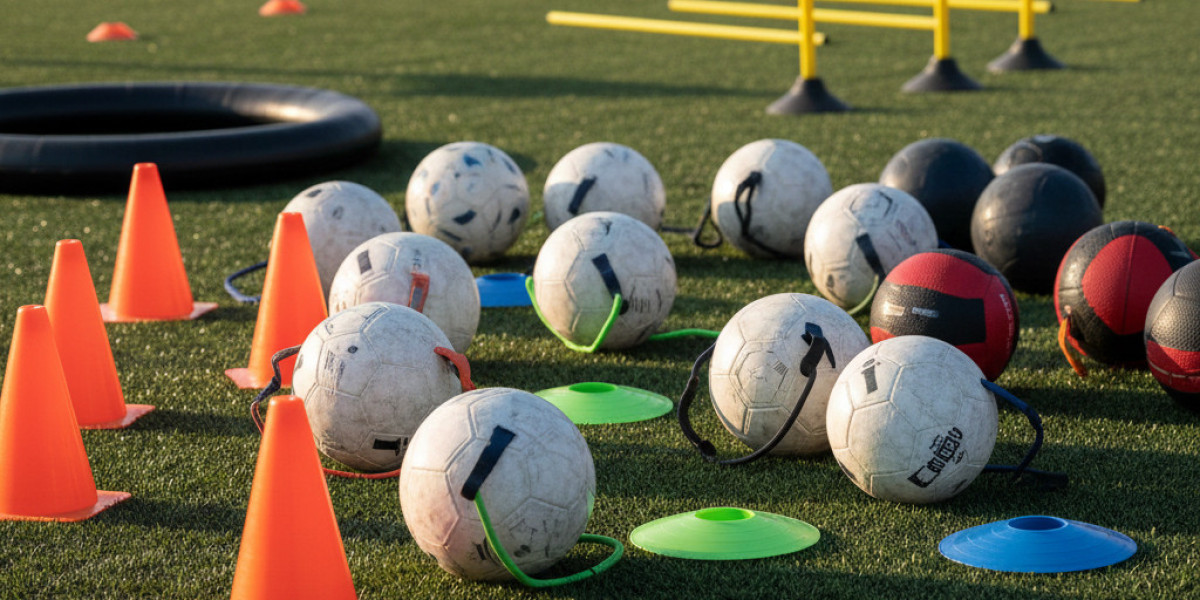

Just a reliable football training ball that survives long sessions, hard kicks, and daily practice.
Think about it.
The ball is the first thing a young player touches and the last thing a professional leaves on the field. If the ball is too heavy, too light, poorly stitched, or uneven, it affects every pass, every shot, and every drill.
That is why choosing the right football training balls matters more than most players realize.
This guide will help you understand everything—from sizes and materials to durability and performance—so you can choose the best training ball for serious development.
What Are Football Training Balls?
Football training balls are designed for daily practice, not just matches. They are built to handle:
Repeated kicks
Rough surfaces
Long training sessions
Youth academy drills
School or club practice
Unlike match balls, training balls focus on durability and consistency instead of premium match-day features.
A good training ball should:
Keep its shape
Hold air well
Feel consistent during touches
Survive tough conditions
Why the Right Training Ball Makes a Big Difference
Many beginners use any ball they find. But serious coaches know that the right ball improves skill development.
Here is how:
Better First Touch
A balanced ball helps players control passes more easily.
More Accurate Passing
Consistent weight and shape lead to better passing accuracy.
Stronger Shooting Technique
Players learn proper striking technique when the ball behaves predictably.
Increased Confidence
When the ball responds correctly, players feel more confident during drills.
Key Features to Look for in Football Training Balls
Not all training balls are the same. Before buying, check these important features.
1. Durable Outer Material
Most training balls use:
TPU (Thermoplastic Polyurethane)
PVC (Polyvinyl Chloride)
TPU offers:
Softer touch
Better control
Higher durability
PVC offers:
Lower price
Good resistance to rough surfaces
2. Strong Stitching
Good training balls have:
Machine stitching for durability
Reinforced seams
Even panel alignment
Poor stitching leads to:
Shape loss
Air leakage
Short lifespan
3. Reliable Bladder
The bladder inside the ball holds the air.
Two common types:
Butyl bladder
Excellent air retention
Requires less pumping
Ideal for training balls
Latex bladder
Softer feel
Used in premium balls
Needs frequent inflation
4. Consistent Weight
A proper training ball should meet official size and weight standards.
This ensures:
Realistic training experience
Smooth transition to match play
Football Training Ball Sizes Explained
Choosing the correct size is critical, especially for young players.
Size 3
For ages 6 to 8
Lightweight and easy to control
Ideal for beginner drills
Size 4
For ages 8 to 12
Medium weight
Used in youth leagues
Size 5
For ages 13 and above
Official match size
Used by teenagers and adults
Using the wrong size can slow down skill development.
Types of Football Training Balls
Different training environments require different ball types.
All-Purpose Training Balls
Used for general drills
Suitable for clubs and schools
Durable and affordable
Hard-Ground Training Balls
Built for rough surfaces
Strong outer layer
Longer lifespan on concrete or dusty fields
Soft-Touch Training Balls
Designed for technical drills
Better for ball control practice
Used in academies
Futsal Training Balls
Smaller and heavier
Reduced bounce
Ideal for indoor training
Training Balls vs Match Balls: What’s the Difference?
Many players think match balls are always better. That is not true.
Training Balls
Built for durability
Used daily
Affordable
Slightly heavier feel
Match Balls
Designed for performance
Lighter and more responsive
Used only during games
Higher cost
For daily practice, training balls are the smarter choice.
How Coaches Choose the Right Football Training Balls
Experienced coaches look beyond price. They focus on performance and reliability.
Here is what they check:
Proper size for age group
Strong stitching
Good air retention
Balanced weight
Surface suitability
They often choose balls that:
Last an entire season
Maintain shape after heavy use
Provide consistent touch
Common Mistakes When Buying Training Balls
Many buyers make simple mistakes that cost them money.
Choosing the Cheapest Option
Low-quality balls wear out quickly.
Ignoring Ball Size
Using the wrong size affects technique.
Not Checking Stitching
Poor seams lead to early damage.
Buying Match Balls for Training
Match balls wear out fast during daily drills.
How Many Training Balls Does a Team Need?
The number depends on team size and training style.
Small Team (8–10 players)
At least 5 to 6 balls
Medium Team (12–15 players)
Around 8 to 10 balls
Full Squad (18–22 players)
12 to 15 balls
More balls mean:
Less waiting
Faster drills
Better engagement
Best Surfaces for Football Training Balls
Different surfaces affect ball life.
Grass Fields
Ideal for most training balls
Less wear and tear
Artificial Turf
Slightly rougher than grass
Use durable TPU balls
Hard Ground
Very rough surface
Requires reinforced training balls
Using the wrong ball on rough surfaces reduces its lifespan.
How to Maintain Football Training Balls
Proper care extends the life of any training ball.
Simple Maintenance Tips
Keep balls properly inflated
Store in a cool, dry place
Clean after muddy sessions
Avoid sharp or rocky surfaces
Check air pressure weekly
A well-maintained ball lasts much longer.
Signs You Need to Replace a Training Ball
Even the best balls do not last forever.
Watch for these signs:
Ball loses shape
Air leaks frequently
Surface cracks or peels
Uneven bounce
Loose stitching
When these appear, it is time for a replacement.
Why Quality Football Training Balls Matter for Skill Development
Training is about repetition.
Players may touch the ball hundreds of times in a single session.
If the ball is poor quality:
Passes feel unpredictable
Shots lose accuracy
Players struggle with control
But with a reliable training ball:
Technique improves faster
Confidence grows
Practice becomes more effective
That is why clubs invest in quality training equipment.
Choosing the Right Football Training Balls for Schools and Clubs
When buying for a group, consider:
Age group of players
Training frequency
Playing surface
Budget
Durability needs
Schools usually choose:
Affordable, durable balls
Size 3 or 4 for younger students
Clubs often choose:
Higher-quality TPU balls
Size 5 for senior players
What Makes a Good Football Training Ball Brand
A trusted brand focuses on:
Consistent quality
Strong materials
Reliable stitching
Accurate weight
Long-term durability
Good brands test their balls under real training conditions before selling them.
Why Buy Football Training Balls from a Specialist Sports Store
Buying from a specialist store ensures:
Authentic products
Proper size options
Durable materials
Expert guidance
Reliable performance
Specialist stores understand the needs of:
Schools
Football academies
Amateur clubs
Professional teams
Final Thoughts: The Right Training Ball Builds Better Players
Great players are not made in stadiums.
They are made on dusty grounds, school fields, and training pitches.
And through all those sessions, one thing stays constant:
the football training ball.
A good training ball:
Improves technique
Builds confidence
Lasts longer
Saves money over time
Whether you are a coach, player, school, or club, choosing the right football training ball is one of the smartest decisions you can make.
Invest in quality. Train with purpose.
Because every great goal begins with a simple, well-chosen ball.