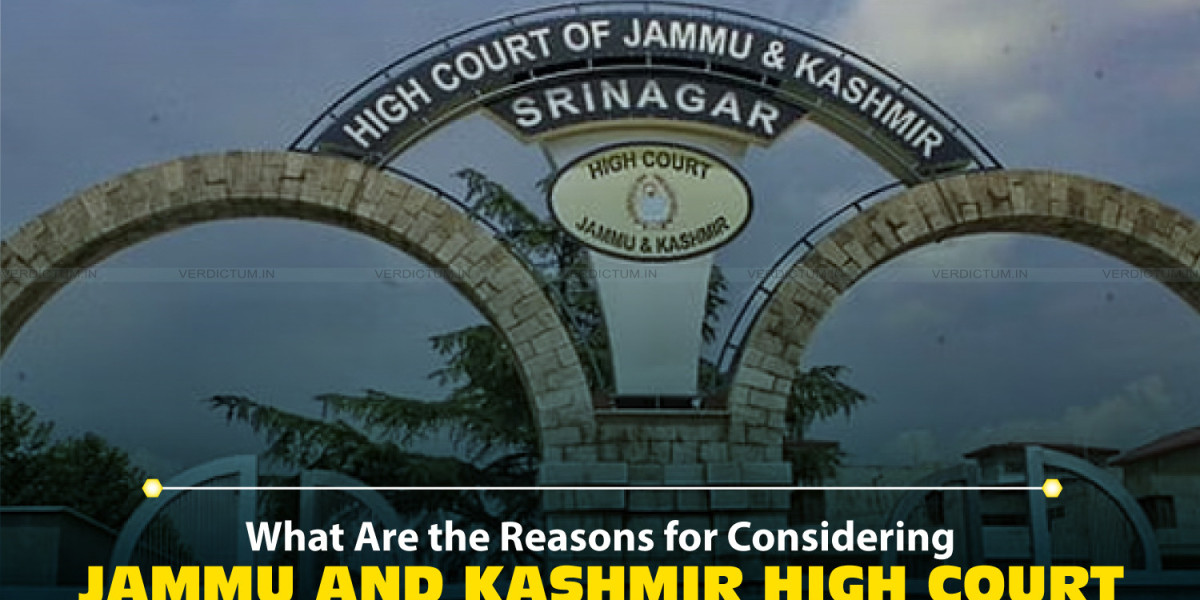

The Jammu and Kashmir High Court in India stands out as another pillar of Legal system under the Indian Constitution. After the abrogation of article 370,the state of Jammu and Kashmir has restored peace and brotherhood that was lost in the shillings from both sides. The Jammu and Kashmir High Court is distinctive in it’s judicial history, historical tradition and constitutional significance. The court, which serves the Union Territories of Jammu & Kashmir and Ladakh, is essential to maintaining the rule of law in an area with high levels of social, political, and legal sensitivity. Its popularity stems from a number of aspects, including its judicial contributions, historical background, and role in defending constitutional ideals.
1. Unique Historical and Constitutional Significance
The High Court of Jammu and Kashmir was founded in 1928 by the Maharaja Of Jaammu and Kashmir.Following independence, the court operated under unique constitutional provisions, especially Article 370, which provided Jammu and Kashmir with a unique judicial system for many years. The High Court's flexibility and institutional strength were seen in its seamless transition into the new constitutional framework even after Article 370 was repealed in 2019. Among Indian High Courts, it is significant both legally and constitutionally due to its uncommon historical development.
2. Jurisdiction Over Sensitive and Strategic Regions
The Court of Jammu and Kashmir is also responsible to take various decisions pertaining to handle situations involving public order, human rights, land disputes, national security, and constitutional concerns. By upholding justice while preserving the integrity of the constitution and the interests of the country, the Jammu and Kashmir High Court has continuously shown moderation. This duty highlights the institution's credibility and raises its prestige.
Read More: Latest News and Updates from Punjab & Haryana High Court
3. Strong Contribution to Constitutional Law
The Jammu and Kashmir High Court is known for rendering various significant rulings on administrative law, civil freedoms, constitutional interpretation, and service issues over the years.
The constitutional transition has led to state re organization and structuring the Union Territory of Ladakh also falls under the jurisdiction of the Jammu and Kashmir High Court.The High Court of Jammu and Kashmir is also responsible for establishing administrative responsibility, safeguarding fundamental rights and clarification and implementation of central laws. The High Court of Jammu and Kashmir has also taken the initiative for Indian Constitutional jurisprudence for remarkable contributions.
4. High Standards of Judicial Integrity and Independence
The Jammu and Kashmir High Court is renowned for upholding the highest norms of independence, impartiality, and judicial integrity. Despite outside pressures resulting from political, security, or societal difficulties, the court's judges have consistently defended constitutional values. The court's independence upholds democracy and the notion that justice is still available even in difficult situations.
5. Adaptability to Legal and Administrative Changes
Another factor contributing to the court's prominence is its capacity to adjust to significant administrative and legislative changes. Ladakh was added to the High Court's jurisdiction with the Jammu and Kashmir Reorganization Act, 2019. The court effectively reorganized benches, processes, and case management systems in spite of increasing workload and transitional difficulties. This flexibility is a sign of administrative skill and institutional maturity.
Read More: Latest News and Updates from Himachal High Court
6. Efficient Case Handling and Judicial Reforms
The Jammu and Kashmir High Court, like many Indian courts, struggles with case pendency. Nonetheless, it has made great progress toward court reforms, such as virtual hearings, e-filing systems, and record digitization. Transparency, accessibility, and efficiency have all increased as a result of these initiatives, especially for plaintiffs from isolated and hilly areas. These initiatives bring the court into compliance with contemporary judicial procedures used by India's top High Courts.Like many Indian courts, the Jammu and Kashmir High Court faces challenges related to pendency of cases. However, it has taken significant steps toward judicial reforms, including digitization of records, e-filing systems, and virtual hearings. These initiatives have improved transparency, accessibility, and efficiency, particularly for litigants from remote and mountainous regions. Such efforts align the court with modern judicial practices adopted by leading High Courts in India.
7. Symbol of Stability and Rule of Law
The Jammu and Kashmir High Court is a symbol of stability, constitutional governance, and the rule of law in an area sometimes plagued by political unpredictability and social upheaval. Its steady operation, especially in times of conflict, gives citizens confidence that justice is still available and unbiased. Its status among Indian High Courts is improved by its symbolic significance.
8. National Relevance and Judicial Responsibility
The region's special position and strategic significance, the rulings of the Jammu and Kashmir High Court frequently have national significance. Policymakers, legal experts, and the Supreme Court of India regularly pay attention to issues that the court considers. Its standing as a significant judicial institution is further strengthened by this widespread exposure.
Conclusion
The Jammu and Kashmir High Court has distinctive historical development, constitutional role, jurisdiction over sensitive areas, dedication to human rights, and judicial integrity, the Jammu and Kashmir High Court is regarded as one of India's leading High Courts. The robustness of India's judicial system is demonstrated by its capacity to maintain justice in the face of political and legal changes. The court continues to play a crucial role in bolstering democracy, the rule of law, and public confidence in the Indian judiciary by striking a balance between regional realities and constitutional values.