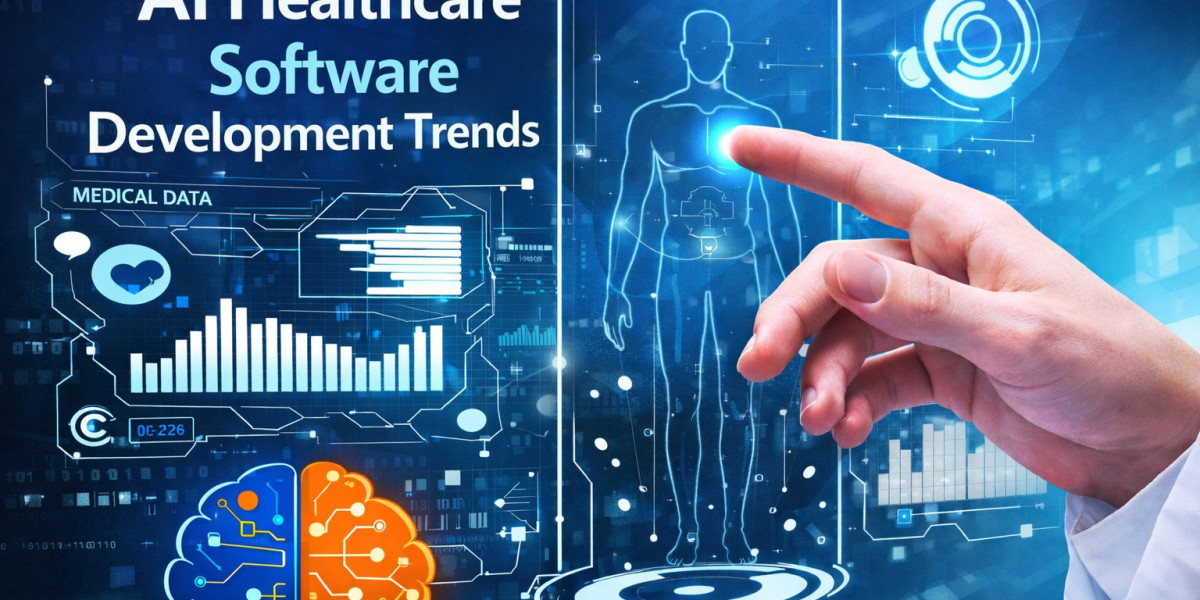

Healthcare has always evolved with technology, but the pace of change we’re witnessing now feels different. Hospitals are no longer just physical spaces filled with equipment and professionals—they are becoming data-driven ecosystems powered by intelligent software. In 2026, the focus won’t simply be on adopting artificial intelligence, but on refining it, regulating it, and embedding it deeply into everyday clinical workflows.
The transformation is being shaped by patient expectations, regulatory pressure, rising operational costs, and an urgent need for more efficient care delivery. From predictive diagnostics to AI-powered hospital management systems, the future of healthcare will depend heavily on smarter, faster, and more secure digital solutions.
Here are the 10 most important AI healthcare software development trends that will define 2026 and beyond.
The Rise of Predictive and Preventive Care Models
Healthcare is moving away from reactive treatment and shifting toward prediction and prevention. Instead of waiting for symptoms to appear, providers are leveraging intelligent systems to forecast potential health risks before they escalate.
In 2026, predictive analytics will be more deeply integrated into hospital systems. AI models will analyze electronic health records, genetic data, wearable device metrics, and lifestyle patterns to identify early signs of chronic diseases such as diabetes, cardiovascular disorders, and cancer.
This shift is redefining how providers view patient care. The goal is no longer to treat illness alone but to prevent it. As AI in healthcare becomes more advanced, predictive models will become more personalized, offering individualized risk assessments and treatment recommendations.
Software development in this area will focus heavily on accuracy, bias reduction, and explainability. Physicians need systems they can trust and understand. As a result, development teams are prioritizing transparent algorithms and interpretable outputs to ensure clinical confidence.
AI-Powered Clinical Decision Support Systems
Clinical decision support systems (CDSS) are not new, but in 2026 they are becoming far more intelligent. Instead of offering static rule-based alerts, modern AI systems provide dynamic, context-aware recommendations.
These systems analyze patient history, lab results, imaging data, and even population-level trends to assist doctors in making better decisions. For example, AI can flag abnormal patterns in radiology scans or recommend treatment adjustments based on real-time patient responses.
The next generation of AI healthcare software development is focused on seamless integration with existing hospital workflows. If systems are slow or disruptive, clinicians simply won’t use them. Therefore, usability and interoperability are now top priorities.
In 2026, expect AI-powered CDSS tools to reduce diagnostic errors, improve treatment precision, and lower hospital readmission rates. The emphasis will be on augmenting doctors—not replacing them.
Generative AI for Medical Documentation and Workflow Automation
Administrative burdens remain one of healthcare’s biggest challenges. Physicians spend countless hours on documentation, billing codes, and compliance paperwork. Generative AI is stepping in to address this issue.
By 2026, advanced AI models will automatically generate clinical notes from voice conversations between doctors and patients. They will summarize case histories, prepare discharge instructions, and assist with medical coding.
This shift is not only about efficiency—it’s about reducing burnout. When healthcare professionals spend less time typing and more time interacting with patients, the quality of care improves significantly.
An experienced AI healthcare software development company will focus on building secure, HIPAA-compliant solutions that maintain patient privacy while leveraging powerful generative models. Accuracy and data security will remain critical concerns as automation expands.
Hyper-Personalized Treatment Through AI and Genomics
One of the most exciting developments in 2026 is the fusion of AI and genomic medicine. With the cost of genome sequencing steadily decreasing, AI systems can analyze massive genetic datasets to design personalized treatment plans.
Cancer care, in particular, is benefiting from this trend. AI algorithms can identify genetic mutations and recommend targeted therapies based on individual patient profiles. Instead of one-size-fits-all treatment, patients receive highly tailored interventions.
The complexity of genomic data requires sophisticated infrastructure. Healthcare organizations are increasingly partnering with an AI Development company that specializes in high-performance computing, secure data pipelines, and advanced analytics platforms.
As these tools mature, personalized medicine will shift from being a premium offering to becoming standard practice.
Remote Patient Monitoring and AI-Driven Wearables
The pandemic accelerated the adoption of remote healthcare, but in 2026, remote monitoring will be smarter and more proactive. Wearable devices are evolving from simple step counters into sophisticated health monitors capable of tracking heart rhythms, oxygen levels, glucose levels, and more.
AI systems analyze this data in real time, detecting anomalies and alerting healthcare providers before emergencies occur. For patients with chronic conditions, this technology offers peace of mind and continuous oversight.
Software developers are now focusing on creating platforms that integrate data from multiple devices into unified dashboards. Interoperability between devices, hospitals, and insurance systems is becoming a defining requirement.
Security, again, is paramount. As patient data flows continuously from homes to hospitals, encryption, authentication, and compliance frameworks are critical components of development strategies.
AI in Drug Discovery and Clinical Trials
Drug discovery has traditionally been a slow and expensive process. AI is dramatically accelerating it. In 2026, machine learning models are identifying potential drug compounds faster than ever before by analyzing chemical structures, biological pathways, and historical trial data.
AI is also transforming clinical trials. Patient recruitment, which once took months or years, can now be optimized using predictive algorithms that identify eligible candidates more efficiently. AI tools can monitor trial data in real time, spotting safety concerns early.
Pharmaceutical companies are investing heavily in partnerships that combine biomedical expertise with advanced AI healthcare software development capabilities. The result is shorter development cycles and more targeted therapies.
As regulatory frameworks adapt to AI-driven research, we will likely see more AI-assisted drugs entering the market faster than ever before.
Intelligent Hospital Operations and Resource Optimization
Behind every successful healthcare system lies complex operational management. Staffing shortages, bed management, equipment allocation, and supply chain logistics can significantly impact patient outcomes.
AI systems in 2026 are optimizing hospital operations with predictive modeling. They forecast patient admission rates, recommend staffing adjustments, and streamline resource distribution.
For example, AI can predict emergency room surges based on historical trends, weather conditions, and local events. Hospitals can prepare in advance rather than reacting in crisis mode.
This operational intelligence reduces costs while improving service quality. Healthcare providers are increasingly seeking integrated platforms that combine clinical and operational data into a single, AI-powered ecosystem.
Stronger Focus on Explainable and Ethical AI
As AI systems become more influential in medical decision-making, transparency is no longer optional. In 2026, regulatory bodies and healthcare institutions are demanding explainable AI models.
Doctors and patients need to understand why an AI system recommended a particular diagnosis or treatment. Black-box algorithms are facing increasing scrutiny.
Ethical considerations are also shaping development strategies. Bias in training data can lead to unequal care outcomes. Developers must ensure diverse datasets and fairness audits are embedded into system design.
Healthcare organizations are prioritizing partnerships with responsible technology providers who understand compliance requirements and ethical standards. Building trust will be as important as building functionality.
Interoperability and Unified Healthcare Ecosystems
Healthcare systems often operate in silos. Different departments use different platforms that do not communicate effectively. In 2026, interoperability is becoming a central goal.
AI-powered integration platforms are connecting electronic health records, diagnostic tools, billing systems, and wearable data into unified ecosystems. This ensures that patient information flows seamlessly across departments and facilities.
Standardized APIs, cloud-based infrastructures, and advanced data mapping tools are enabling this transformation. Developers are focusing on scalable architectures that can adapt to evolving regulatory requirements and expanding data sources.
Unified ecosystems not only improve care coordination but also enhance analytics capabilities, allowing providers to derive deeper insights from comprehensive datasets.
Cybersecurity and AI-Driven Threat Detection
Healthcare data is among the most sensitive information in existence. Unfortunately, it is also a prime target for cyberattacks. In 2026, AI is playing a dual role—powering healthcare systems while also protecting them.
Advanced AI-driven security tools monitor network activity, detect anomalies, and respond to threats in real time. Instead of waiting for breaches to occur, these systems proactively identify vulnerabilities.
As healthcare organizations adopt more cloud-based solutions, cybersecurity is being embedded into the development lifecycle. From encrypted data storage to zero-trust architectures, security-first design is now standard practice.
Companies that invest in robust protection mechanisms will not only safeguard patient trust but also ensure regulatory compliance and operational continuity.
The Road Ahead: Smarter, Safer, More Human-Centric Healthcare
The future of healthcare technology in 2026 is not about replacing doctors with machines. It is about empowering professionals with smarter tools. It is about reducing administrative burdens so clinicians can focus on empathy and expertise. It is about detecting diseases earlier, personalizing treatments more precisely, and delivering care more efficiently.
AI is becoming deeply embedded in every layer of healthcare—from diagnostics and treatment planning to hospital management and cybersecurity. The challenge now is not whether to adopt AI, but how to implement it responsibly and effectively.
Healthcare organizations that embrace these trends thoughtfully will gain a significant competitive advantage. They will improve patient outcomes, streamline operations, and build stronger trust in digital health solutions.
The coming years will likely bring even more innovation, but one thing is certain: artificial intelligence will continue to shape the foundation of modern medicine. And as technology evolves, the ultimate goal remains the same—to provide better care for every patient, everywhere.