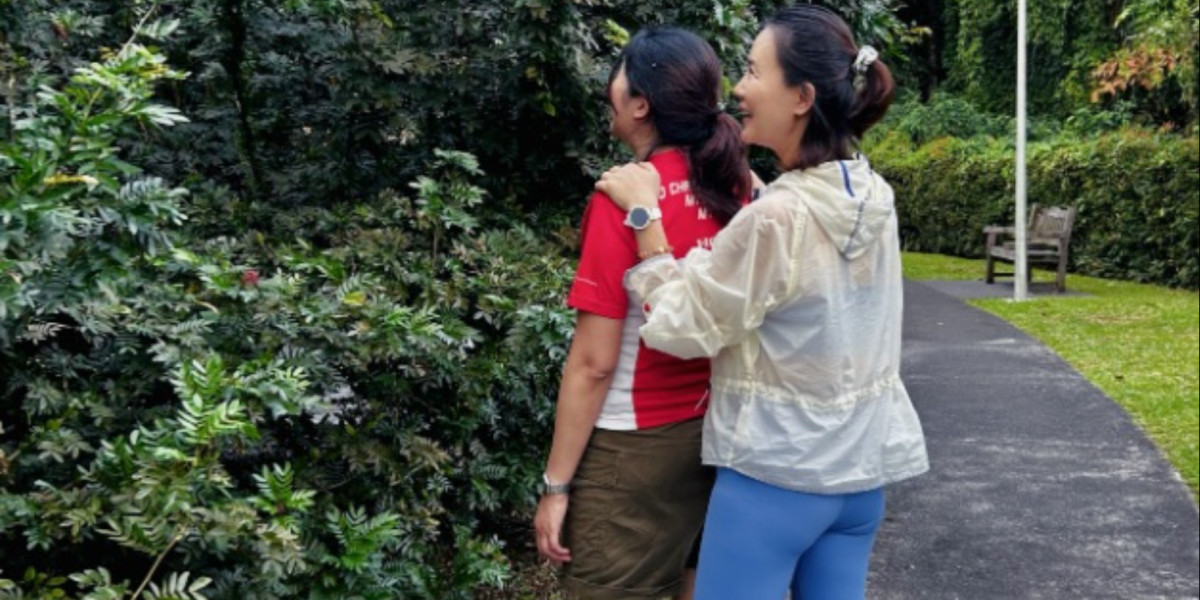

At the end of a guided forest therapy session at MacRitchie Reservoir, participants sat quietly under tall trees. The facilitator asked a simple question.
“How was this different from your usual time in nature?”
Almost everyone gave a similar answer.
“I’ve walked here many times,” one participant said, “but today I actually felt calm.”
Another shared, “I noticed sounds and smells I never paid attention to before.”
None of them were new to Singapore’s parks. Many already visited green spaces regularly. Yet the guided experience felt deeper and more restorative than their usual solo walks.
This pattern appears often in forest bathing Singapore workshops. People assume being in nature is enough. But research and participant experience show guided forest bathing often creates stronger mental and emotional healing than walking alone.
Here are five clear reasons why.
1. Guidance Helps Your Brain Slow Down Properly
When people walk alone, their mind usually stays active. They think about work, plans, or messages. Even in nature, attention remains busy.
Guided forest bathing changes how attention works.
Facilitators gently invite participants to focus on sensory details like:
Layers of bird sounds
Movement of leaves
Air on the skin
Textures of bark
This type of awareness creates what psychologists call soft fascination. The brain stays gently engaged without effort. This state restores mental fatigue.
Attention Restoration Theory research shows directed sensory awareness in nature improves cognitive recovery more than passive exposure.
So the difference is not the forest itself.
It is how attention is guided inside it.
2. Singapore’s Stressful Lifestyle Needs Intentional Slowing
Singapore is green, but daily life moves fast. Long work hours and constant digital activity keep the nervous system in alert mode.
A national mental health survey by Singapore’s Institute of Mental Health found about 1 in 7 residents has experienced a mental disorder in their lifetime. Stress and anxiety remain common urban issues.
A solo walk often happens at the normal city pace. People walk quickly and think continuously.
Guided forest bathing intentionally slows movement and breathing. This activates the parasympathetic nervous system, which controls relaxation and recovery.
Forest medicine researcher Dr. Qing Li has shown guided forest exposure reduces cortisol, heart rate, and blood pressure. These effects appear stronger when attention is structured rather than casual.
So guided sessions send clearer safety signals to the body.
3. Facilitators Help You Stay Present Longer
One major difference between guided and solo nature time is how long attention stays in the present.
Alone, people notice something briefly, then move on. Thoughts return quickly.
In guided sessions, facilitators encourage staying with sensory moments longer. For example:
Listening to one sound for several minutes
Observing one tree slowly
Feeling ground contact
This extended awareness deepens relaxation.
Forest therapy studies led by Park and colleagues in Japan show guided sessions reduce anxiety and mood disturbance more than unguided walks. Participants experience gradual calm instead of brief refreshment.
Depth comes from sustained noticing.
Guidance makes that possible.
4. Structured Sessions Create Progressive Relaxation
Guided forest bathing follows a sequence developed from hours of research and practice in forest therapy traditions.
Typical stages include:
Arrival and grounding
Slow sensory walking
Stillness period
Quiet reflection
Each stage gradually lowers mental activity.
Solo walks usually skip this progression. The mind stays lightly active throughout.
Singapore’s forests contain rich sensory cues like humidity changes, soil scent, and layered bird calls. Structured pacing allows the nervous system to absorb these cues slowly rather than filter them out.
So the session becomes a full relaxation cycle instead of a pleasant stroll.
5. Gentle Group Presence Increases Emotional Safety
Many people think solitude heals best. But a calm shared presence often deepens relaxation.
Guided forest bathing groups move quietly together without social pressure. This creates subtle safety signals in the brain.
Participants often report feeling:
Supported
Less self conscious
Comfortable slowing down
Safe being still
Research in psychophysiology shows perceived social safety reduces stress activation in the nervous system.
A solo walker may still carry mild alertness.
A quiet group often allows deeper letting go.
Why a Solo Nature Walk Feels Different
Walking alone in nature still helps. Green spaces improve mood and attention.
But modern habits often follow people into the forest:
Phone checking
Fast pace
Goal focused walking
Thinking loops
So the nervous system never fully shifts into recovery mode.
Guided forest bathing teaches how to experience nature through all senses and slower awareness. Many participants later say their solo walks become more mindful too.
Guidance builds skill that stays.
Singapore’s Forests Are Ideal for Forest Bathing
Singapore has dense biodiversity within easy reach of the city. Key locations used for forest therapy include:
MacRitchie Reservoir
Bukit Timah Nature Reserve
Central Catchment
These areas provide layered vegetation, wildlife sounds, and shaded trails that support sensory immersion.
Research in Urban Forestry and Urban Greening shows biodiverse green spaces create stronger psychological restoration than simple parks. Singapore’s tropical ecology enhances this effect through rich scent and humidity cues.
So guided sessions here combine natural richness with structured mindfulness.
What Participants Commonly Notice in Guided Sessions
Across multiple Singapore forest therapy workshops, participants often describe similar experiences:
“I slowed down more than I ever do.”
“I felt calm without trying.”
“I noticed details I usually miss.”
“I stayed present longer.”
These responses appear even among people who already spend time outdoors.
So the difference is not access to nature.
It is guided perception within it.
Experience Guided Forest Bathing in Singapore
For those curious to explore deeper nature immersion, structured workshops provide a gentle and evidence based way to begin.
You can join guided forest bathing Singapore sessions designed for Singapore’s natural landscapes and urban stress patterns.
These workshops follow established forest therapy principles adapted to local ecology and climate.
The Takeaway
A solo walk in nature is beneficial.
A guided forest bathing workshop often heals more deeply.
Because restoration depends not only on the environment, but on attention, pacing, and nervous system state.
Guidance slows awareness.
Structure deepens sensation.
Group presence increases safety.
Nature then restores naturally.
In a fast city like Singapore, that difference can be powerful.