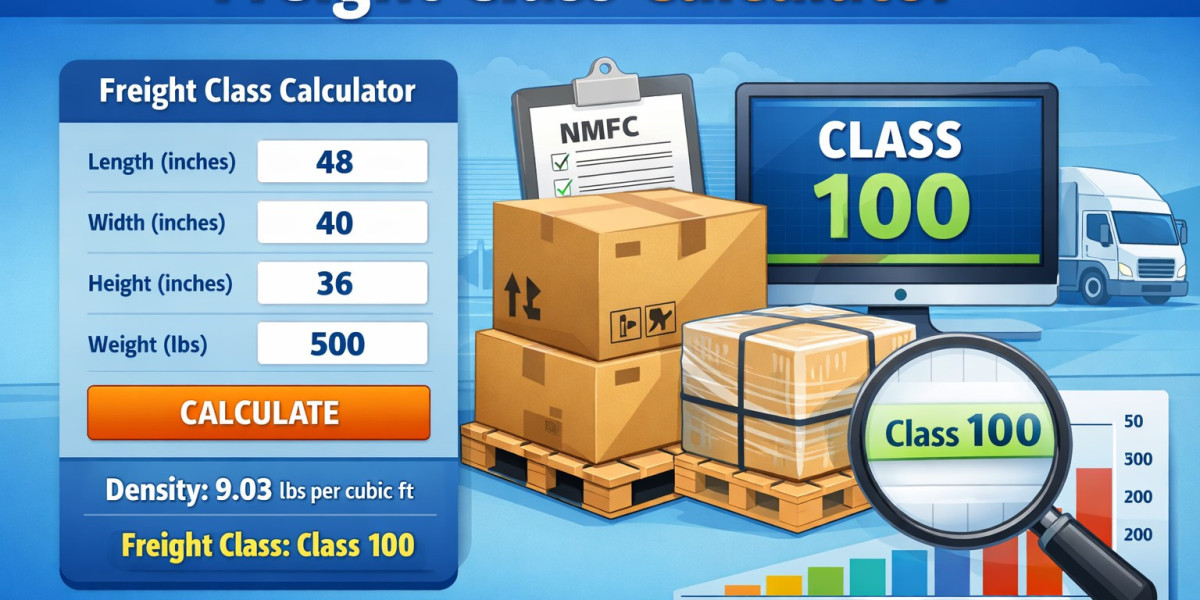

When you ship goods by freight, one of the most important things you must know is the freight class. Many people feel confused when they hear terms like density, NMFC codes, and freight class chart. But the truth is simple. If you understand how a Freight Class Calculator works, you can save money, avoid delays, and ship your goods with confidence.
A Freight Class Calculator is a tool that helps you find the correct freight class for your shipment. Freight class affects how much you pay for shipping. If you enter the wrong class, you may be charged extra fees later. That is why businesses, warehouse managers, and online sellers use a Freight Class Calculator to calculate freight class correctly before shipping.
In this detailed guide, you will learn what a Freight Class Calculator is, why it matters, how to calculate freight class, and how to avoid common mistakes. Everything is explained in very simple language so anyone can understand it.
What Is Freight Class Calculator
A Freight Class Calculator is an online or manual tool that helps you find the correct freight class for your shipment. Freight class is a number that is used in LTL (Less Than Truckload) shipping. It usually ranges from 50 to 500. The lower the number, the cheaper the shipping cost. The higher the number, the more expensive it becomes.
The Freight Class Calculator mainly works based on density. Density means how heavy your shipment is compared to its size. If your shipment is heavy and takes up less space, it has high density. High-density shipments usually get a lower freight class. If your shipment is light but takes up a lot of space, it has low density. Low-density shipments usually get a higher freight class.
To use a Freight Class Calculator, you need:
Length of the shipment
Width of the shipment
Height of the shipment
Total weight
The calculator uses this information to find the density and match it with the correct freight class chart.
A Freight Class Calculator helps avoid mistakes. If you guess your freight class, you might be wrong. Carriers will re-check your shipment. If the class is incorrect, they will charge extra fees. This is called reclassification. Using a Freight Class Calculator helps you avoid these extra charges.
In short, a Freight Class Calculator is a simple but powerful tool. It saves money, prevents billing surprises, and makes your shipping process smooth and stress-free.
Why Freight Class Matters in Shipping
Freight class plays a big role in shipping costs. Many businesses ignore this at first. But once they receive unexpected shipping bills, they understand how important freight class really is.
A Freight Class Calculator helps determine the correct class before shipping. Freight class is important because it affects:
Shipping price
Carrier selection
Delivery planning
Risk and handling requirements
Freight class is based on four main factors:
Density
Stowability
Handling
Liability
Density is the most common factor used in a Freight Class Calculator. But the other factors are also important. For example, if your product is fragile or dangerous, it may have a higher freight class even if it is dense.
If you choose the wrong freight class, the carrier will inspect your shipment. If they find an error, they will adjust the class and send you a new bill. This can hurt your profit, especially if you ship regularly.
Using a Freight Class Calculator gives you accurate information. This means better cost planning and no surprise charges. For small businesses and eCommerce sellers, this is very important. Every dollar saved in shipping can increase profit.
Freight class also helps carriers organize their trucks efficiently. They need to know how much space and weight each shipment will take. So when you use a Freight Class Calculator correctly, you are also helping the carrier plan better.
In simple words, freight class is not just a number. It directly impacts your shipping cost and business success.
How To Calculate Freight Class
Many people think calculating freight class is difficult. But when you understand the steps, it becomes very easy. A Freight Class Calculator makes this process simple.
Here are the steps to calculate freight class manually:
Step 1: Measure Dimensions
Measure the length, width, and height of your shipment in inches.
Step 2: Calculate Cubic Feet
Multiply length × width × height.
Then divide the total by 1728 (because there are 1728 cubic inches in one cubic foot).
Step 3: Find Density
Divide the total weight (in pounds) by the total cubic feet.
This gives you pounds per cubic foot.
Step 4: Match With Freight Class Chart
Use a freight class chart to match your density with the correct class number.
For example:
If your shipment weighs 200 pounds and measures 4 cubic feet, the density is 50 pounds per cubic foot. This usually falls under a lower freight class like 50 or 55.
Instead of doing all this math, most people use a Freight Class Calculator online. You just enter the numbers, and it gives you the correct class instantly.
The Freight Class Calculator reduces human error. If you calculate manually, small mistakes in measurement or math can change the class. Even a small change in density can move your shipment to a higher class.
So, always measure carefully and double-check your numbers. The more accurate your data, the more accurate your freight class will be.
Common Mistakes in Freight Classification
Even experienced shippers sometimes make mistakes in freight classification. These mistakes can cost a lot of money. That is why using a Freight Class Calculator is very important.
One common mistake is incorrect measurements. Some people round down the size to reduce shipping costs. But carriers re-measure shipments. If they find a difference, they will charge extra fees.
Another mistake is guessing the freight class. Never guess. Freight class is based on real calculations. A Freight Class Calculator exists to prevent guessing.
Some businesses also forget to include packaging size. The freight class is based on the total shipment size, including pallets and packaging materials.
Another common mistake is ignoring NMFC codes. NMFC (National Motor Freight Classification) codes are used to classify products. Some products have fixed freight classes regardless of density.
Reclassification fees are expensive. They also delay deliveries. If your shipment is held for inspection, your customer may receive the goods late. This can damage your reputation.
Using a Freight Class Calculator helps you avoid these issues. It gives you accurate results before shipping. Always double-check your measurements, weight, and product details.
Accuracy is the key to saving money and keeping customers happy.
Benefits of Using Freight Class Calculator
There are many benefits of using a Freight Class Calculator. It is not just about finding a number. It improves your entire shipping process.
First, it saves money. When you calculate freight class correctly, you avoid extra charges and billing corrections.
Second, it saves time. Instead of doing manual calculations, you can get instant results.
Third, it improves accuracy. A Freight Class Calculator reduces human errors in math and measurement.
Fourth, it helps in budgeting. Businesses can estimate shipping costs more accurately when they know the correct freight class.
Fifth, it improves customer satisfaction. Accurate freight classification means no delays and no surprise charges.
Sixth, it supports better logistics planning. When freight class is correct, carriers can load trucks efficiently.
Many online shipping platforms now include a Freight Class Calculator. This shows how important it has become in modern logistics.
In today’s competitive market, even small cost savings matter. Using a Freight Class Calculator is a smart and simple way to improve your shipping operations.
Tips To Reduce Freight Shipping Costs
If you want to reduce shipping costs, understanding the Freight Class Calculator is very helpful. But there are also other tips you should follow.
Increase Density
Make your shipment more compact. Use smaller packaging if possible.Use Proper Packaging
Avoid oversized boxes. Extra empty space increases cubic feet and reduces density.Double Check Measurements
Accurate measurement ensures correct freight class.Compare Carrier Rates
Different carriers may offer different rates for the same freight class.Ship More Weight Together
Combining shipments can improve density and reduce freight class.Use Freight Class Calculator Before Booking
Never book shipping before confirming freight class.
When you combine smart packaging with a Freight Class Calculator, you can significantly reduce shipping costs.
Freight shipping is a major expense for many businesses. But with proper planning and correct freight classification, you can control these costs effectively.
Conclusion
A Freight Class Calculator is an essential tool for anyone involved in freight shipping. It helps calculate freight class accurately, avoid extra charges, and improve shipping efficiency.
Freight class directly impacts your shipping cost. If you calculate it incorrectly, you may face reclassification fees and delays. But when you use a Freight Class Calculator properly, you can ship with confidence.
Always measure your shipment carefully. Enter accurate weight and dimensions. Double-check everything before booking your shipment.
Shipping does not have to be complicated. With the right knowledge and tools like a Freight Class Calculator, you can make the process simple, cost-effective, and stress-free.
Frequently Asked Questions
1. What is a Freight Class Calculator used for?
A Freight Class Calculator is used to calculate the correct freight class based on shipment weight and dimensions.
2. Why is freight class important?
Freight class affects shipping costs, handling, and carrier planning.