
The faster you hire, the higher the risk unless intelligence guides the process.
Hiring teams are under constant pressure. Business units demand speed. Candidates expect rapid responses. Leadership wants quality without escalating recruitment costs. Traditional hiring processes, manual screening, spreadsheet tracking, and email follow-ups struggle under this pressure.
AI Hiring Software introduces intelligence into the recruitment pipeline. Instead of relying solely on manual review and subjective judgment, organizations use predictive systems, automated screening, and data-driven insights to improve decision accuracy.
What Is AI Hiring Software?
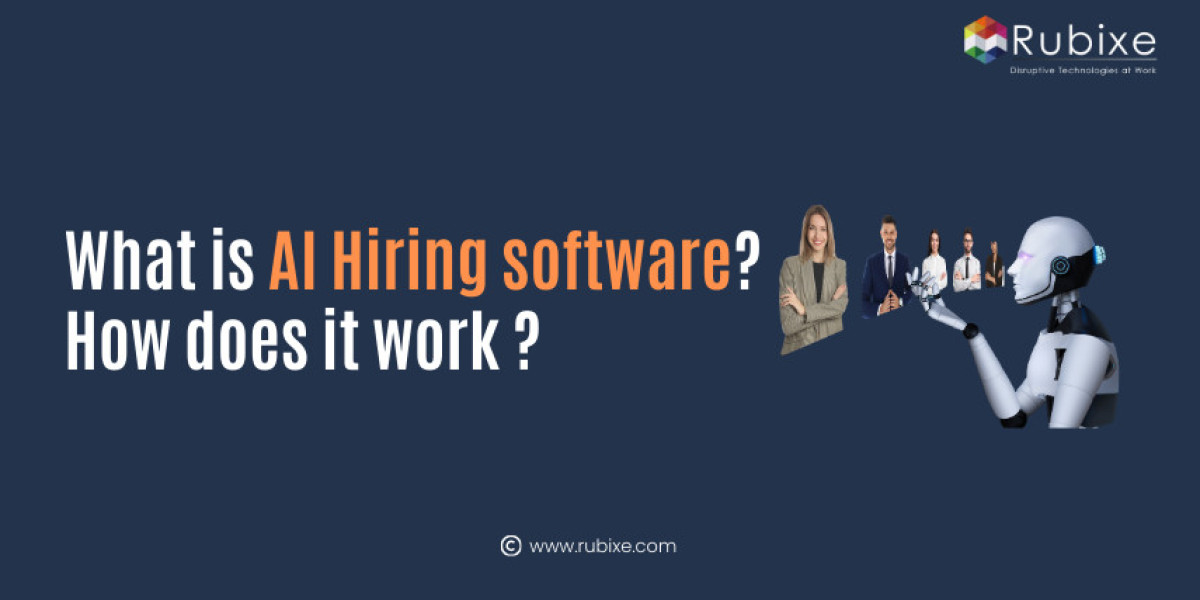
AI Hiring Software is a technology platform that uses artificial intelligence and machine learning to automate, analyze, and optimize recruitment workflows. It assists with sourcing, screening, ranking, interviewing, and candidate engagement.
Unlike basic applicant tracking systems, AI Hiring Software evaluates patterns in resumes, behavioral signals, and historical hiring outcomes. It identifies high-potential candidates based on data rather than intuition alone.
This approach enhances consistency and reduces manual workload while maintaining oversight.
Why Traditional Hiring Breaks at Scale
Manual recruitment models work when candidate volume is low. As hiring scales, inefficiencies multiply.
Common challenges include:
Resume overload
Delayed candidate communication
Inconsistent evaluation criteria
Bias in manual screening
High cost per hire
AI Hiring Software addresses these bottlenecks by embedding structured intelligence at each stage of the pipeline.
Organizations adopting AI for hiring gain faster screening without sacrificing quality.
How AI Hiring Software Works Across the Recruitment Pipeline
Sourcing and Talent Discovery
AI scans job boards, professional networks, and internal databases to identify potential candidates. It analyzes skills, experience, and contextual indicators to match profiles with job requirements.
Instead of keyword-only searches, AI Hiring Software uses semantic analysis to identify relevant qualifications even when phrasing differs.
Resume Screening and Ranking
Machine learning models evaluate candidate resumes against predefined role criteria. The system ranks applicants based on skill alignment, experience depth, and cultural indicators derived from historical success data.
This stage reduces manual review hours significantly.
Candidate Engagement and Communication
Automated messaging systems maintain candidate interaction throughout the hiring cycle. AI-powered chatbots answer common queries, schedule interviews, and provide status updates.
This structured communication improves candidate experience while reducing recruiter workload.
Interview Intelligence
Advanced AI Hiring Software platforms analyze video interviews using natural language processing and behavioral analysis. They assess tone, clarity, and response relevance while maintaining structured scoring systems.
Human decision-makers retain final authority, but data-supported insights enhance evaluation consistency.
Continuous Optimization
Learning From Hiring Outcomes:
Over time, AI Hiring Software learns from hiring results. It analyzes which candidates succeed long-term and adjusts screening criteria accordingly.
This feedback loop refines recruitment accuracy and reduces future hiring risk.
Organizations leveraging structured AI staffing systems often experience improved retention outcomes due to data-informed matching.
Core Technologies Behind AI Hiring Systems
Natural Language Processing (NLP): Interprets resumes, job descriptions, and interview transcripts.
Machine Learning Algorithms: Identify patterns in successful hires and improve candidate ranking.
Predictive Analytics: Estimate candidate success probability based on historical data.
Automation Engines: Manage communication workflows and scheduling tasks.
Bias Detection Models: Monitor fairness in candidate evaluation criteria.
Together, these technologies form the backbone of AI Hiring Software.
Business Benefits of AI Hiring Software
Faster resume screening
Reduced manual recruiter workload
Improved consistency in candidate evaluation
Enhanced candidate experience
Lower cost per hire
Data-driven hiring decisions
Improved long-term retention alignment
Scalable recruitment capacity
When integrated properly, AI Hiring Software improves both speed and quality across hiring cycles.
Organizations that deploy structured AI Services for recruitment modernization often see measurable improvements in efficiency within months.
Governance and Ethical Considerations
AI-driven hiring must operate within strict compliance frameworks.
Managing Bias and Transparency
Recruitment algorithms must be monitored to prevent unintended bias amplification. Data sources should be audited regularly. Evaluation criteria must remain transparent.
Collaboration with an experienced AI Consulting company helps ensure governance alignment and regulatory compliance.
Ethical hiring practices must remain central to automation efforts.
When Should Organizations Invest in AI Hiring Software?
AI Hiring Software becomes particularly valuable when:
Candidate volume exceeds manual processing capacity
Hiring timelines impact revenue generation
Evaluation inconsistency affects retention
Recruitment costs continue rising
Multi-location hiring creates coordination complexity
Intelligence enhances scalability without sacrificing human oversight.
Companies adopting AI for hiring early often gain a competitive advantage in talent acquisition markets where speed and candidate experience matter significantly.
If your organization is facing increasing hiring pressure, structured adoption of AI Hiring Software can transform recruitment from reactive task management into strategic talent optimization.
Work with specialists who understand how to align AI with workforce objectives, governance standards, and performance metrics. Intelligent hiring is not about replacing recruiters it is about empowering them with precision and speed.