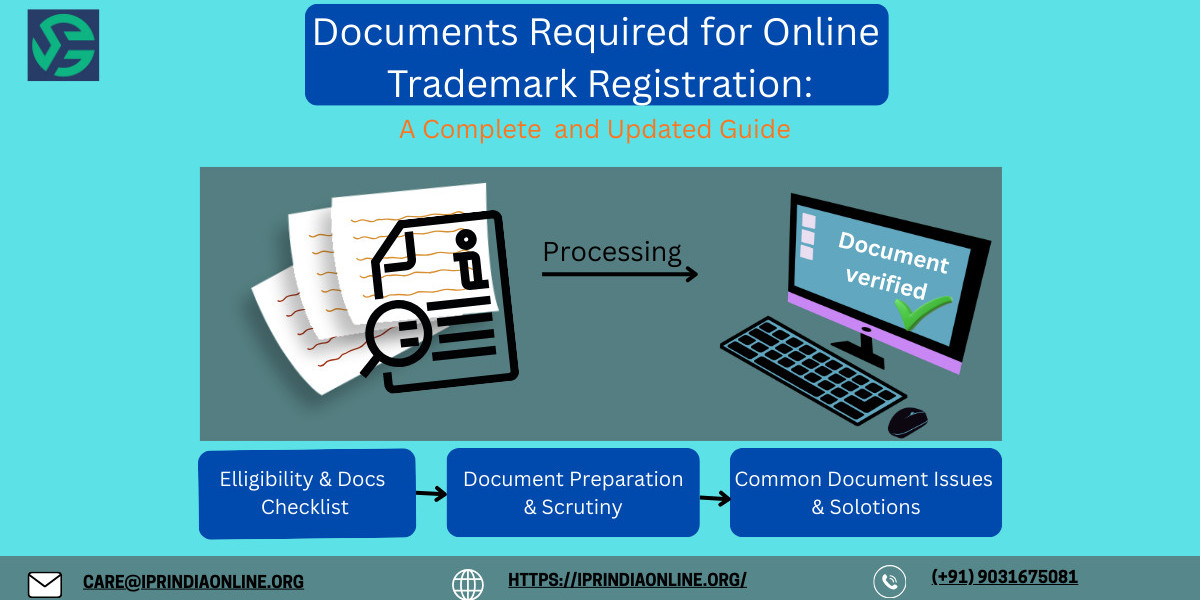

A Complete and Updated Guide of TM Registration Process
Starting a business means standing out, so securing your name matters more than ever. Though the system allows anyone to file directly, most people choose help just to skip headaches down the road. Not tied to any agency, we walk clients through every part of the process using only current data pulled from reliable public sources.
Starting out, companies aiming to online register trademark need to grasp exactly what papers are needed - mistakes here can derail the whole process. What follows lays out every document necessary for digital trademark submission, refreshed regularly, shaped by real experience, keeping things clear and correct.
Role of a Private Trademark Service Provider
As a private service provider, we do not function as a government body or trademark office. Our role is to assist applicants by:
Interpreting trademark rules as per officially published guidelines
Preparing and validating documents before submission
Reducing the risk of objections caused by clerical or procedural errors
Ensuring applications are aligned with the latest registry practices
We try to provide all the correct and updated information as cross-checked by trusted & authoritative sources.
Applicant Identity Documents
For Individual Applicants
Individuals filing a trademark application must submit valid identity and address proof. The documents must be updated and clearly legible:
Government-issued photo ID (passport, voter ID, driver’s license, or equivalent)
Residential address proof, such as utility bills or bank statements
Correct legal name matching all supporting documents
Consistency across records is essential to avoid examination discrepancies.
For Business Entities
Businesses must establish their legal existence and ownership capacity. Required documents include:
Certificate of incorporation or registration
Partnership deed for partnership firms
Business registration certificate for proprietorships
Official address proof of the registered office
These documents confirm that the entity is legally entitled to own a trademark.
Trademark Details and Representation
Word Marks
For trademarks consisting only of text:
Exact spelling, spacing, and capitalization must be declared
The word mark should match the branding used or proposed for use
Logo or Device Marks
For logos or stylized marks:
High-resolution image in approved digital format
Clear visibility of symbols, fonts, and design elements
Color claim details, if applicable
Accurate representation ensures correct publication and legal protection.
Description of Goods and Services
Trademark registration requires classification under the appropriate category of goods or services. Documentation must include:
Precise description of business activities
Correct class selection
Alignment with current or intended commercial use
Incorrect classification is a common cause of objections, making expert review valuable at this stage.
Proof of Trademark Usage
For Trademarks Already in Use
When claiming prior use, documentary evidence must support the claim:
Invoices or sales bills
Product packaging or labels
Marketing materials or advertisements
Website or social media screenshots showing commercial use
Each document should clearly display the trademark and relevant dates.
For Proposed-to-Be-Used Trademarks
If the trademark has not yet been used:
No commercial proof is required at filing
A declaration of intent to use is sufficient
This option is commonly chosen by startups and new ventures.
Authorization and Power of Attorney
When someone else submits the application - like an agent or outside helper - a permission note with a signature must come along.
That piece of paper shows they’re allowed to act on your behalf
Applicant information appears here, along with a signed name
Covers filing, follow-ups, and responses
Proper authorization avoids procedural delay or rejection during examination.
Affidavit of Use (Where Necessary)
In cases of prior use, an affidavit may be required to present, such as,
Declare the date of first commercial use
Confirm continued usage of the trademark
Strengthen priority claims
This document must be accurate and supported by evidence.
Priority Claim Documents
Applicants claiming priority from earlier foreign filings must submit:
Certified copy of the priority application
Filing details and jurisdiction
English translation, if applicable
Priority documentation ensures recognition of earlier rights.
Online Filing and Digital Requirements
Online trademark filing systems require:
Digitally signed documents, where applicable
Scanned copies of signed forms
Files uploaded in approved formats and sizes
Technical accuracy is as important as legal accuracy.
Trademark Fee Payment Proof
Proof of payment forms part of the documentation set:
Online transaction receipt
Reference or acknowledgment number
Correct fee category based on applicant type
Incorrect fee payment can invalidate an otherwise correct application.
Common Documentation Mistakes to Avoid
Based on our real experience, common errors include:
Name mismatch across documents
Poor-quality logo uploads
Unsupported prior-use claims
Incorrect classification
Missing signatures
Professional review significantly reduces these risks.
Why Verified and Updated Information Matters
Trademark laws and registry practices evolve. As a private service provider, we rely only on official notifications, published guidelines, and trusted legal sources to ensure:
Documentation aligns with current standards
Filing strategies remain compliant
Applicants receive reliable guidance
This commitment to accuracy protects applicants from unnecessary delays.
Post-Registration Changes and Rectification
Even after registration, updates may be required due to changes in ownership details, address, or trademark specifications.
Note: if you have already registered a trademark, need to make some changes or rectify, click here to trademark rectification.
Conclusion
Getting a trademark means filling out lots of papers correctly - small mistakes matter. Our support comes from clear know-how, built on reliable current rules. We help companies move faster through paperwork by cutting confusion. Mistakes fade when experienced hands shape each step. Every applicant moves forward with steady backing throughout the full path.