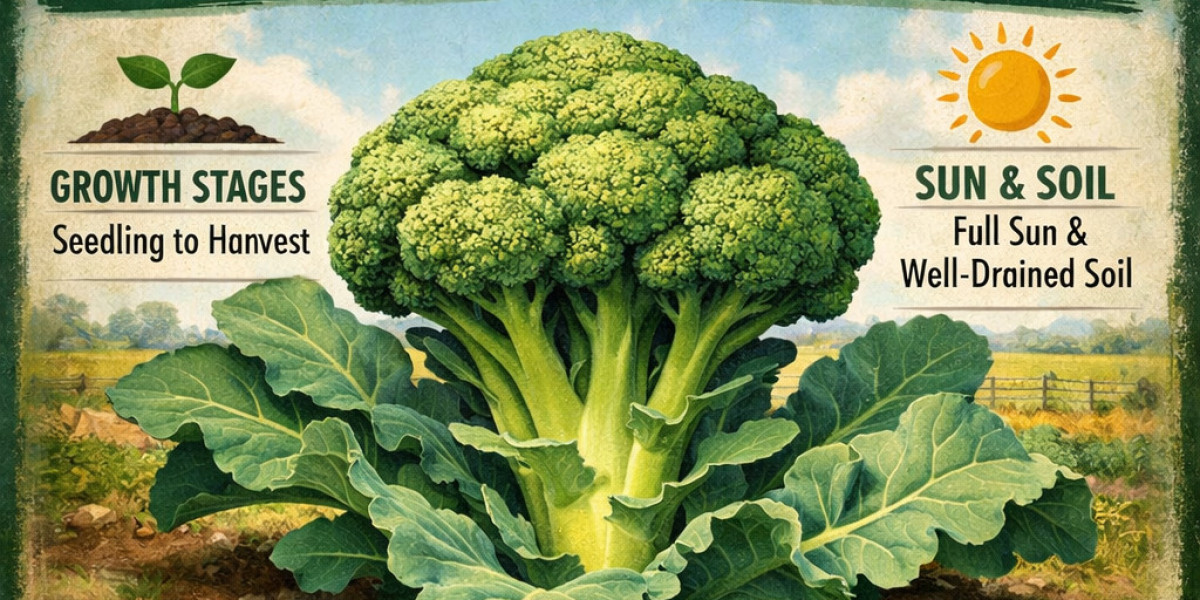

Broccoli is a healthy green vegetable that can be easily grown in your garden. It has immense nutritional value and, unknown to many, belongs to the cabbage family. The plant is valued by people for its edible green flowers that are rich in vitamins, minerals, and antioxidants, which makes it an important part of people’s healthy diet.
What are the different types of Broccoli Plant?
Well, there are numerous different types of broccoli that you will find all around the world. The most common form of broccoli you will see is the Calabrese broccoli, which has a large green head. Sprouting broccoli is another variety that you can see very commonly and can be recognised easily because of the smaller side shoots that you will see. The purple-coloured broccoli, known as the purple broccoli, is famous for its unique nature and mild flavour.
Exploring the Ideal Growing Conditions for Broccoli
A broccoli plant grows best in cool weather, as the ideal temperature for a broccoli plant to thrive is between 18°C and 24°C. Additionally, you need to make sure that your plant receives around 6 hours of daily sunlight. As for the soil, it is important to make sure that your soil is rich in organic matter and is well-draining. Too much hot weather can negatively affect the plant, as it results in quick flowering, which reduces its quality.
How can you plant a Broccoli plant?
You can start broccoli from either seeds or seedlings. Just plant the seeds about a centimeter or two deep in damp soil. Once your seedlings have four or five leaves, move them into the garden and give each plant plenty of space—somewhere between 45 and 60 centimeters apart works well. Broccoli really loves steady moisture, especially when it starts forming that big central head. Tossing some compost or organic fertilizer into the soil gives your plants a healthy boost.
Basic Care Instructions for a Broccoli Plant
Broccoli doesn’t like to be neglected. Lay down some mulch to lock in moisture and keep weeds from taking over. Pests can be a real headache; cabbage worms and aphids are the usual suspects. Go for natural fixes, like a spray of neem oil, to keep them in check.
You’ll know it’s time to harvest when the main head looks tight and firm. Grab a sharp knife and cut it off before the buds start turning yellow. Don’t pull up the plant just yet; after you take the main head, you’ll usually get a few bonus side shoots that are perfect for another meal.